

Tag: SFPD

  • The Mini-Panic Over SF Shoplifting

    The Mini-Panic Over SF Shoplifting

    Since Chesa Boudin was narrowly elected (with the LPSF’s support!) as San Francisco district attorney in November 2019 over the mayor’s interim DA appointee Suzy Loftus, who was heavily backed by the San Francisco Police Officers Association (SFPOA) and other law enforcement interests, there have been plenty of folks unhappy with that outcome.

    As in many locales, police in San Francisco had long enjoyed an improperly cozy relationship with prosecutors. Even Boudin’s relatively liberal elected predecessor (and former police chief) George Gascon, never really seen as reliably in the SFPOA’s corner during his time overseeing the SFPD, failed as DA to prosecute a single police officer for an unjustified shooting or any other abuse. This was despite occurrences like the gangland-style execution of Mario Woods by multiple SFPD officers in 2015.

    Chesa Boudin has been a breath of fresh air in an office that badly needed reform. A former deputy public defender in the office built by the much-missed Jeff Adachi, he ran on a platform that emphasized issues like opposing mass incarceration, focusing on real (not victimless) crimes, ending cash bail, and holding police accountable. He has been as good as his word on this, enhancing civil liberties and saving taxpayer money via efforts such as getting the SF jail population reduced by around 25% by letting elderly inmates and those with medical conditions, charged with misdemeanors out early, requiring prosecutors to review all available evidence before charging any cases involving allegations of resisting, obstructing or assaulting police officers (charges often trumped up when police don’t have any real cause to arrest someone, or want to make their life more difficult), and working with Supervisor Matt Haney to try to stop police officers with records of abuse from being hired, according to Wikipedia. The people who don’t like him are upset with him in no small part because he is doing what he said he would do.

    In seeking to remove Boudin via an upcoming recall election however, opponents have latched onto one issue in particular as an easier “sell” to San Francisco voters who might not be so enthused about a return to criminal justice “business as usual” – shoplifting. In this they were given a major media assist. While most of the mainstream media may lean to the left on many issues, when it comes to local petty crime their statism often has a more right-wing “tough-on-crime” flavor. ABC7 TV reporter Lyanne Melendez exemplified this when she pushed the shoplifting issue to the front burner on June 14 by tweeting a video of a brazen shoplifting incident at a Walgreens store in Hayes Valley. Without providing any evidence or context to support blaming the district attorney, she editorialized her tweet with the words “#NoConsequences @ChesaBoudin”. According to Twitter, that video has now been viewed 6.2 million times.

    Watching it raises some obvious questions, like “Why doesn’t the store security guard make more than a half-hearted grab at the thief’s bag as he rides his bicycle directly past him in a narrow store aisle toward the store exit, when almost anyone in that position making a serious effort could have easily blocked the getaway?”

    The incident almost gives the impression of having been staged. If the security guard was afraid for his own safety (isn’t being exposed to potential physical confrontations part of his job?), why wasn’t he on the phone to 911, or calling for more backup from other store personnel, instead of just standing there watching as the thief swept items from store shelves into a large trash bag? Was this incident really about local criminal justice authorities falling down on the job, or was it about store management having some kind of “don’t interfere” policy designed to avoid bad publicity or potential liability?

    A Tech-Gate story about the incident reports that the man – subsequently taken into custody – had previously robbed the same store on four consecutive days earlier in the month, but that Walgreens declined to prosecute.

    A district attorney can’t prosecute anyone unless they are first identified, which generally means apprehending them. Some commenters have also tried to blame the perceived increase in shoplifting – more on that later – on the Black Lives Matter or police abuse reform movement which saw a major surge after the police murder of George Floyd in May 2020, arguing that cops are more afraid to make arrests now, lest they be accused of police brutality.

    But unless police happen to be on the scene and catch a shoplifter in the act, it is usually store personnel who apprehend shoplifters, so this doesn’t really offer a good excuse for what do appear to be low arrest rates in SF for this type of crime:

    “…state and local crime clearance reports show the problem is not San Franciscans’ failure to report shoplifting to police, but the SFPD’s low rate (4.9 percent) of making arrests in reported thefts compared to police elsewhere in the state (10.5 percent).”

    – From cjcj org/news/13165

    Being arrested is a traumatic experience, typically costing arrestees time and money and affecting their records regardless of what happens afterward, so more SFPD arrests of shoplifters would presumably have some impact.

    Nevertheless, despite the shocking Melendez video and some high-profile incidents of organized shoplifting, the rates for this crime in San Francisco are in fact still much lower than they were back in the 1980s, and have fallen further since 2019:

    “The data shows police-reported shoplifting incidents that are from
    pre-pandemic dates. Also looking even further back then pre-pandemic,
    the data shows that shoplifting rates have been falling more or less
    steadily since the 1980s.

    According to the SF Chronicle, 710 shoplifting incidents were
    reported in the city from January to April of 2021 in comparison to 933
    shoplifting periods from the same period in 2019, an actual decrease.”

    – From davisvanguard org/2021/07/are-shoplifting-rates-in-san-francisco-rising-data-says-nope/

    Some of the people who believe, despite the evidence, that shoplifting is way up in San Francisco, also like to blame state Proposition 47, the criminal justice reform measure that helped address the epidemic of mass incarceration by releasing some non-violent offenders from overcrowded jails.

    But contrary to the myth that the law now lets people caught stealing goods worth less than $950 get off scot free, California statutes actually classify it as a misdemeanor that carries a penalty of up to six months in jail, in addition to potential civil liability to the store owner for:

    • the retail value of the merchandise, if the property is not recovered in sellable condition
    • damages of at least $50 but not more than $500, and
    • costs of bringing the action.

    – From criminaldefenselawyer com/resources/criminal-defense/crime-penalties/petty-theft-california-penalties-defense

    While it’s true that prosecution rates for shoplifting are down since the start of Covid not long after district attorney Boudin was elected, it’s a bit of a stretch to hold him mainly responsible, as a July 9 San Francisco Examiner article shows:

    The numbers show the prosecution rate for shoplifting cases involving
    a misdemeanor petty theft charge for a loss of $950 or less fell under
    Boudin, from 70 percent under former District Attorney George Gascon in
    2019 to 44 percent in 2020 and 50 percent as of mid-June 2021.

    Prosecutors filed charges in 116 of 266 cases presented by police
    involving petty theft in 2020, compared to 450 of 647 cases in 2019,
    according to the data provided by the District Attorney’s Office.

    On the other hand, the prosecution rate for certain organized retail
    theft cases remained between 81 and 84 percent under both Gascon and
    Boudin between 2019 and 2021.

    The office charged 35 of the 43 organized retail theft cases presented in 2020,
    compared to 21 of the 25 cases in 2019…

    Boudin said the decline in prosecution rates for shoplifting cases is
    a reflection of the “difficult choices” his office had to make during
    the pandemic, when the Hall of Justice closed most of its courtrooms and
    city officials decided to largely empty the jails, in part to prevent
    an outbreak.

    “We made an intentional decision to prioritize crimes involving
    violence, injury to human beings and use of weapons,” Boudin said.

    – From SFExaminer com/news/data-shows-chesa-boudin-prosecutes-fewer-shoplifters-than-predecessor/

    So if you’re inclined to blame Chesa Boudin, which of the following alternative courses of action do you think he should have taken?

    • Prioritizing the prosecution of petty theft over crimes involving violence?
    • Trying to force the courts to reopen their courtrooms to enable more prosecutions, and the sheriffs to refill the jails, risking Covid outbreaks?
    • Violating the Constitution by somehow prosecuting people without due process?

    Meanwhile, while shoplifting in San Francisco has decreased in recent decades, homelessness is way, way up. Which must be a bit of a head-scratcher if you think homeless people are disproportionately the ones to blame for such petty crime.

    More to the point though, what should concern us more as a society?

    Petty theft, whether organized or by individuals, from retail establishments of property worth less than $950 per offense?; or

    Organized State robbery in the form of taxes, often many thousands of dollars a year per victim, that leave people with fewer resources to help themselves and their families and exacerbate poverty?

    In humanitarian terms, which is the greater problem that we should be more concerned over?

    While it’s frustrating to see blatant, repeated shoplifting from stores occurring in the community, which ultimately means higher prices for everyone, libertarians should resist the agenda – often pushed by conservatives – of just inflicting harsher punishments on the residents committing these thefts. Asking government to put more people behind bars for longer terms tends to be far costlier to the public. Not to mention a far greater threat to freedom.

    We should not let this largely manufactured panic over shoplifting cause us to vote out a district attorney who is pursuing real, valuable reforms.
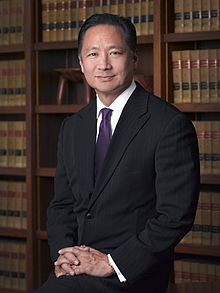
  • Our Defender, Jeff Adachi

    Our Defender, Jeff Adachi

    Last month San Francisco lost one of its best leaders, perhaps the only elected official in the city truly worthy of that description.

    “Prosecutors, with near unlimited resources and the full backing of the government, are trying to take away a citizen’s freedom. That’s a big deal and something we want to get right,” he wrote in a 2014 op-ed piece in the Sacramento Bee.

    Jeff Adachi, the 59-year-old elected Public Defender, had held the position since first winning election in 2002 after working as an attorney in the office for several years prior, and was subsequently reelected four times, most recently last year. But on the evening of February 22, he was found unresponsive at an apartment in North Beach after suffering a heart attack, and efforts to revive him were sadly unsuccessful.

    Police officers were soon on the scene, and before long someone in the SFPD – whose misdeeds have often been exposed by the Public Defenders Office under Adachi’s leadership – leaked, in violation of department protocol, details of the police report to the press: The late Public Defender had been in the company of a woman who wasn’t his wife, and they had reportedly consumed several drugs that day including wine, cocaine, and marijuana edibles.

    Some of his detractors were quick to jump on these embarassing (at least to the anti-hedonism set) details. Most notably Gary Delagnes, the former head of the Police Officers Association union who rarely if ever sees a case of police abuse that he doesn’t see fit to excuse (when the Board of Supervisors acted in 2016 to memorialize Mario Woods, victim of an SFPD firing-squad-style execution, he called board members “idiots” who “honored a street thug”), railed on Facebook not long after Adachi’s death that he had been “a serial adulterer who drove his wife to a suicide attempt,” and groused that, “Only in San Francisco is Jeff Adachi a hero.”

    If you’re not pissing some people off as a politician you’re probably not doing it right, as the saying goes!

    To their credit, this tone deaf jab at the recently deceased was the last straw for Delagnes’s colleagues at the POA, who apparently recognized that despite the success of his hardball methods in getting police pay sharply boosted during his tenure heading the union from 2004 to 2013 his big mouth had become too much of a political liability, and politely expelled him from the organization where he had remained on the board earning nearly $100,000 a year as a consultant.

    But as the civil-liberties-hating Delagnes was grudgingly forced to acknowledge, Adachi is a hero in San Francisco, and won’t be soon forgotten. Despite the circumstances of his death, there was an outpouring of grief and mourning from not only his colleagues but many ordinary members of the public. Over 1,000 people reportedly joined a candlelit vigil and march from the Public Defenders Office to City Hall before Adachi’s body lay in state under the grand old building’s dome.

    When a well-known elected official dies, there are almost always the obligatory accolades from other political figures. But in this case the praise that poured in may have been a bit more accurate than usual. “Everything he said or did came from the heart,” State Senator Scott Wiener told the San Francisco Chronicle. “He was someone who, it didn’t matter to him what people thought about him or if people were mad at him. He was there to fight for the most marginalized people in society.” Eric Quandt, a deputy public defender, said of his former boss that, “I’ve never seen a defense lawyer more tenacious or courageous.” He described himself as “devastated” and said he was sure he spoke for many of his colleagues. “I didn’t always agree with him,” said former supervisor and current BART Board member Bevan Dufty, “but I always appreciated that he made this job so much bigger than what the charter called for.” Congresswoman Jackie Speier called Adachi “the real deal… a righteous public servant who believed passionately in the Constitution, due process and the rights of the accused to be ably represented by counsel. He did not shrink from public debate or tough political decisions.” Perhaps referring to the all-too-often correct perception of public defenders being incompetent and providing poor quality representation, Alameda County Public Defender Brendon Woods said that Adachi “crashed and reshaped all of the negative stereotypes” and “elevated what it meant to be a public defender.” 

    In the city’s traditionally black Bayview and Fillmore neighborhoods, where Adachi was a frequent presence, there was widespread sadness at his passing. “Jeff was the only official in this city we could trust to fight for us, the black and brown and poor San Franciscans,” wrote Dr. Willie and Mary Radcliff in the San Francisco Bayview newspaper. The “MAGIC” (Mobilization for Adolescent Growth In our Communities) programs his office started, “BMAGIC” for the Bayview and “Mo’ MAGIC” for the Fillmore, helps integrate struggling teens into the community with gardening programs, field trips, and other activities. Another group started by the SF Public Defender’s Office provides help to the children of incarcerated parents. Adachi himself was often out in the community in connection with these programs as well as legal work. San Francisco mayor London Breed recalled him coming around to visit clients when she was growing up in the Fillmore and living in public housing projects.

    This history may have contributed to Breed, a “moderate” who although African-American herself has not always been relible when it comes to reforming an SFPD and criminal justice system that have had a disproportionately negative impact on blacks (57 percent of local inmates are black, despite blacks accounting for less than 5% of the city’s population, according to the Bayvew newspaper), doing the right thing by quickly appointing Manohar Raju as Adachi’s successor. Raju was previously a deputy public defender and respected member of the office Adachi had built. Prior to the appointment, it was speculated that she might appoint another deputy PD, Chesa Boudin, a reform-oriented candidate for district attorney, in order to get him out of that race and clear the field for her own more law-and-order oriented pick for DA, but she didn’t end up doing that.

    Unlike most politicians, Jeff Adachi rarely inspired such suspicions that his decisions might be politically driven. For him, it was clearly about doing what he thought was right. He was consistently bold and fearless in holding law enforcement accountable. When his office found video camera footage that showed police officers barging into the rooms of poor residents living in SRO hotels without warrants or permission and even stealing from them, he put the videos on YouTube. Again when his office learned through a whistleblower of sheriffs deputies staging fights among inmates at an SF jail, he took the information straight to the media and the public. And the Public Defender’s Office under his leadership is also responsible for the texting scandal among members of the SFPD who exchanged numerous racist and homophobic text messages on the job being uncovered.

    Adachi’s courage went beyond standing up to the politically powerful police and sheriffs departments. He point-blank refused mayor Gavin Newsom’s request to cut his office’s budget along with those of other departments, explaining to the man now in the governor’s office that the legal services provided by the Public Defender’s offices are legally required, and that it would actually cost taxpayers more to outsource them to private attorneys. In 2010, he took on virtually the entire city establishment by championing Proposition B, a pension reform measure he got on the ballot that actually took the burgeoning problem of out-of-control city pension costs seriously and proposed a responsible solution to rein in spending.

    Adachi was politically progressive, but honest in his approach, and not one for feeding the “city family” – for him, good government seemed to mean spending discretionary funds in ways that would promote social justice and equality without breaking the bank. He understood that the soaring costs of “defined benefit” pensions being paid out to well-compensated city government employees would mean fewer and fewer dollars available for everything else, and unlike other local Democrats, was determined to do something about it. Even after Proposition B was overwhelmingly defeated, Adachi brought a revised version of the legislation back the following year as Proposition D. (That measure too was defeated by the votes of the self-serving and the ignorant, an outcome that most San Franciscans will at some point likely come to regret. According to a 2010 SF Weekly article, SF’s city employee pension costs had grown by over 66,000% during the past decade – and they continue to rapidly grow today.)

    When he went to City Hall to lobby for more funding to defend undocumented immigrants against Trump-era deportation proceedings, Adachi brought a cameraman with him to record the encounters. This sort of behavior grated on his politician colleagues, but nevertheless he got $1.9 milllion appropriated for his immigrant-protection efforts. “The theatricality that marked Adachi’s courtroom demeanor did not stop outside the Hall of Justice”, local journalist Joe Eskenazi observed. Just as Jeff Adachi made his office so much more than the usual public defender’s office, in life he was more than just a lawyer. While actively representing clients – as department head, he didn’t limit himself to administrative matters, but argued over 100 cases before juries himself – he also managed to find time to turn his theatrical flair and passion for social justice into becoming an award-winning filmmaker, writing and directing several documentaries about race and criminal justice issues.

    Although Adachi was not a Libertarian, the LPSF has long appreciated both his criminal justice reform and his pension reform efforts, inviting him to come speak to us and recommending our supporters vote for him.

    Some community members have suggested renaming for Adachi a street in the SOMA neighborhood which the late public defender walked almost daily on his “commute” between the Public Defenders Office at 555 Seventh Street to the Hall of (In)Justice at 850 Bryant Street, and we certainly appreciate the sentiment.

    But while Adachi and his work deserve to be remembered, is this the right way to do it? Politicians are always naming things after other politicians, symbolically plundering the landscape for the aggrandizement of their own profession even as they plunder the public’s pocketbooks via taxes and fees in order to fund their political agendas (as well as their generous salaries, benefits and pensions). If a moratorium on such namings were adopted, in favor of attaching more evocative and inspirational names to places and infrastructure, it would be a public blessing.

    At least in this case the renaming would supplant another politician: Gilbert Street is currently named after Edward Gilbert, a 19th century congressman who was killed in a duel with James Denver, the future namesake of the capitol city of Colorado (himself also a politician).

    One nevertheless suspects that Adachi himself, being the man he was, would rather members of the Board of Supervisors remember him by introducing some meaningful criminal justice reform legislation, than by slapping his name on something.

    Regardless, Jeff Adachi’s legacy will live on in other ways. By all appearances, he has built a strong and efficient Public Defenders Office, filled with competent, passionate attorneys and staff who truly believe in the office’s mission of providing quality legal defense to the indigent. The myriad awards he earned, ampong them the American Bar Association’s national award for excellence in public defense, the Managerial Excellence Award of the Mayor’s Fiscal Advisory Committee, and the Elected Official Award for transparency of the Society of Professional Journalists’ northern California chapter, are testimony to this. Just a month before Adachi’s death, the SF Public Defender’s Office as a whole was recognized by the National Association of Criminal Defense Lawyers with its Champion of Public Defense Award.

    One of the last people to spend time with Jeff Adachi was another deputy public defender, the aforementioned Chesa Boudin, who at a recent neighborhood meeting recalled their eating lunch together on the day Adachi died. Boudin, like most of his colleagues, was hit hard by the untimely death. Like his boss, he has a passion for defending the marginalized and upholding civil liberties, and is now running a strong campaign for San Francisco district attorney. The current DA, George Gascon, is not seeking another term. Although reform oriented in some respects – e.g. working with the Public Defender’s Office to work on expunging the records of non-violent marijuana offenders – Gascon has during his term failed to prosecute a single unjustified SFPD shooting.

    As Boudin points out, this will be the first time there’s been an open race for that office in over 100 years. It is a rare opportunity to hopefully elect someone as the city’s top prosecutor who respects civil liberties and believes in holding police accountable when they commit abuses as much as SF’s late Public Defender did. It’s no less than Jeff Adachi would have wanted.

    ~~~~~~~~~~~~~~~~~~~~~~~~~

    “A hail of bullets is not an appropriate police response to people suffering mental health crises.”

    – Jeff Adachi