Politicians and bureaucrats certainly give people plenty of good reasons to hate them, but from time to time you have to sympathize with them, because in their power-addiction, serving as cogs in the leviathan they have created, they victimize themselves too.
Just because they are oppressing us from the top of the pyramid doesn’t mean that most of the individuals running government necessarily have a good quality of life. I don’t think most people would actually enjoy doing their jobs. They may have power, but the daily grind of exercising it, cranking out the sausage on a day-to-day basis, can’t be very enjoyable for most of them. They’re like junkies who keep chasing after that power fix even though it’s destroying their lives.
What do senior government officials really spend their time doing, to earn all the taxpayer money they suck up? Many of them spend significant amounts of time writing, reading, interpreting, and/or overseeing compliance with material that’s written like this:
———————————————————————————————————————
SEC. 13. Section 17070.57 is added to the Education Code, to read:
17070.57. (a) A school district submitting an application for an apportionment shall include all of the following as part of the school district’s application package:
(1) A school facilities master plan adopted pursuant to Section 17070.54.
(2) A certification by the governing board of the school district acknowledging the applicable school facilities program grant agreement and the school facilities program’s associated audit requirements.
(3) Any information and forms required by the board and department required pursuant to law.
(4) Written approval from the State Department of Education that the site selection, and the building plans and specifications, comply with the standards adopted by the State Department of Education pursuant to subdivisions (b) and (c), respectively, of Section 17251.
(5) Plan approval of the project by the Department of General Services pursuant to the Field Act, as defined in Section 17281.
(6) A certification by the governing board of the school district indicating that upon receiving an apportionment, the school district will have entered into construction contracts within 90 days for at least 50 percent of the work included in the scope of the application.
(7) For modernization projects, a certification that the school district complied with the requirements of Section 116277 of the Health and Safety Code.
(8) The applicable grant agreement associated with the school district’s applicable project.
(b) Subject to the availability of funds, the board shall disburse apportionment funds to an eligible school district only upon a certification by the school district that the required matching funds from local sources have been expended by the district for the project, or have been deposited in the county fund, or will be expended by the district by the time the project is completed.
(c) As a condition of participating in the school facilities program, a school district shall certify that it has submitted a five-year school facilities master plan pursuant to Section 17070.54 and that the school facilities master plan is consistent with the goals, actions, and services identified in the school district’s applicable fiscal year’s local control and accountability plan for the first state priority, as described in paragraph (1) of subdivision (d) of Section 52060, as it relates to school facilities. In developing its required school facilities master plan, a school district shall review any data that is publicly reported for the school accountability report card related to the safety, cleanliness, and adequacy of school facilities pursuant to paragraph (8) of subdivision (b) of Section 33126.
(d) (1) New construction and modernization applications submitted before August 30, 2019, shall be processed in accordance with this chapter, as it read on August 30, 2019.
(2) New construction and modernization applications submitted before August 30, 2019, that are withdrawn and subsequently resubmitted by a school district shall be processed in accordance with this chapter, as it read on August 30, 2019.
SEC. 14. Section 17070.59 is added to the Education Code, to read:
17070.59. For purposes of determining the points used to compute the adjustments applied pursuant to Sections 17072.30 and 17074.16, the department shall compute the sum of the following point computations applicable to each school district:
(a) For each school district, the department shall divide the district’s gross bonding capacity by the district’s total enrollment, as determined for purposes of this chapter.
(1) A school district determined to have a gross bonding capacity per enrollment of between zero dollars ($0) to nine thousand nine hundred ninety-nine dollars ($9,999), inclusive, shall receive four points.
(2) A school district determined to have a gross bonding capacity per enrollment of between ten thousand dollars ($10,000) to nineteen thousand nine hundred ninety-nine dollars ($19,999), inclusive, shall receive three points.
(3) A school district determined to have a gross bonding capacity per enrollment of between twenty thousand dollars ($20,000) to fifty-four thousand nine hundred ninety-nine dollars ($54,999), inclusive, shall receive two points.
(4) A school district determined to have a gross bonding capacity per enrollment of more than fifty-five thousand dollars ($55,000) shall receive one point.
(b) For each school district, the department shall identify each district’s unduplicated pupil percentage as determined for purposes of the local control funding formula pursuant to Section 42238.02.
(1) A school district determined to have an unduplicated pupil percentage of between 75 percent and 100 percent shall receive eight points.
(2) A school district determined to have an unduplicated pupil percentage of between 50 percent and 74.99 percent shall receive six points.
(3) A school district determined to have an unduplicated pupil percentage of between 25 percent and 49.99 percent shall receive four points.
(4) A school district determined to have an unduplicated pupil percentage that is less than 24.99 percent shall receive two points.
(c) A school district that has a pupil enrollment of 200 pupils or fewer shall receive one point.
(d) The department shall draft regulations for consideration by the board to further clarify the requirements of this section.
———————————————————————————————————————
If you take a few minutes to try to read and understand the material above, and then consider the fact that there’s much more where that came from which you may need to read for context (see http://leginfo.legislature.ca.gov/faces/billTextClient.xhtml?bill_id=201920200AB48 to get started), and that even the material there comprises just one single document out of an endless web of government documents that relate to each other in various ways, you may be moved to feel some pity for your oppressors. (At least until you recall the inflated paychecks, generous benefits, and pensions they give themselves at your expense!)
Except in regimes where tyrants simply do as they please regardless of what’s written in the law, the actual functioning of government on a large scale is always entwined in a morass of this kind of legalese. Humorist P.J. O’Rourke called the notion that the senior bureaucrats who live and breathe this stuff are lazy a “delusion”, noting that wasting as much money as government does requires “enormous effort and elaborate planning”. And as novelist Mary McCarthy said, reminding us that it really isn’t funny but destroys peoples’ lives, “Bureaucracy, the rule of no one, has become the modern form of despotism.”
If you think you can tell me, in a few readily understandable sentences and without resorting to reading someone else’s analysis, what effect adding the above regulations to state law will have in the real world, please do so. I’d honestly like to know. After all, I’m a voter.
Which leads me to sort of the kicker of this essay: Those running government expect you to understand it. I mean, that’s the basic premise of putting a piece of legislation before the voters, isn’t it? A belief that voters are competent to understand the proposal and make an educated decision on it.
Do you feel competent to make a decision based on your understanding of what real-world effect the regulations copied above would have if enacted? Because this material was taken from Assembly Bill 48, a piece of legislation that put a $15 billion bond measure on California voters’ ballots this year. If you vote for that bond measure, designated as Proposition 13 on the March 3, 2020 ballot, all 55 pages or so of it will become the law of the land in California.
Mind you, you won’t see the whole thing on the ballot, only one part out of 56. But if voters approve that part, guess what? The other 55 sections that weren’t in the ballot will also take effect! Scroll all the way down to the bottom of the legislation, and you’ll see, “Sections 1 to 56, inclusive, of this act shall take effect upon the adoption by the voters of the Public Preschool, K–12, and College Health and Safety Bond Act of 2020, as set forth in Section 54 of this act.”
So it you might vote for something with a title like that, and believe in being a responsible voter who makes educated decisions on ballot measures based on understanding what a measure you’re voting on actually does before you support it – you’ve got a few weeks as of this publishing to bone up on the document.
And again, if you think you do understand this legislation, and can explain in plain English exactly what it will do in the real world, please do share! I’m serious – send me an email with your response, putting “I Can Explain What AB 48 Does” in the subject line. If I were designing a video game here, accomplishing this task might earn you your Master Bureaucrat credentials. Sadly I don’t have any of those to give out, but I can tell you the real world relevance: $15 billion of Californians’ money is at stake.
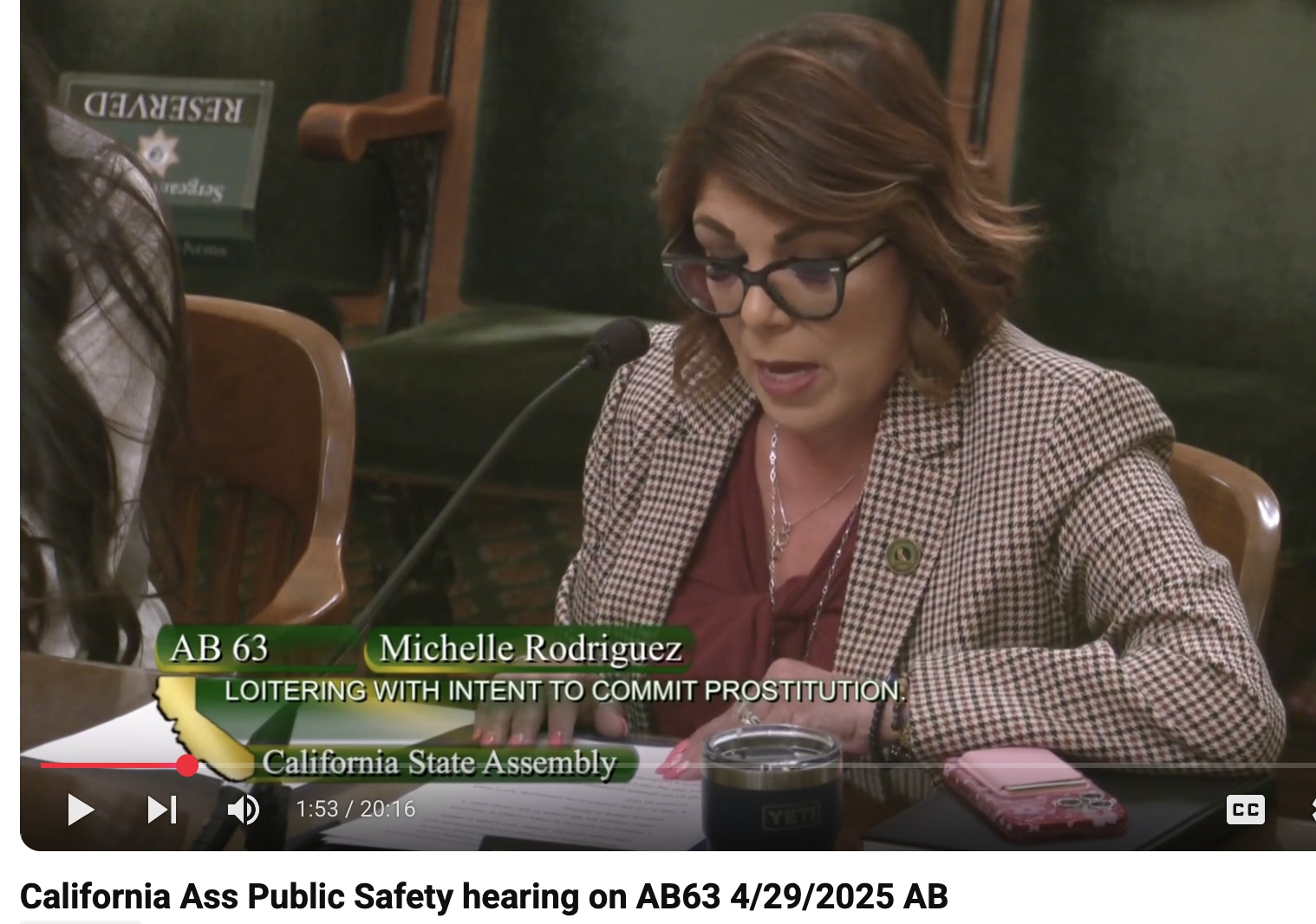
Even if you believe “your” state senators and assembly members who voted to put it on the ballot are smart, honorable people in whom you have full confidence, are you sure they read and understood the legislation before voting on it? To ask that question is to answer it – they vote on hundreds of bills a session and spend most of their time fundraising. It’s on you! Before you go along with letting government relieve you and your fellow residents of that kind of cash without their individual consent, shouldn’t you or someone you trust have first read the plan and understood it well enough to be able to explain what any of the language in it means if asked?
But if you don’t feel like doing all that work for no actual compensation (unlike the well-paid politicians, bureaucrats, and lawyers who generate this stuff) – and what sane person would? – there is a libertarian shortcut: Vote No.
Even if they’ve given it a really appealing title, like “The Public Preschool, K–12, and College Health and Safety Bond Act of 2020.” Even if you see a lot of slick fliers and TV ads telling you the great things it’s going to do. Just Vote No.
Don’t feel bad for rejecting the legislation without understanding it. If you can’t understand something, chances are there’s a lot of unsavory stuff hidden in those bits of legal sausage. Supporting a piece of legislation is saying you want it to be The Law™, which means that someone could be prosecuted for not obeying it – they could have their money taken or be put in jail or worse. Voting to potentially inflict that kind of harm on people without even understanding what you’re voting on is immoral.
And if studying a proposed law sufficiently to understand it would take an unreasonable amount of your time, you have no actual moral or civic responsibility to do so before rejecting it. The people who wrote it, or had it written, or voted on it, have no legitimate basis on which to expect you to understand it, and the reality is they don’t expect you to. Odds are most of them don’t really understand it either.
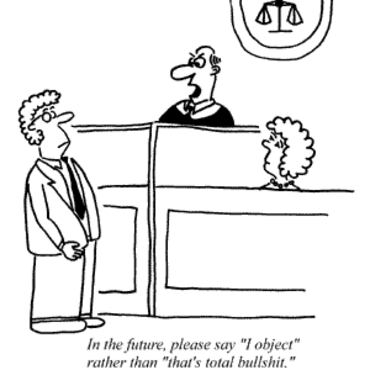
It’s not really written in English after all, but in another language whose meanings can be quite difficult to comprehend. Some call this language legalese or bureaucratese, but there is another more revealing term for the particular dialect found in lengthy pieces of legislation like this, and that term is bullshit.
Really grokking* this last point is something a number of Libertarians have achieved. It may lead to some deep epiphanies, among them:
• Maybe you aren’t meant to understand it; maybe that’s the point – “if you can’t dazzle them with brilliance, baffle them with bullshit,” as the coffee mug saying goes
• Master Bureaucrat credentials are kind of like Master Huckster credentials, they just involve specializing in and mastering different types of bullshit
• Hang on, why did I think employing large numbers of people at great public expense to immerse themselves in creating and processing bullshit was a good idea?
• Government is a scary bunch of bullshit, I should become an anarchist
Anyway, thank you for reading this considerably shorter and more reader-friendly column. Besides giving you a small head start on next year’s ballot questions, if it has in any slight way enhanced your insight into understanding government, then it has served its purpose.
And if you know of any high school or college teachers who might be interested in having someone come in and give their class(es) a “real world” talk on civics and American government based on this essay, please write and put us in touch with them!
* * *
*Science fiction writer Robert Heinlein invented the verb “grok” to describe understanding something deeply and holistically.