Tag: Libertarian Party

  • How Now, Ocean Beach Park?

    How Now, Ocean Beach Park?


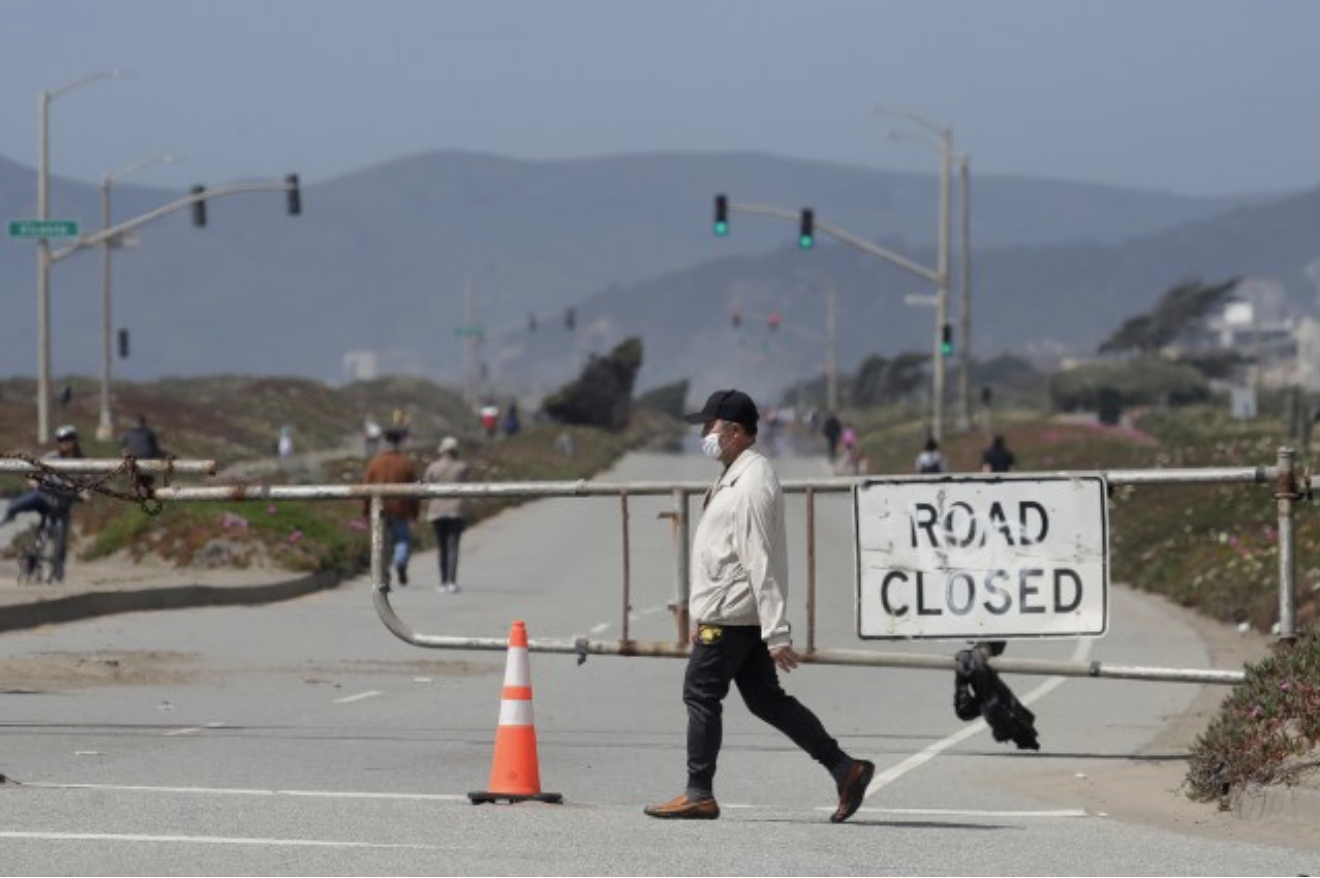
    So, Proposition K won. I didn’t vote for it, nor did most westside residents apparently, but it passed. The ballot measure promised to replace the stretch of the Great Highway from Fulton to Lincoln with a park. But it didn’t say what kind of park. So let’s think about this!

    San Francisco today suffers from a lack of imagination. Sure, people still do creative work here – the AI revolution bears witness to that. But when it comes to civic projects, we’ve gotten so used to letting government clog everything up with masses of regulatory red tape that we’ve forgotten how to dream big.

    This town used to be called “The City That Knows How” because they got things done. The improbable birth of “Baghdad by the Bay” in the first place – who could have dreamt, in 1845, that the Gold Rush would turn a barren, windswept peninsula of little more than 1,000 residents into the most important city west of the Mississippi? Later, San Francisco magnificently rebuilt itself, rising like a glorious phoenix from the ashes of the 1906 earthquake and fire. In 1915 and 1939, the city hosted two world fairs. They built two bridges and Treasure Island, along with a bunch of gorgeous buildings that shouldn’t have been torn down. But back then nobody cared – the thinking was, we’ll build something even better.

    So what are some creative possibilities for Ocean Beach Park?

    RV Park

    Let’s start modestly. There’s virtually nowhere to legally park a recreational vehicle in San Francisco. This is wrong. Many if not most of the RVs you see are inhabited by people who are one step from being homeless, having only their vehicles to live in. Yet the city harasses RV owners with tickets and tows if they don’t regularly burn the gas to pointlessly move them around. This summer, dozens of vehicles were “evicted” from two locations near the San Francisco Zoo. Why not let them park on this section of road that won’t be used any more? Let people build tiny homes there too, and invite food truck operators who are also made unwelcome in many locations, to create a mixed use residential and commercial RV park.

    Medical Enterprise Zone

    If they can build a platform off the coast of Gaza to unload relief supplies, why not off the coast of San Francisco? The sea lions would love it. Let the Mexican cartels do something more helpful than importing fentanyl. Give them a legal (or just decriminalized) place to dock their speedboats bringing in the good stuff: Magic mushrooms from Oaxaca, ayahuasca from Columbia, cheaper prescription drugs from Tijuana. You probably know someone who’s traveled abroad to buy drugs or obtain more affordable transgender surgery or other medical care. Those things could be provided in a special tax-free zone here, creating local jobs. Let the Great Highway be reborn as a medical business park and drug emporium.

    Playland 2.0

    As longtime residents know, there was once a full-on amusement park across from Ocean Beach north of Golden Gate Park. Playland at the Beach could be reopened with a Santa Cruz style boardwalk. We could even underground the highway and let cars travel beneath the park, like Tunnel Tops in the Presidio. While we’re at it, let’s give tourists more reason to come by rebuilding the old Victorian version of the Cliff House and reopening the Sutro Baths. Supervisors are finally getting serious (knock on wood) about bringing bathhouses back – doesn’t restoring the most famous one make sense?

    Worst case scenario?

    Ah yes, funding. City Hall has a whopping deficit, and the federal money spigot’s about to be turned off. So what better time for SF to re-learn how to accomplish things without State assistance? What’s the alternative, kiss Donald Trump’s orange you-know-what enough to get the gravy flowing again? (Actually his rear is undoubtedly white, not orange – not even the edges of his face are orange, if you look carefully.) But it’s kind of become his trademark color. What might politicians be tempted to do to make the Orange One forgive all? Rename the Golden Gate Bridge after him? It’s already orange, and he’d love-love-love having his name attached to such a world-famous landmark. His antipathy toward San Francisco would melt away like fog on a sunny day in the Mission district. There’s clear precedent, too – naming SF General Hospital after Meta mogul Mark Zuckerberg. If our gag reflexes can stomach that, maybe… But no. No! The “Donald J. Trump Golden Gate Bridge”? No subsidy would be worth such humiliation. Better a big, all-volunteer, Habitat for Humanity style community building project, am I right?

    Okay, maybe the practical solution is to forget all this and just put another proposition on the ballot to overturn Prop. K. And restore the iconic 49 Mile Scenic Drive by reopening the southern portion of the Great Highway for good measure. The way that’s being discussed is frankly embarrassing: “Oh well, coastal erosion is happening, nothing we can do, guess we’ve just gotta permanently close that stretch of road.” Nonsense. Look at Devil’s Slide in San Mateo county. Highway 1 is built into the side of a sheer cliff! Yet every time the road there washes out, they manage to get it reopened. Why can’t we figure out how to do the same where the land is relatively flat?

    But if we’re not going to do the sober, responsible thing, let’s have an Ocean Beach Park with a purpose. Get government out of the way, and as the fairies say, glitt’er done!

  • LPSF Ballot Recommendations

    LPSF Ballot Recommendations

    The Libertarian Party of San Francisco makes the following recommendations for the November 5, 2024 general election:
     

    BALLOT MEASURES
     

    Proposition A – NO.

    The Libertarian Party of San Francisco is the official ballot opponent of Proposition A. You can read our opposing arguments in your Voter Information Pamphlet or online at https://www.sf.gov/information/proposition-schools-improvement-and-safety-bond. This $790 million bond measure to fund a grab bag of San Francisco Unified School District spending priorities would have a total estimated price tag of $1.3 billion. That alone is a good reason to vote oppose Proposition A – it’s like running up credit card debt. You end up way overpaying for stuff. And they’re already overpaying, spending around $26,000 per year for each of the declining number of students enrolled in SFUSD schools. Not that all this money is actually making it to the classroom. The superintendent is paid over $300,000 a year. Other districts are spending far less and getting better educational results. To say nothing of independent schools and homeschooling – options that roughly one of every three school-age kids in San Francisco are availing themselves of, despite the fact that their families have to finance them on top of the money they’re already paying in taxes to subsidize sub-par government schools. Get your fiscal house in order first, SFUSD. Show us you can stand and deliver, before hitting taxpayers up for more cash!


    Proposition B – NO.

    Another bond measure, this one for $390 million. More to address the homeless crisis, as if throwing more money at homelessness is going to change anything. The “homeless industrial complex”, as it has been dubbed, will soak up that money as it soaks up the over $1 billion a year that San Francisco’s city government already spends to supposedly help people without a roof over their heads. And it would also fund other things government shouldn’t be involved with in the first place, like health care – specifically more money for SF General Hospital (which you shouldn’t refer to with the Facebook billionaire’s name, by the way, because doing so just encourages people with money to flush more of it down the toilet of government in exchange for a vanity or PR payout, when that cash could be put to better use elsewhere).


    Proposition C – NO.

    We were initially inclined to take no position on Proposition C, or possibly even see it as worth supporting. Having an “inspector general” in the Controller’s office tasked with investigating corruption sounds nice in theory. There never seems to be a shortage of it at City Hall. But we are always wary about expanding government. There’s also never any guarantee that increasing the size, scope, power, or money spent on a department or agency will be used the way you want or expect it to be used. The Briones Society argues against Prop. C as unnecessary on the grounds that all the powers it would invest in the inspector general are already possessed by other officials. But we’re not entirely sure of that. A troubling section in the legal text of the measure (which can be found online at https://www.sf.gov/sites/default/files/2024-08/legal%20text.pdf) describes the additional powers and responsibilities which the Controller’s Office would gain, as follows: “Further, the Controller may subpoena witnesses, administer oaths, and compel the production of books, papers, testimony, and other evidence with respect to matters affecting the conduct of any department or office of the City and County. The preceding sentence authorizes the Controller to compel testimony or production from any person or entity including but not limited to City and County officers and employees; persons or entities that have or are seeking a contract, grant, lease, loan, or other agreement with the City and County, and their employees or officers: applicants for or recipients of permits, licenses, land use entitlements, tax incentives, benefits, or services from the City and County, and their employees or officers; and registered City lobbyists. The Controller and employees of the Controller, including the Inspector General, may seek and execute search warrants to the extent permitted by State law.” Wording that apparently limits these new powers of subpoena, search, and seizure, is contained in the first sentence, the part that reads, “with respect to matters affecting the conduct of any department or office of the City and County”. But this language reminds us of the infamous “general welfare” and “interstate commerce” clauses in the U.S. Constitution. What does it mean, after all, to affect the conduct of a city government department? If for example, you are the recipient of a permit to do work on your home, does that give the Controller’s Office the legal power to come and search your home for evidence that you’re failing to comply with the conditions of the permit, unless state law specifically prohibits them from doing so? After all, the matter of what work is being done on your home can logically be said to affect a department’s conduct – if it’s the “wrong” kind in their eyes, the Planning Department may issue you a fine or require it to be removed. Or say there’s a city ordinance providing some kind of tax exemption to businesses with fewer than a certain number of employees – if your business reports that they have fewer than the required number of employees and claims the exemption, does this give the Controller’s office the right to come into your office and demand you produce papers proving that individuals they see or suspect of working for you are really independent contractors and not employees? Granting or not granting a tax exemption to a particular business would again be a matter of conduct. Think about how many other government agencies already have statutory mandates to investigate you or intrude into your life in different ways, and how their mandates have in many cases expanded over time in ways the agency’s creators’ likely did not envision. Controller Greg Wagner says in the Controller’s Statement on Prop. C in the Voter Information Pamphlet, that the measure would have only a “moderate impact” on the cost of government (maybe around $1 million per year). However given that his office would be granted additional powers and employees, he has a pretty blatant conflict of interest, and may be incentivized to downplay the possible or likely costs.


    Proposition D – NO.

    The city government has a lot of commissions, and this measure would cut their number in half. But commissions aren’t the real problem. Most of them have little power, and most commissioners get minimal pay and benefits if any, often just a stipend of a few hundred dollars a year (according to the Controller, the city paid a total of $350,000 for the stipends and health benefits of 180 commissioners in 2023. They don’t have armies of paid, unionized bureaucrats working under them. And they are more likely than city departments to be staffed by ordinary civilians rather than government careerists. According to the San Francisco Examiner says opponents characterize Prop. D as “the largest transfer of power and authority from the people of San Francisco to the staff of San Francisco since adoption of the 1932 city charter.” Proposition D would also remove oversight of the San Francisco Police Department from the Police Commission, giving the sole power to set rules for police officer conduct to the police chief. Policing is too important to be left to the police, and we’ve seen how poorly the tend to perform when it comes to policing their own. Chiefs tend to be authoritarian-minded officials who side with other officers against civil liberties and the public. The various commissions don’t always play a positive role, but sometimes they do, and they help ensure that independent amateur voices keeping the professional bureaucracy in check can be heard.


    Proposition E – YES.

    Proposition E is a rival measure put on the ballot in response to Proposition D. On its own, this proposal to simply establish a temporary five-member panel to look at streamlining the city’s commissions wouldn’t particularly excite us. But it’s not a stand-alone measure. The important thing to understand about Prop. E is that if it gets more votes than Prop. D, it will block the harmful provisions of that measure from taking effect. This is the real reason to vote for it. While it doesn’t guarantee the cut in the number of commissions that Prop. D does, Prop. E would enable any cuts to occur in a manner that avoids putting even more power in the hands of the mayor and weakening independent oversight of the police and other executive branch departments, as Prop. D does.


    Proposition F – NO.

    Contrary to what members of the “City family” (aka the governing class) and their strange bedfellow right-wing “tough on crime” allies would have you believe, San Francisco is not under-policed. The city has more police officers per capita than Paris did under the hated regime of Louis XIV right before the French Revolution (see https://lpsf.org/articles/2017-10-31-guarding-le-r%C3%A9gime-moderne). The argument that the SFPD has a “shortage” of cops is based on not meeting their goal of having 2,074 officers. But that was always an arbitrary number not based on any real data. The fact is that city is misallocating its police resources, including by having officers focus on things that should not be crimes, like drugs, prostitution, and other non-violent actions that don’t violate anyone’s rights. The new captain of the Bayview station recently revealed that he has two officers assigned full time to policing illegally parked recreational vehicles (in other words, hassling and ticketing the homeless, since most of the RVs parked on city streets are occupied by people who lack other housing). Many other officers can be seen engaged in various forms of public relations such as staffing booths at street fairs, providing excessive motorcades to visiting politicians, etc. The argument that they are overworked is belied by the fact that many officers voluntarily moonlight as private security for local businesses and events under the city’s “10B” program – a role that used to be more frequently filled by members of the independent, non-taxpayer-funded San Francisco Patrol Specials, until that organization was gutted by the SFPD, which saw it as unwelcome competition. Prop. F would allow longtime officers over age 50 to double-dip, getting the pension payments to which they would be entitled on retirement in addition to their salaries, in exchange for continuing to work. One SFPD officer already receives total compensation in pay and benefits of over $800,000 a year (see https://www.sfchronicle.com/projects/2024/san-francisco-employee-pay/). Dozens of other “emergency” personnel draw over $500,000 a year. If this measure passes, the number of officers in the “half a million dollars a year club” would expand significantly.


    Proposition G – NO.

    This measure would establish additional rent subsidies ostensibly reserved for some of the city’s poorest residents, to the tune of $8.25 million a year – or more – through 2046. But it’s not as simple or honest as just providing more money for housing on the basis of true need. Prop. G would exclude some of the extremely poor on the basis of age, family status, or disability status. And if you imagine thousands of elderly or disabled persons or families living homeless on the streets of San Francisco receiving “school choice” type vouchers that would at least let them “vote with their feet” and rent from whatever landlords are willing to offer the best deal, not a chance. As the ballot summary puts it, the Mayor’s Office of Housing and Community Development would administer the fund “by disbursing money to the owners of certain new and existing affordable housing developments”. In other words, this would be a giveaway to favored operators of already-subsidized housing (in today’s housing jargon, “affordable” no longer means “low cost”, but instead serves as a euphemism for “taxpayer-subsidized”). The ballot summary goes on to say that these payments “would subsidize the difference between the amount these tenants can afford and the rents the owner would otherwise charge”. Except as any economist would tell you, owners won’t necessarily charge the same rents otherwise. Just as government tuition subsidies have driven up the cost of higher education in recent decades – encouraging schools to charge more because they know students will be able to tap into taxpayers’ money to pay – the government rent subsidies that Prop. G would write into the city charter will put upward pressure on rents. Meanwhile, subsidized units in housing complexes owned by the government or transferred to management by non-profit groups under long-term leases have long been rife with problems. “Part of the reason why the Housing Authority no longer manages the properties themselves was because of a history of mismanagement of properties all over the city,” said one member of the Board of Supervisors quoted in a Mission Local article (https://missionlocal.org/2024/05/sf-management-tight-lipped-housing-scams-potrero-hill/). That article also details how a manager at one company put in charge of such a housing complex on Potrero Hill was allowing squatters to illegally occupy vacant units and charging them rent. Other news stories detail a laundry list of abuses by those overseeing housing on the government’s behalf, including failure to make needed repairs, harassment, and restricting when tenants can have visitors, even demanding those visitors show “valid ID”.


    Proposition H – NO.

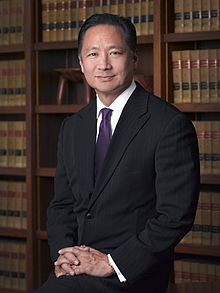
    The Libertarian Party of San Francisco is the official ballot opponent of Proposition H. You can read our opposing arguments in your Voter Information Pamphlet or online at https://www.sf.gov/information/proposition-h-retirement-benefits-firefighters. Firefighters want to be exempted from the same pension rules as other city government employees. These rules were put in place in 2011 by voters trying to keep the pension system from spiraling into bankruptcy. That year’s Proposition C was actually the weaker of the pension reform measures on the ballot – a stronger competing measure put on the ballot by the late Public Defender Jeff Adachi, one of the city’s few honest and admirable pols. Unfortunately his better alternative failed to get the nod after most of the local establishment opposed it. But Prop. C did at least make some modest changes to rein in the fiscal bleeding caused by unsustainable payouts to retirees. Overturning this mild reform sensibly voted in by nearly 70% of San Francisco voters over a decade ago in order to benefit a few privileged city government employees would be a mistake.


    Proposition I – NO.

    The Libertarian Party of San Francisco is the official ballot opponent of Proposition I. You can read our opposing arguments in your Voter Information Pamphlet or online at https://www.sf.gov/information/proposition-i-retirement-benefits-nurses-and-911-operators. We don’t think it’s fair to force members of the public to subsidize the retirement of others who are making more money than they are when it’s well known that most people don’t even have enough money set aside for their own retirements. Yet that’s what Proposition I would do. It would increase spending certain city government employees like per diem registered nurses (starting pay $200,000/year – https://careers.sf.gov/role/?id=3743990004718816) and 911 operators (starting pay $106,000/year – https://www.sf.gov/work-san-francisco-911) boost their pensions beyond the generous compensation that retirees are already slated to receive.


    Proposition J – NO.

    The Ballot Simplification Committee really dropped the ball on this one. Their ballot description states that a “yes” vote on Proposition J means “you want to amend the Charter to create an Our Children, Our Families Initiative to ensure that related funds are used effectively.” As if this was just about using tax money “effectively” – something nobody is against! – and not the big school spending increase that it actually is. According to the Controller’s statement, Prop. J would have “a significant impact on the cost of government of up to $35 million in FY 2024-25 and increasing up to $83 million in FY 2037-38”, by reallocating money that would otherwise be available to the general fund. And does the San Francisco Unified School District need this additional money? It has around 48,000 students, 8,000 employees, and a $1.3 billion budget. That translates to one employee for every six students, at a per student cost of over $27,000 per year. And yet somehow the district is deeply in debt and threatened with a state takeover. The SFUSD just appointed a new superintendent, Maria Su, a career bureaucrat who was formerly executive director of the San Francisco Department of Children, Youth, and their Families (no representation for their friends, pets, or deceased relatives?). Her predecessor Matt Wayne may have gotten the boot for having the temerity to make the sensible suggestion that with falling enrollment, the district needs to save money on overhead by closing some of its schools and consolidating, rather than maintaining skeleton staffs for smaller number of students spread among the same number of campuses. Don’t feel sorry for him though – he’s getting a “severence package” worth over half a million dollars. Su’s base salary will be $320,000 a year, just $5000 per year less than Wayne’s. Hopefully the decrease means they’re feeling the pressure not to just keep boosting administrator salaries, but in reality, especially given the school closures and enrollment numbers, a cut of just over 1% isn’t going to cut it either. The average school superintendent salary in California, according to ZipRecruiter.com, is $102,000 (https://www.ziprecruiter.com/Salaries/School-Superintendent-Salary–in-California). Meanwhile, the promised oversight to ensure any additional school funding would be used effectively is a joke. Along with city government employees, the new initiative that Prop. J would establish would be staffed by employees of the very same SFUSD receiving money via the intiative. No conflict of interest there!


    Proposition K – NO.

    This measure is nothing but red meat for people who hate cars – not even a solution, but a non-plan in search of a problem. Proposition K would overturn an existing compromise under which the Great Highway, the road that runs parallel to Ocean Beach along the city’s western edge, is open during the week but closed on weekends for pedestrian use, by closing the highway permanently and turning it into a park. However there are no actual plans or funding for such a park. Nor is there any obvious need for one, with Ocean Beach immediately to one side of the highway already being parkland, and Golden Gate Park, the city’s largest, on the other side. Paths for bicycles and pedestrians already run adjacent to the road, not to mention the pleasanter option to walk on the beach itself. The closure would divert a significant amout of auto traffic into nearby residential neighborhoods, forcing drivers to go out of their way and waste more time and fuel, as well as limiting beach access for the physically impaired and potentially delaying emergency rescues. None of this makes any sense, unless the real goal of Prop. K is to build condos, not a park, on the land, as some have speculated. But while San Francisco urgently needs more housing, and it makes sense for a lot of that housing to be built in the low-density western half of the city, a dishonest ballot measure closing a much-loved and needed road that’s an integral part of San Francisco’s famous 49-mile scenic drive advertised to visitors is in order to make room for a government developed mega-project is not the way to make it happen.


    Proposition L – NO.

    Members of the Board of Supervisors don’t think your cost of living is high enough. They want to ensure that (unless you’re one of the privileged elite) you only have the means to use city government transit, enroll your kids in low-quality government schools, etc. At least that is the conclusion one might draw from the effort by seven board members (Chan, Melgar, Preston, Dorsey, Engardio, Ronen, and Safai), to raise the cost of using a ride share service like Uber or Lyft by imposing a $ . Like the SFUSD (see argument against Prop. J), Muni is deeply in debt. According to Prop. L opponents, the transit agency owes $214 million. But they point out (see https://www.sf.gov/sites/default/files/2024-08/prop_l_-_official_opp_redacted.pdf) that the measure provides no details about how the new money would be spent, nor does it contain any of the citizen oversight protections (toothless as they may be) usually found in similar measures. Meanwhile, Jeffrey Tumlin, head of the San Francisco Municipal Transportation Agency (SFMTA), the department that runs Muni, is getting a salary of over $367,000 a year, with a total compensation package of over $465,000 (see https://transparentcalifornia.com/salaries/2021/san-francisco/jeffrey-p-tumlin/). Sound familiar? It should. It’s yet another example of the Government Greed that fuels what is basically the same story ever year – a never-ending push to take more money from the public, and the reason behind our opposition once again) to the vast majority of the measures on this year’s San Francisco general election ballot. Tumlin, by the way, is also spearheading a boneheaded plan to ban making all right turns at a red light in the city. This on top of championing unwanted street closures, and restricted lanes. Perhaps he thinks that if he makes driving in the city unpleasant and expensive enough, more people will take the bus, helping bail out his mismanaged Muni. Let’s not reward this failure to serve the public.

    Proposition M – NO.

    This is a complicated reshuffling of how the city government taxes businesses. While it’s less than obvious from a simple reading of its text what the results of Proposition M would be, again the Controller’s ballot statement on the expected fiscal impact of the measure (https://www.sf.gov/sites/default/files/2024-08/Prop%20M%20-%20Business%20Taxes%20-%20CON%20VIP%20Letter%20-%20Signed.pdf) is revealing. Controller Greg Wagner states that the measure would, after a slight delay, “generate additional revenue” (read: by lowering the revenues of the businesses that would be taxed, resulting in higher prices and lower wages) to the tune of an estimated $50 million per year. While he expects the changes would mean the city getting less revenue for the first few years, Wagner says that by 2028-2029, it would mean government taking in an estimated $50 million extra per year. With an annual budget of around $15 billion, bigger than those of many entire U.S. states, local government does not need to be taking yet more money out of the productive, voluntary sector of the economy. All Prop. M will do is increase perceptions of the city as a hostile climate in which to do business, and exacerbate the already notable trend of companies abandoning San Francisco, costing jobs and hurting the local economy.


    Proposition N – NO.

    If it’s unfair to force members of the public to subsidize the retirements of people who get paid more than they do, when they already cannot adequately fund their own retirements (see our argument against Prop. I), it’s just as unfair to force people to subsidize advanced education for those better-paid others, when they have not gone to college themselves. Proposition N would reimburse “eligible employees” up to $25,000 for student loans or professional-related education or training expenses. It would be one thing if an employer was requiring employees to get some kind of training, for them to cover the expense. But the education expenses in this case are voluntary. Employees are already financially incentivized to get such education or training so they can advance in their careers and earn even more money. That’s not something the general public needs to be paying for. Proponents may point to the fact that Prop. N only sets up a city fund, without requiring government to actually put any money into that fund, which they claim could receive private donations. But this explanation doesn’t pass the smell test. Either these giveaways to members of the “City Family” will end up being paid for with taxpayer money, or the fund will become another vehicle for special interest groups to make surreptitious donations in order to curry favor with political insiders. After all, there’s nothing stopping private donors from simply donating directly to the employees themselves now, without Prop. N.


    Proposition O – YES.

    While this is a mostly symbolic expression of support for abortion rights, which are not directly threatened in San Francisco, it could help protect the civil liberties of people from other states, and would set another positive precedent of refusing to cooperate in the enforcement of bad laws. Its fiscal cost would be minimal. Specifically, Proposition O would limit San Francisco city employees from cooperating with officials from places where abortion is criminalized, prohibiting information being released to them about people coming here to have abortions. In the wake of reproductive choice protections being eliminated by the U.S. Supreme Court overturning its 1973 Roe v. Wade decision, a wave of state-level restrictions have made it a crime to terminate your pregnancy in many parts of the U.S. Even before the 2022 Dobbs v. Jackson SCOTUS decision unleashed a new assault on reproductive freedom, it was difficult to get an abortion in many states due to existing restrictions and shortages of providers. In 2020, an estimated 81,000 people crossed state lines to obtain abortions; that number more than doubled to 173,000 by 2023 (see https://theconversation.com/crossing-state-lines-to-get-an-abortion-is-a-new-legal-minefield-with-courts-to-decide-if-theres-a-right-to-travel-238167). Now anti-choice activists are trying to close this loophole by passing new laws restricting the ability of people to travel out of state for an abortion or helping others to do so. The governments of Idaho and Tennessee have passed so called “abortion trafficking” laws to this effect, although they are currently held up in court, and several other state governments are weighing similar legislation. In response, other jurisdictions have been passing “shield laws” protecting the rights of women seeking to terminate their pregnancies, or others helping them do so. Proposition O would establish this type of protection for San Francisco at the local level.


    CANDIDATES

    There are unfortunately no Libertarian candidates on the ballot in San Francisco this year besides our presidential and vice-presidential ticket of Chase Oliver and Mike ter Maat. Since California adopted the “Top Two” election law in 2012, most alternative party and independent candidates have been prevented from appearing on general election ballots in partisan races, which has reduced the interest in seeking these offices. We wholeheartedly endorse Chase and Mike, and recommend a vote for the following non-Libertarian local candidates who seem to us the best or among the best in their respective races.

    DISTRICT ATTORNEY – Ryan Khojasteh
    BOARD OF EDUCATION – Ann Hsu, Min Chang
    MAYOR – Keith Freedman

    Due to a lack of local volunteers, we did not conduct a full screening and interview process for all the races on the ballot. If you’re a San Francisco Libertarian reading this, we encourage you to get involved next cycle and ensure we have enough activists working together to give this the attention it deserves.

  • LPSF Ballot Recommendations – March 5, 2024 Election

    LPSF Ballot Recommendations – March 5, 2024 Election

    Proposition (“Affordable” Housing Bonds) – NO  

    Here we go again. Another election, another tax increase in the form of borrowing money that taxpayers will be expected to repay – the least fiscally responsible way to fund stuff, since you have to pay a lot of interest on top of the actual amount you borrow. In this case, Controller Ben Rosenfield reports that the “best estimate” of the cost of borrowing $300 million by selling bonds would be “approximately $544.5 million”. Once again, proponents are playing dishonest word games to pretend that the bond measure is cost-free, claiming in their ballot argument that Prop. A “does not increase property tax rates”, even though the costs are right there in the controller’s statement, which notes that the cost for someone with a house valued at $700,000 would be approximately $55 a year.  


    Proposition B (Police Staffing) – NO

    It’s shameful how quickly some politicians have abandoned the calls for police reform they took up in the wake of the police murder of George Floyd in 2020, and have now gone back to carrying water for the powerful law enforcement lobby. One side in this fight wants to hire more cops immediately out of the existing budget at the expense of other programs and services, while they other side wants to use the supposed need for more cops as an excuse to raise taxes. The reality is they are both wrong. San Francisco does not need more police. The city already has more law enforcement personnel, per capita, than Paris did under the hated regime of Louis the XIV before the French Revolution. Contrary to what fearmongers want you to believe, violent crime in the city is significantly lower than it was in past decades. But it’s higher than it would be if the politicians would stop criminalizing people for trying to protect themselves, and respect our individual right to keep and bear arms as guaranteed by the Second Amendment.


    Proposition (Real estate transfer tax exemption) – YES

    Just about any tax reduction is good news, and the need to revitalize the downtown neighborhood by allowing vacant office buildings to be repurposed is severe enough that it’s gotten the mayor and some of the supervisors to rein in government greed for a change. While it wouldn’t Prop. C also has the admirable feature of allowing the Board of Supervisors to further reduce the transfer tax (but not raise it!) in the future, without special voter approval.


    Proposition D (Ethics) – NO POSITION

    When it comes to ethics measures on the ballot, we’re often reminded of the metaphor about rearranging deck chairs on the Titanic. This one will pass – they always do. Everyone claims they’re against corruption, at least until they get caught engaging in it. Yet the perennial problem of self-dealing doesn’t go away, because these measures never address the fundamental issue – government has too much power, which draws money and lobbying from those trying to get politicians and bureaucrats to use that power, and the stolen taxpayer money at their disposal, to benefit them and their interests, the way a big steaming pile of cow manure draws flies. While Proposition D might do some good on the margins by closing off a few avenues for city officials to enrich themselves at the public’s expense, it does nothing to rein in State power. As long as the excessive power over the economy and people’s lives is there, money will continue flowing into politics the way water flows downhill, routing around whatever obstacles are placed in its path. We also wonder what politically correct DEI type indoctrination may be bundled into the “ethics training” the measure would require city officials to undergo, although on the bright side, every hour they spend sitting around listening to lectures on ethics is an hour less to spend potentially engaged in other more harmful activities such as writing up new laws and regulations violating other people’s rights.


    Proposition E (increased police powers) – NO
    The way the ballot description for this measure opens is really misleading: “Shall the city allow the Police Department to hold community meetings before the Police Commission can change policing policies…?” What’s wrong with having more public input, right? But Prop. E’s presentation is deceptive, because whether or not there are community meetings about proposed changes in SFPD policies is not what’s at the heart of this measure. What it’s really about is expanding police powers at the expense of civil liberties. Adding more surveillance cameras, drones, and other intrusive new technologies to monitor and spy on the public, including at political protests. Letting police engage in high-speed car chases of suspects even if it endangers pedestrians and other members of the public (as such chases often do), etc. If you understand that we already live in too much of a police state, and that going further down this road will ultimately make all of us LESS, not more safe – as we hope Libertarians do – opposing this measure is a no-brainer.


    Proposition F (Making people get drug tested to receive welfare) – NO
    As long as the right to choose what you put into your own body is being wrongfully criminalized, a measure like Prop. F that adds new government policies further stigmatizing the use of banned substances is a step in the wrong direction. Government welfare is bad enough to begin with – it relies on stolen tax money and typically fosters a culture of dependency on government among recipients, often with rules that create perverse incentives for people not to work (e.g. paying them less if they get jobs). But when it starts to involve attempted social engineering by the State, it takes on a more sinister character. You may like the idea of incentivizing people to stop abusing drugs, but once the precedent of government discriminating against people whose lifestyles those in power don’t approve of is established, will you like it when you find yourself ineligible for various things your taxes have paid for because something you do is deemed to no longer be “politically correct”? Like, say, being denied health care benefits if you have “too much” screen time? If tax-funded welfare has a legitimate purpose it is a humanitarian one, not turning the state into a de facto church that punishes you for various perceived “sins”.


    Proposition G (8th grade algebra) – NO POSITION

    Libertarians generally favor the separation of School and State, and would like to see government get out of the education business altogether. So tinkering with the details of the curriculum in government-run schools doesn’t greatly excite us. Prop. G isn’t even a binding measure, but would simply put voters on record asking the school district to overturn its decision to stop offering algebra to 8th grade students (a subject it now offers only to those in high school, which proponents say harms those seeking to pursue a college prepratory focus on STEM (Science Technology, Engineering, and Math) that includes higher math classes in subjects like calculus. Our opinions about the value of algebra vary, but we generally support students and families having more educational choices. On the other hand, the most meaningful and positive educational choice they could make is getting their kids out of government schools. To the extent these schools fail to adopt reforms that ameliorate parental concerns and prompt more families to exit the SF Unified School District, this could be a positive outcome. Yet we’re reluctant to embrace this kind of cynical strategy of hoping things get worse in the short run.

  • Vote Tuesday June 7, 2022!

    Vote Tuesday June 7, 2022!

    LPSF Ballot Measure Recommendations

    Prop. A (public transit bond) – NO

    Anyone familiar with libertarian thinking know we dislike bond measures, and this year’s Prop. A is no exception. They are a form of tax increase, despite politicians’ efforts to disguise this reality by engaging in a fiscal shell game that keeps property taxes at a permanently inflated level rather than allowing them to decrease when previous bond borrowing is paid off. And due to the costs of interest and servicing the bonds, they are an extremely inefficient way to spend, with each dollar borrowed costing as much as twice as much. As former judge and supervisor Quentin Kopp writes, “the sponsor (MTA) ignores the controller’s statement that interest on the 30-year bond will approximate $600 million. That is borne by homeowners who usually pay double the voter-approved debt, thanks to compounding interest.” Renters will also pay, in the form of pass-throughs raising their rent. And as Kopp also notes, a 2008 court decision effectively removed responsibility for the money to be spent as advertised. Even if it were, if just throwing more money at Muni were capable of fixing the chronic problems with the local government transit monopoly, they would have been fixed long ago.

    Prop. B (Building Inspection Commission reform) – NO POSITION

    This measure purportedly reacting to corruption scandals at the Building Inspection Commission fails to address the fundamental problem, which is that government has too much discretionary power to block or allow development. While reducing the professional qualifications necessary to serve on the commission could marginally diversify the body and reduce its domination by industry insiders, the legal language of the measure is opaque, and it doesn’t appear to do anything significant.

    Prop. C (make recall elections harder) – NO

    Despite our opposition to Prop. H (see below), recall elections are in general an important tool in the voters’ toolbox for holding politicians accountable. They are another form of term limits, essentially allowing voters to demand an early election. The successful recall of school board members in February would not have occurred if the narrow time window mandated by Prop. C had been in effect.

    Prop. D (create new Victim/Witness Rights Office) – NO

    Politicians love to come up with new programs and agencies. It gives the appearance that they are doing something new and concrete to bring about positive change. Certainly doing more to protect victim and witness rights sounds good in theory. But why can’t existing agencies like the SFPD and the district attorney’s office that provide victim and witness services simply reform their practices and coordinate their operations to be more helpful to victims and witnesses of crime without expanding the bureaucracy by creating an Office of Victim and Witness Rights as yet another government department? The official Voter Information Pamphlet argument against the measure points out that the planned new office is tasked with producing “an annual survey, an evaluation plan, and a consolidation plan” without “directly improving victim and witness rights” – in other words “a lot of bureaucracy, without a lot of new services.”

    Prop. E (further restrict behested payments) – YES

    The term “behested payments” may be new to you (it was to some of us), but it refers to an old form of corruption: Politicians and government officials raising – some would say extorting – donations from lobbyists, permit “expediters” or interest groups fearful of saying no lest the money or favors that they rely upon government to provide will be withdrawn if they don’t pony up. Giving directly to government officials at the behest (request) of those officials is mostly prohibited already, but this measure would further make it illegal for members of the Board of Supervisors to seek money from contractors whose contracts they had voted to approve – i.e. closing an obvious loophole that invites corruption. The YIMBY group Grow SF complains that Prop. E “would make it impossible for the city to work with philanthropic organizations” (a frank admission that local government works with these groups in the first place only so that politicos can extort money from them?) While their “impossible” language is an exaggeration, given that philanthropic groups do more good acting on their own than entering into “public private partnerships” with government that often reek of cronyism, making such collaboration more difficult sounds to us like a reason to support Proposition E.

    Prop. F (weak garbage collection reform) – NO

    Recology (nee Sunset Scavenger) is backing this “reform”, which tells you most of what you need to know about how much of a reform it really is. In the wake of revelations about the company having overcharged San Francisco ratepayers to the tune of almost $95 million, and its employees having been involved with bribing corrupt former Department of Public Works head Mohammed Nuru, both of which Recology admits, it is a measure of the longstanding trash and recycling monopoly’s clout that it is not employees were bribing the corrupt head of the Department of Public Works, Mohammed Nuru (now facing charges).

    Prop. G (paid sick leave for air quality) – NO

    This one is a business- and job-killer. Employees whose jobs are classified as substantially outdoors would get a new legal privilege to take up to two weeks of paid sick leave a year on days when a government agency says that local air quality is poor. As the economy has struggled to cope with and recover from government Covid lockdowns and restrictions, the public has gained a new appreciation for the complexity and fragility of supply chains, and what the result can be if, say, one baby formula plant unexpectedly shuts down. A mandate like that of Prop. G would throw additional monkey wrenches into those supply chains.

    Prop. H (DA Chesa Boudin recall) – NO

    While recalls of politicians are more often than not deserved, this case is an exception. The Libertarian Party of San Francisco urges voters to oppose Proposition H, the ballot measure in the Tuesday, June 7 election that would recall SF district attorney Chesa Boudin.

    Boudin was narrowly elected (with LPSF support) in 2019 over the candidate appointed by the mayor and backed by the police union. A progressive prosecutor, he is by no means perfect from a pro-freedom perspective. He has, for instance, sought to sue manufacturers of so-called “ghost guns” for crimes committed with those guns, which is as silly as suing manufacturers of ballpoint pens over letters written with those pens.

    Nevertheless, he is the only SF district attorney in living memory, if ever, to take criminal justice reform seriously by holding police officers accountable for their misconduct as other individuals would be, pushing to end the discriminatory use of cash bail that often results in defendants who don’t pose a risk to the community sitting behind bars pending trial simply because they cannot afford release; de-prioritizing the prosecution of victimless so-called “crimes” involving things like drugs and prostitution; and seeking to reduce the expensive and failed warehousing of criminals in a system of mass incarceration, in favor of a more victim-centered “restorative justice” approach.

    This understanding and approach have made him a committed enemy not only of the SF Police Officers Association – the local monopoly SFPD union that rarely sees a meaningful reform it likes or an abusive cop whose actions it isn’t willing to defend – but of the “law and order” crowd generally. Those who still favor the traditional “lock ‘em up” mentality, including many career prosecutors who undermined the DA’s office by quitting after Boudin’s election rather than embrace a reform agenda, can’t stand that SF’s top prosector has disrupted the office’s previously cozy relationship with the police and adopted a more appropriately neutral stance.

    Government police did not even exist in the United States until the 19th century. They were not part of the vision of the constitutional founders, who generally feared standing armies and would have been horrified by many of the laws under which people are routinely incarcerated in this country today. Well-informed Libertarians and fellow freedom lovers understand that law enforcers and prosecutors are the enforcement arm of Big Government. Without the threat of violence and kidnapping, all the other immoral and unconstitutional State regulations and controls on the lives of people who are harming no one would be moot. In an environment with so many unjust and unconstitutional statutes on the books, calls for more police, more prisons, and harsher sentences are profoundly at odds with the libertarian belief in limiting government power and upholding individual rights.

    While we empathize with San Franciscans upset about lack of respect for property rights in this city, this is a longstanding problem that has far more to do with anti-business and anti-development policies enacted by establishment Democrats than it does with anything the DA’s office has done. Going after homeless people for “quality of life” infractions has further proven ineffective and burdensome to taxpayers. And as Joe Eskenazi has reported in Mission Local, the SFPD’s clearance rate in making arrests for reported crimes has dropped to its lowest level in decades, making the question of whether police are “engaging in a wildcat strike or simply underperforming” a “difference without a distinction”. Indeed SF police have gone so far in trying to undermine Boudin that in a recent successful sting by his office that busted an auto theft rin, his office had to reach out to the Feds for logistical support normally provided by the SFPD. We would be unlikely to support someone with Boudin’s views for mayor or supervisor, but as district attorney he is about the best that San Francisco is realistically going to get, given current political realities.

  • March 3, 2020 Ballot Recommendations

                Longtime freedom-oriented observers of politics in the City by the Bay won’t be greatly surprised that exactly none of the local measures on the March 3 ballot are worth supporting. The Libertarian Party of San Francisco recommends voting NO on all five. Here’s some brief thoughts on why:


    Proposition A – $845 million City College “Job Training, Repair and Earthquake Safety” bond

    According to a faculty union representing teachers at City College, spending on administration has grown to comprise 10% of the school’s personnel costs, up from 7% just five years ago.

    An October bulletin published by the union describes how students, teachers and community members recently had to “push back on exorbitant raises” for top administrators, “including a proposal to compensate Associate Vice Chancellors at $275K/yr.” Meanwhile, City College enrollment is down from 90,000 in 2011-2012 to 65,000 today, according to a piece by Marc Joffe of the Reason Foundation. “With so many San Franciscans living on the streets, investing in educational infrastructure seems to be an especially odd priority,” he writes. We agree. Vote NO on Prop. A.

    Proposition B – $628.5 million “Earthquake Safety and Emergency Response” bond

    Another massive tax-and-spend measure in the name of “safety”. San Franciscans have already voted time and again to appropriate money for earthquake preparedness and emergency services. Just last year voters adopted a $425 million bond measure billed as protecting the city from flooding and earthquakes. As with all bond spending, this measure is wasteful – the controller estimates that borrowing $628.5 million will end up costing taxpayers over $1 billion by the time the principal is repaid with interest to the companies financing the bonds. A nice deal for Wall Street financiers perhaps, but not so great for overtaxed residents including tenants, who could see up to half the cost of the measure passed along to them in the form of higher rents.

    Proposition C – Retiree Benefits for Former SF Housing Authority Employees

    The Housing Authority is a local agency, but has been funded by the federal government. Now some former SFHA employees are being hired by the city government. This measure would make them eligible for city government retirement benefits based not just on their time as municipal employees, but also based on the years they spent drawing federal government paychecks. This sounds like a recipe for double-dipping, and most government employees are already over-compensated compared to people doing similar work in the voluntary sector. Increasing government employee compensation also means stealing more money from the taxpayers to pay for it. We say Vote NO.

    Proposition D – Vacancy Tax

    This measure would tax owners of commercial storefront property for allowing it to sit vacant, incentivizing landlords to rush to fill leases quickly rather than taking the time to consult with community members and groups and seek out tenants who are a good match for their neighborhoods. The usually statist editors of the Bay Area Reporter newspaper correctly point out that retail vacancies are growing nationally “as a result of the convenience of online shopping, competitive prices, and speedy delivery”, and that “the challenges of doing business in San Francisco” , among them “bureaucratic red tape and a protracted permitting process, onerous taxes, scarcity of workers” make the problem even worse here. They note that instead of “doing the hard work of cutting the red tape that frustrates and discourages businesses from operating in our neighborhoods,” the Board of Supervisors “punted and placed Prop. D on the ballot.” We agree – please vote NO.

    Proposition E – Limits on Office Development

    This measure would limit the amount of office space that can be built in San Francisco unless the city government meets its goals for the development of “affordable” housing. More housing is urgently needed, but development of new office space should not be held hostage to this need. Creating laws like this based on guesses about what future needs will be is a bad idea. Limiting creation of office space will also pave the way for politicians to hand out special exemptions based on political favoritism and corruption. One such loophole already built into the measure would allow new office space development in exchange for affordable housing being built off-site, but would require such off-site housing to be located “within an economically disadvantaged community”. In other words, new housing for poor people would have to be located in places where poor people already live, further reinforcing the de facto segregation of the city into poor and wealthy areas, as driven by past government policies like redlining, rather than allowing market development to happen organically. Vote NO on Prop. E.

    Aside from voting to oppose the ballot measures, the LPSF also voted to support three candidates in this election:

    Starchild for State Assembly (write-in)

    Such is the lack of democracy in this largely one-party town that incumbent Assembly member David Chiu was the only candidate to fill for his District 17 seat that comprises the eastern half of San Francisco, leaving an opening for a write-in candidate to run in the primary and automatically appear on the November ballot without having to feed the State by paying a filing fee of hundreds of dollars. LPSF chair Starchild decided this was too good an opportunity to pass up, and decided to collect the signatures needed to be that candidate. The erotic service provider and freedom activist says the core of his campaign message will be the idea of a consent-based society in which government does not tell people what to do with their own bodies and resources, and you can live your life as you choose so long as it does not involve initiating force or fraud against others. “Consent is not just about sex, it matters in every aspect of our lives,” Starchild asserts. He also pledges to champion the rights of homeless people, immigrants, sex workers, independent and homeschool families, the kink and poly communities, people in the cannabis and psychedelic communities, and others who have been marginalized and harmed by the statist quo, while cutting the 6-figure salaries and lavish benefits of those in government who are profiting off the backs of the poor and the victims of government taxes and fees.

    Maria Evangelista for Superior Court Judge

    Like newly elected district attorney Chesa Boudin, Maria Evangelista is a public defender who has worked at the award-winning SF Public Defender’s Office built by the late Jeff Adachi. Her opponent, by contrast, is a former prosecutor. In a criminal justice system that has given the U.S. what is widely reported to be the highest per capita incarceration rate in the world, we need more judges whose background is in trying to keep people out of jail, rather than trying to lock them up. Evangelista’s parents emigrated from Mexico to work as farm workers and took refuge here in San Francisco as undocumented migrants, and her mother collected recycling to help make ends meet, so she has first-hand experience of being poor and on the wrong side of the authorities, if not the law (the Feds actually have no constitutional authority to criminalize or regulate who migrates to the U.S., only the process of becoming a citizen). “Every day I see how our courts have failed to meaningfully address homelessness, car break-ins, and violence”, she writes. “Everyday I see how the courts are disproportionately arresting and imprisoning people of color. We are stuck in a cycle of catch, imprison and release.” It is notoriously difficult to find solid information on the policy positions of candidates for judge, but from her background we believe Maria Evangelista is likely to be the more pro-freedom candidate in this race, and recommend Libertarians support her for Seat 1 on the Superior Court.

    John Dennis for Congress

    There was some dispute in our ranks as to whether we should be recommending a vote for a Republican in a partisan race, but John Dennis has a history of engagement with the freedom movement dating back to Ron Paul’s first campaign for president back in 2007, when he walked the streets alongside many of us canvassing for the libertarian Republican and lifetime Libertarian Party member. A plurality of our committee felt that history, and his positions aside from some regrettable stances on immigration and homelessness, make him a more pro-freedom choice than establishment incumbent Nancy Pelosi or any of her other challengers. John is against overseas wars and in favor of cutting Pentagon as well as other government spending, auditing the Federal Reserve, a return to sound money, and reining in warrantless spying on Americans by the federal government. While we cannot endorse candidates of other parties, we recommend a vote for John Dennis for Congress in District 12 as the best choice in a race without a Libertarian candidate.

    *       *       *

  • 5 Practices For Being An Effective Libertarian Activist

    5 Practices For Being An Effective Libertarian Activist

         Here are a few insights I’ve found in my time as a libertarian (pro-freedom) activist which I consider valuable and thought I’d share in the hope that others may find them useful…

    • If you find yourself debating or arguing with someone (in person, online, or wherever) whose stance in the conversation is more pro-freedom on the particular topic or issue being discussed than yours, change the topic or leave the conversation. If you want to debate that issue, go find another conversation in which the person or people you’re debating are less pro-freedom on it than you are. In this way, you can ensure that your advocacy is on the side of freedom, not against it.

    • Think about your life in broad terms and consider what you can do to share libertarian ideas and advance the cause of freedom. What talents or connections do you have that you can share with the freedom movement which would be helpful in spreading the message?

    • Ask yourself where in your life you can make a difference in terms of influencing where money goes (your own or others’) and how that spending could be altered to create a more positive outcome for freedom, whether it is directing resources toward businesses, organizations and individuals that support or are beneficial to the cause, or withdrawing resources from those that don’t/aren’t. Make preparations to also seek a more positive outcome for freedom for whatever resources you expect to leave behind when you skip off this mortal coil, especially if they are significant and you expect to do so in the not distant future.

    • For each libertarian (pro-freedom) organization you are part of, strive to spend at least as much time communicating with your colleagues in the organization about freedom, philosophy, activism/outreach outside the organization, and events in the world, as you do communicating with them about the politics or operations of the organization itself or interpersonal conflicts/issues that arise – this will not only keep your own efforts focused on actually advancing freedom, but help keep our movement’s groups focused on that purpose as well.

    • Keep some libertarian (pro-freedom) materials (e.g. literature, stickers, rubber stamps, buttons, petitions to sign, Nolan Chart cards, etc.) with you as often as possible, and as you go about your day, be on the lookout for places to distribute these materials and opportunities to share them with people.

         Be creative in thinking about the opportunities to help freedom that may exist for you within each of these bullet points, and may the Non-initiation of Force be with you!   🙂

  • Confucius, Sprint & The State

    Confucius, Sprint & The State

    The philosopher Confucius was reportedly once asked what he would do if he were a governor. He responded that he would first “rectify the names” to make words correspond to reality, for “If language be not in accordance with the truth of things, affairs cannot be carried on to success, proprieties and music do not flourish.”

        I’m not precisely sure what the ancient Chinese sage meant by that, or what examples he may have had in mind, but I’ve thought one possible interpretation of this quote is that language must not be allowed to be abused in such ways that speech grows full of dishonesty and contradictions, or else there won’t be a basis for efficient human action. Perhaps a kind of social equivalent to how free market economists talk about State central planners not being able to efficiently run an economy because they do not have access to accurate price signals.

        These thoughts were provoked by an ad for Sprint cellphone service that I heard earlier this evening. In the ad, a man comes on and says something along the lines of, “Oh great, another wireless ad. You’re probably sick of all these phone ads with all their confusing terms about their networks and offers and blah blah blah. But Sprint is going to do something different.” Then he quotes a monthly price and basically says if you don’t like it after a month you can have 100% of your money back, guaranteed. A few more details are conveyed in a similarly reassuring tone.

    (more…)

  • Where Good Ideas Go To Die

    Where Good Ideas Go To Die

    It’s common knowledge that San Francisco has thousands of homeless people living on the streets and a shortage of not just housing, but even temporary shelter space. San Francisco also has a government-run school system that includes over a hundred schools occupying public space, each with multiple buildings that are vacant and unused at night.

    At some point, someone – probably multiple someones, perhaps even including yourself – may have thought, “Instead of having people without homes out on the streets, at risk of illness or death from exposure, crime, etc, and without places to practice proper sanitation and hygiene, or spending a bunch of taxpayer funds building new shelter facilities, why not let some of the homeless in these unused existing public facilities, where they will be safe and can have access to restrooms and showers?”

    As you may or may not be aware, this is not a hypothetical. Not only was this idea contemplated, it has actually been put into effect as a government program – well, sort of. So how is that working out for us?

    To begin with, the idea was pared way back, limiting the number of people likely to be helped by it. Rather than making space available after hours at government schools in different neighborhoods across the city, the program was limited to a single school, Buena Vista Horace Mann (BVHM), a Mission district kindergarten through 8th grade school located at 3351 23rd Street.

    Then the program was further limited to serving families with children attending that particular school, with assurances to this effect presumably intended to pacify neighborhood and school community xenophobes.

    Did I say xenophobes? Sadly, yes.

    Fear and hostility toward outsiders, people who aren’t here now, aren’t part of the “in group” isn’t just a thing with Donald Trump and his supporters – it’s also a local thing here in SF. Especially (at both the national and the local level) if those outsiders happen to be poor.

    City officials may be regretting those assurances however, because now – after reportedly sinking money into startup costs such as putting in new showers (did the school previously lack showers for students using the gym? were those showers not good enough for homeless people?) – they say they can’t continue the program unless they expand it, because not enough homeless families with students at Buena Vista Horace Mann are applying.

    Did I say applying? Sadly, yes.

    You might think that something like making BVHM’s gymnasium available after hours to homeless families needing a place to stay for the night would be pretty straightforward: Somebody shows up with kids needing a place to sleep for the night, you let them in. Hardly even worthy of being called a “program”. When I let friends or others crash at my place, I don’t call it a program, and there is no application process – people just ask me. But when it comes to government, nothing’s ever so simple. Government is where good ideas go to die.

    Here’s how the “program” is actually working (or not working):

    “Interested families usually begin the conversation by saying they are running out of housing options and they were told the school has a shelter,” writes reporter David Mamaril Horowitz in the bilingual Mission-area newspaper El Tecolote. “They first speak to Chandler”.

    That would be Nick Chandler, the schools’s social worker. According to El Tecolote, he then “vets” these families and “forwards them to Dolores Street Community Services” (DSCS). Why DSCS? Because they are the non-profit organization managing the “shelter”. You might think the school itself should be capable of managing the task of allowing students from its own student body, and their families, to use its own gymnasium, but you are not thinking like a government bureaucrat.

    DSCS’s Mayra Medel-Sanchez is the project’s program manager. You might assume that title means she’s in charge of designing and planning the program. You would be wrong again. They have a separate person for that, one Saul Hidalgo.

    Both Hidalgo and Medel-Sanchez defended the program to El Tecolote (surprise, surprise). But then again, who are they not to have an opinion, when on any given day they may comprise a double digit percentage of the program’s direct beneficiaries?

    That’s right – since it was opened as a shelter in November, according to a critical March 1 story by Jill Tucker and Trisha Thadani in the San Francisco Chronicle, the gym at BVHM has had “an average occupancy of less than two people per night”.

    Tucker and Thadani didn’t get that information from the program’s managers, according to the story, but from yet another individual being supported by tax dollars to “help” the homeless – Department of Homelessness and Supportive Housing director Jeff Kositsky. (Kositsky’s salary of $205,000 a year is presumably not factored into the reported cost of the program – more on which shortly.)

    Although the facility fails to attract any homeless individuals several nights a month, Kositsky said that doesn’t mean it’s completely empty at these times. “Shelter workers are on-site seven nights a week and through holidays, whether anyone shows up or not,” he told the Chronicle. Must be a tough gig!

    The total number of families who’ve used the “shelter” since it’s been open? Five, according to the Chronicle. Seven, according to Nuala Sawyer in SF Weekly, who took the daily paper to task for “implying it’s a failure”. “What may need to happen is a reframing of the program,” Sawyer opined.

    Meanwhile, according to the Chronicle, the city government is paying Dolores Street Community Services $40,000 a month to manage the program (wrong, it’s only $37,000 a month, says SF Weekly). Either way, this doesn’t include any program-related outlays or other costs incurred by Buena Vista Horace Mann school or the city government, such as the aforementioned startup costs. (I couldn’t find an estimate of those costs; Sawyer reports the new showers were “donated with pro bono work”, although by whom, or why, and whether there were any other costs involved, she doesn’t say.)

    This means that for the three-month period of December through February, taxpayers have shelled out a bare minimum of $111,000, and probably significantly more, so that between five and seven families have been able to spend some time sleeping on the floor of a gymnasium.

    Perhaps in future months administrators could instead consider putting homeless families up at the Ritz-Carlton or the Four Seasons, where they could have full access to the hotel’s concierge service to connect them to local resources? With monthly rates at these hotels, they might be able to save some money.

    But in government it’s all about perceptions, so Sawyer’s proposed “reframing” is a more likely outcome for what responsible (or irresponsible, depending on your point of view) parties are calling the “Stay Over Program”. What would this involve? Essentially “keeping people out of the gym’s shelter” rather than getting them into it. If that sounds odd, it is not without precedent – government has long been paying farmers not to grow food, and there is the famous, if possibly apocryphal, story of the U.S. general in Vietnam who explained how they had to bomb a village in order to save it.

    In seeking to continue the program, BVHM principal Claudia DeLarios Morán, program manager Medel-Sanchez, Sawyer, and others, claim the number of families who’ve been sleeping in the gym doesn’t tell the real story. The real benefit, they assert in so many words, has been getting people into other government programs.

    “All participants in the program register with the the city’s Mission Access Point, which enters them into the city’s homelessness response system and makes them eligible for its services. They are also able to meet with a case manager who provides counseling and guides them to resources,” program manager Medel-Sanchez told El Tecolote.

    The paper reported that 59 Horace Mann families (out of an initial 64 that SF Weekly says were identified as “housing insecure”) have spoken with Chandler, and at least 26 have “received case management”.

    Once families show up at the shelter, they “receive support and services from trained professionals who have the connections to get them help,” DeLarios Morán told SF Weekly. That wasn’t happening previously, she said. “This is a level of coherence we’ve never really had before.”

    Since the families had already been identified, you might think that much could have happened without the need to pay a non-profit group tens of thousands of dollars a month to run a shelter that few of them apparently wanted to use. But again, you would not be thinking like a bureaucrat – remember, these are “trained professionals”.

    Supervisor Hillary Ronen, who initially championed the idea in Spring 2018 along with DeLarios Morán and in whose district this is all taking place, said the program won’t be continued unless it can be made more cost-effective. For the number of families involved, it “doesn’t make any financial sense,” she admitted to SF Weekly. “We might as well buy a condo for that amount of money,” she said. Yup, or failing that, give the Ritz-Carlton a call.

    Along with pretty much everyone else quoted by the media with the exception of the NIMBYs, Ronen favored expanding the program to allow the families of students attending other schools in the district to participate. On March 12, members of the SF Unified School District’s Board of Education, aka the school board, agreed, unanimously voting to do what common sense suggests should have been done in the first place. At a minimum, that is – I’ve seen no explanation for why homeless people not related to SFUSD students, whose taxes after all help pay for those government schools, shouldn’t also be allowed to participate. In any case, the “Stay Over Program”, rather than being slated for shutdown on June 30, got a new lease on life.

    The NIMBYs aren’t without some wisdom of their own, however, even if their motives may be less than pure. “This is not to me a success,” BVHM parent Johanna Lopez Miyaki told the Chronicle. “Why didn’t they ask those 60 families what they needed? Why didn’t they ask the 60 families if they wanted to sleep on the gym floor?”

    An estimated 2,200 students in the SFUSD “cope with homelessness or housing insecurity”, according to the El Tecolote article. But how many of their families will be willing and able to deal with the bureaucracy around the program in exchange for the dubious priviliege of accessing a mattress on the floor of a school gym when needed? That remains to be seen.

    But let there be no confusion on this point: Letting homeless people sleep in a government school at night, which school board member Mark Sanchez noted is probably a first in the country, is not the problem, just as the problem with California’s Proposition 64 was never the idea of legalizing cannabis – as with Prop. 64, the problem is all the government BS that has come with it.

    Now that it has been expanded, if not yet reframed, will this comi-tragic effort manage to morph into something both useful and reasonable, as those who conceived it presumably intended, or will their good intentions be once again defeated by the nature of government, its non-profit patronage system, and the Lennon Rule* as the program matures into an even larger and more wasteful boondoggle?

    Stay tuned…

    *”Everything the government touches turns to shit.”
    – John Lennon

  • Our Defender, Jeff Adachi

    Our Defender, Jeff Adachi

    Last month San Francisco lost one of its best leaders, perhaps the only elected official in the city truly worthy of that description.

    “Prosecutors, with near unlimited resources and the full backing of the government, are trying to take away a citizen’s freedom. That’s a big deal and something we want to get right,” he wrote in a 2014 op-ed piece in the Sacramento Bee.

    Jeff Adachi, the 59-year-old elected Public Defender, had held the position since first winning election in 2002 after working as an attorney in the office for several years prior, and was subsequently reelected four times, most recently last year. But on the evening of February 22, he was found unresponsive at an apartment in North Beach after suffering a heart attack, and efforts to revive him were sadly unsuccessful.

    Police officers were soon on the scene, and before long someone in the SFPD – whose misdeeds have often been exposed by the Public Defenders Office under Adachi’s leadership – leaked, in violation of department protocol, details of the police report to the press: The late Public Defender had been in the company of a woman who wasn’t his wife, and they had reportedly consumed several drugs that day including wine, cocaine, and marijuana edibles.

    Some of his detractors were quick to jump on these embarassing (at least to the anti-hedonism set) details. Most notably Gary Delagnes, the former head of the Police Officers Association union who rarely if ever sees a case of police abuse that he doesn’t see fit to excuse (when the Board of Supervisors acted in 2016 to memorialize Mario Woods, victim of an SFPD firing-squad-style execution, he called board members “idiots” who “honored a street thug”), railed on Facebook not long after Adachi’s death that he had been “a serial adulterer who drove his wife to a suicide attempt,” and groused that, “Only in San Francisco is Jeff Adachi a hero.”

    If you’re not pissing some people off as a politician you’re probably not doing it right, as the saying goes!

    To their credit, this tone deaf jab at the recently deceased was the last straw for Delagnes’s colleagues at the POA, who apparently recognized that despite the success of his hardball methods in getting police pay sharply boosted during his tenure heading the union from 2004 to 2013 his big mouth had become too much of a political liability, and politely expelled him from the organization where he had remained on the board earning nearly $100,000 a year as a consultant.

    But as the civil-liberties-hating Delagnes was grudgingly forced to acknowledge, Adachi is a hero in San Francisco, and won’t be soon forgotten. Despite the circumstances of his death, there was an outpouring of grief and mourning from not only his colleagues but many ordinary members of the public. Over 1,000 people reportedly joined a candlelit vigil and march from the Public Defenders Office to City Hall before Adachi’s body lay in state under the grand old building’s dome.

    When a well-known elected official dies, there are almost always the obligatory accolades from other political figures. But in this case the praise that poured in may have been a bit more accurate than usual. “Everything he said or did came from the heart,” State Senator Scott Wiener told the San Francisco Chronicle. “He was someone who, it didn’t matter to him what people thought about him or if people were mad at him. He was there to fight for the most marginalized people in society.” Eric Quandt, a deputy public defender, said of his former boss that, “I’ve never seen a defense lawyer more tenacious or courageous.” He described himself as “devastated” and said he was sure he spoke for many of his colleagues. “I didn’t always agree with him,” said former supervisor and current BART Board member Bevan Dufty, “but I always appreciated that he made this job so much bigger than what the charter called for.” Congresswoman Jackie Speier called Adachi “the real deal… a righteous public servant who believed passionately in the Constitution, due process and the rights of the accused to be ably represented by counsel. He did not shrink from public debate or tough political decisions.” Perhaps referring to the all-too-often correct perception of public defenders being incompetent and providing poor quality representation, Alameda County Public Defender Brendon Woods said that Adachi “crashed and reshaped all of the negative stereotypes” and “elevated what it meant to be a public defender.” 

    In the city’s traditionally black Bayview and Fillmore neighborhoods, where Adachi was a frequent presence, there was widespread sadness at his passing. “Jeff was the only official in this city we could trust to fight for us, the black and brown and poor San Franciscans,” wrote Dr. Willie and Mary Radcliff in the San Francisco Bayview newspaper. The “MAGIC” (Mobilization for Adolescent Growth In our Communities) programs his office started, “BMAGIC” for the Bayview and “Mo’ MAGIC” for the Fillmore, helps integrate struggling teens into the community with gardening programs, field trips, and other activities. Another group started by the SF Public Defender’s Office provides help to the children of incarcerated parents. Adachi himself was often out in the community in connection with these programs as well as legal work. San Francisco mayor London Breed recalled him coming around to visit clients when she was growing up in the Fillmore and living in public housing projects.

    This history may have contributed to Breed, a “moderate” who although African-American herself has not always been relible when it comes to reforming an SFPD and criminal justice system that have had a disproportionately negative impact on blacks (57 percent of local inmates are black, despite blacks accounting for less than 5% of the city’s population, according to the Bayvew newspaper), doing the right thing by quickly appointing Manohar Raju as Adachi’s successor. Raju was previously a deputy public defender and respected member of the office Adachi had built. Prior to the appointment, it was speculated that she might appoint another deputy PD, Chesa Boudin, a reform-oriented candidate for district attorney, in order to get him out of that race and clear the field for her own more law-and-order oriented pick for DA, but she didn’t end up doing that.

    Unlike most politicians, Jeff Adachi rarely inspired such suspicions that his decisions might be politically driven. For him, it was clearly about doing what he thought was right. He was consistently bold and fearless in holding law enforcement accountable. When his office found video camera footage that showed police officers barging into the rooms of poor residents living in SRO hotels without warrants or permission and even stealing from them, he put the videos on YouTube. Again when his office learned through a whistleblower of sheriffs deputies staging fights among inmates at an SF jail, he took the information straight to the media and the public. And the Public Defender’s Office under his leadership is also responsible for the texting scandal among members of the SFPD who exchanged numerous racist and homophobic text messages on the job being uncovered.

    Adachi’s courage went beyond standing up to the politically powerful police and sheriffs departments. He point-blank refused mayor Gavin Newsom’s request to cut his office’s budget along with those of other departments, explaining to the man now in the governor’s office that the legal services provided by the Public Defender’s offices are legally required, and that it would actually cost taxpayers more to outsource them to private attorneys. In 2010, he took on virtually the entire city establishment by championing Proposition B, a pension reform measure he got on the ballot that actually took the burgeoning problem of out-of-control city pension costs seriously and proposed a responsible solution to rein in spending.

    Adachi was politically progressive, but honest in his approach, and not one for feeding the “city family” – for him, good government seemed to mean spending discretionary funds in ways that would promote social justice and equality without breaking the bank. He understood that the soaring costs of “defined benefit” pensions being paid out to well-compensated city government employees would mean fewer and fewer dollars available for everything else, and unlike other local Democrats, was determined to do something about it. Even after Proposition B was overwhelmingly defeated, Adachi brought a revised version of the legislation back the following year as Proposition D. (That measure too was defeated by the votes of the self-serving and the ignorant, an outcome that most San Franciscans will at some point likely come to regret. According to a 2010 SF Weekly article, SF’s city employee pension costs had grown by over 66,000% during the past decade – and they continue to rapidly grow today.)

    When he went to City Hall to lobby for more funding to defend undocumented immigrants against Trump-era deportation proceedings, Adachi brought a cameraman with him to record the encounters. This sort of behavior grated on his politician colleagues, but nevertheless he got $1.9 milllion appropriated for his immigrant-protection efforts. “The theatricality that marked Adachi’s courtroom demeanor did not stop outside the Hall of Justice”, local journalist Joe Eskenazi observed. Just as Jeff Adachi made his office so much more than the usual public defender’s office, in life he was more than just a lawyer. While actively representing clients – as department head, he didn’t limit himself to administrative matters, but argued over 100 cases before juries himself – he also managed to find time to turn his theatrical flair and passion for social justice into becoming an award-winning filmmaker, writing and directing several documentaries about race and criminal justice issues.

    Although Adachi was not a Libertarian, the LPSF has long appreciated both his criminal justice reform and his pension reform efforts, inviting him to come speak to us and recommending our supporters vote for him.

    Some community members have suggested renaming for Adachi a street in the SOMA neighborhood which the late public defender walked almost daily on his “commute” between the Public Defenders Office at 555 Seventh Street to the Hall of (In)Justice at 850 Bryant Street, and we certainly appreciate the sentiment.

    But while Adachi and his work deserve to be remembered, is this the right way to do it? Politicians are always naming things after other politicians, symbolically plundering the landscape for the aggrandizement of their own profession even as they plunder the public’s pocketbooks via taxes and fees in order to fund their political agendas (as well as their generous salaries, benefits and pensions). If a moratorium on such namings were adopted, in favor of attaching more evocative and inspirational names to places and infrastructure, it would be a public blessing.

    At least in this case the renaming would supplant another politician: Gilbert Street is currently named after Edward Gilbert, a 19th century congressman who was killed in a duel with James Denver, the future namesake of the capitol city of Colorado (himself also a politician).

    One nevertheless suspects that Adachi himself, being the man he was, would rather members of the Board of Supervisors remember him by introducing some meaningful criminal justice reform legislation, than by slapping his name on something.

    Regardless, Jeff Adachi’s legacy will live on in other ways. By all appearances, he has built a strong and efficient Public Defenders Office, filled with competent, passionate attorneys and staff who truly believe in the office’s mission of providing quality legal defense to the indigent. The myriad awards he earned, ampong them the American Bar Association’s national award for excellence in public defense, the Managerial Excellence Award of the Mayor’s Fiscal Advisory Committee, and the Elected Official Award for transparency of the Society of Professional Journalists’ northern California chapter, are testimony to this. Just a month before Adachi’s death, the SF Public Defender’s Office as a whole was recognized by the National Association of Criminal Defense Lawyers with its Champion of Public Defense Award.

    One of the last people to spend time with Jeff Adachi was another deputy public defender, the aforementioned Chesa Boudin, who at a recent neighborhood meeting recalled their eating lunch together on the day Adachi died. Boudin, like most of his colleagues, was hit hard by the untimely death. Like his boss, he has a passion for defending the marginalized and upholding civil liberties, and is now running a strong campaign for San Francisco district attorney. The current DA, George Gascon, is not seeking another term. Although reform oriented in some respects – e.g. working with the Public Defender’s Office to work on expunging the records of non-violent marijuana offenders – Gascon has during his term failed to prosecute a single unjustified SFPD shooting.

    As Boudin points out, this will be the first time there’s been an open race for that office in over 100 years. It is a rare opportunity to hopefully elect someone as the city’s top prosecutor who respects civil liberties and believes in holding police accountable when they commit abuses as much as SF’s late Public Defender did. It’s no less than Jeff Adachi would have wanted.

    ~~~~~~~~~~~~~~~~~~~~~~~~~

    “A hail of bullets is not an appropriate police response to people suffering mental health crises.”

    – Jeff Adachi

  • Republicans Provide Crutch To Lessen Pain of Taxes on Poor – Democrats Add Armpads

    Republicans Provide Crutch To Lessen Pain of Taxes on Poor – Democrats Add Armpads

    Usually it’s the other way around – heartless Republicans trying to screw the poor, and Democrats trying to “help” them (but without addressing the actual source of the problem, and often making it worse).

    But yesterday’s Examiner (March 4) had a kind of “man bites dog” story – Assembly Bill 503, authored by Republican Assemblyman Tom Lackey of Palmdale and signed into law last year, requires local agencies to offer payment plans to poor people burdened by government fines they cannot afford.

    To give local Democrats their barely-deserved slice of credit, once this GOP-originated crutch became law, SF’s Democrat city Treasurer, Jose Cisneros, added extra padding to make the crutch a little easier to use by implementing a plan that goes further in some respects than what the law requires. Which his spokesperson was not too modest to tell the Examiner:

    As implemented locally by Cisneros, the plan goes “far beyond what was legally mandated”

    (more…)