Tag: libertarian

  • Sympathy for the Sausage Makers

    Sympathy for the Sausage Makers

          Politicians and bureaucrats certainly give people plenty of good reasons to hate them, but from time to time you have to sympathize with them, because in their power-addiction, serving as cogs in the leviathan they have created, they victimize themselves too.

          Just because they are oppressing us from the top of the pyramid doesn’t mean that most of the individuals running government necessarily have a good quality of life. I don’t think most people would actually enjoy doing their jobs. They may have power, but the daily grind of exercising it, cranking out the sausage on a day-to-day basis, can’t be very enjoyable for most of them. They’re like junkies who keep chasing after that power fix even though it’s destroying their lives.

          What do senior government officials really spend their time doing, to earn all the taxpayer money they suck up? Many of them spend significant amounts of time writing, reading, interpreting, and/or overseeing compliance with material that’s written like this:

    ———————————————————————————————————————

    SEC. 13. Section 17070.57 is added to the Education Code, to read:

    17070.57. (a) A school district submitting an application for an apportionment shall include all of the following as part of the school district’s application package:

    (1) A school facilities master plan adopted pursuant to Section 17070.54.

    (2) A certification by the governing board of the school district acknowledging the applicable school facilities program grant agreement and the school facilities program’s associated audit requirements.

    (3) Any information and forms required by the board and department required pursuant to law.

    (4) Written approval from the State Department of Education that the site selection, and the building plans and specifications, comply with the standards adopted by the State Department of Education pursuant to subdivisions (b) and (c), respectively, of Section 17251.

    (5) Plan approval of the project by the Department of General Services pursuant to the Field Act, as defined in Section 17281.

    (6) A certification by the governing board of the school district indicating that upon receiving an apportionment, the school district will have entered into construction contracts within 90 days for at least 50 percent of the work included in the scope of the application.

    (7) For modernization projects, a certification that the school district complied with the requirements of Section 116277 of the Health and Safety Code.

    (8) The applicable grant agreement associated with the school district’s applicable project.

    (b) Subject to the availability of funds, the board shall disburse apportionment funds to an eligible school district only upon a certification by the school district that the required matching funds from local sources have been expended by the district for the project, or have been deposited in the county fund, or will be expended by the district by the time the project is completed.

    (c) As a condition of participating in the school facilities program, a school district shall certify that it has submitted a five-year school facilities master plan pursuant to Section 17070.54 and that the school facilities master plan is consistent with the goals, actions, and services identified in the school district’s applicable fiscal year’s local control and accountability plan for the first state priority, as described in paragraph (1) of subdivision (d) of Section 52060, as it relates to school facilities. In developing its required school facilities master plan, a school district shall review any data that is publicly reported for the school accountability report card related to the safety, cleanliness, and adequacy of school facilities pursuant to paragraph (8) of subdivision (b) of Section 33126.

    (d) (1) New construction and modernization applications submitted before August 30, 2019, shall be processed in accordance with this chapter, as it read on August 30, 2019.

    (2) New construction and modernization applications submitted before August 30, 2019, that are withdrawn and subsequently resubmitted by a school district shall be processed in accordance with this chapter, as it read on August 30, 2019.

    SEC. 14. Section 17070.59 is added to the Education Code, to read:

    17070.59. For purposes of determining the points used to compute the adjustments applied pursuant to Sections 17072.30 and 17074.16, the department shall compute the sum of the following point computations applicable to each school district:

    (a) For each school district, the department shall divide the district’s gross bonding capacity by the district’s total enrollment, as determined for purposes of this chapter.

    (1) A school district determined to have a gross bonding capacity per enrollment of between zero dollars ($0) to nine thousand nine hundred ninety-nine dollars ($9,999), inclusive, shall receive four points.

    (2) A school district determined to have a gross bonding capacity per enrollment of between ten thousand dollars ($10,000) to nineteen thousand nine hundred ninety-nine dollars ($19,999), inclusive, shall receive three points.

    (3) A school district determined to have a gross bonding capacity per enrollment of between twenty thousand dollars ($20,000) to fifty-four thousand nine hundred ninety-nine dollars ($54,999), inclusive, shall receive two points.

    (4) A school district determined to have a gross bonding capacity per enrollment of more than fifty-five thousand dollars ($55,000) shall receive one point.

    (b) For each school district, the department shall identify each district’s unduplicated pupil percentage as determined for purposes of the local control funding formula pursuant to Section 42238.02.

    (1) A school district determined to have an unduplicated pupil percentage of between 75 percent and 100 percent shall receive eight points.

    (2) A school district determined to have an unduplicated pupil percentage of between 50 percent and 74.99 percent shall receive six points.

    (3) A school district determined to have an unduplicated pupil percentage of between 25 percent and 49.99 percent shall receive four points.

    (4) A school district determined to have an unduplicated pupil percentage that is less than 24.99 percent shall receive two points.

    (c) A school district that has a pupil enrollment of 200 pupils or fewer shall receive one point.

    (d) The department shall draft regulations for consideration by the board to further clarify the requirements of this section.

    ———————————————————————————————————————

          If you take a few minutes to try to read and understand the material above, and then consider the fact that there’s much more where that came from which you may need to read for context (see http://leginfo.legislature.ca.gov/faces/billTextClient.xhtml?bill_id=201920200AB48 to get started), and that even the material there comprises just one single document out of an endless web of government documents that relate to each other in various ways, you may be moved to feel some pity for your oppressors. (At least until you recall the inflated paychecks, generous benefits, and pensions they give themselves at your expense!)

          Except in regimes where tyrants simply do as they please regardless of what’s written in the law, the actual functioning of government on a large scale is always entwined in a morass of this kind of legalese. Humorist P.J. O’Rourke called the notion that the senior bureaucrats who live and breathe this stuff are lazy a “delusion”, noting that wasting as much money as government does requires “enormous effort and elaborate planning”. And as novelist Mary McCarthy said, reminding us that it really isn’t funny but destroys peoples’ lives, “Bureaucracy, the rule of no one, has become the modern form of despotism.”

          If you think you can tell me, in a few readily understandable sentences and without resorting to reading someone else’s analysis, what effect adding the above regulations to state law will have in the real world, please do so. I’d honestly like to know. After all, I’m a voter.      

          Which leads me to sort of the kicker of this essay: Those running government expect you to understand it. I mean, that’s the basic premise of putting a piece of legislation before the voters, isn’t it? A belief that voters are competent to understand the proposal and make an educated decision on it.

          Do you feel competent to make a decision based on your understanding of what real-world effect the regulations copied above would have if enacted? Because this material was taken from Assembly Bill 48, a piece of legislation that put a $15 billion bond measure on California voters’ ballots this year. If you vote for that bond measure, designated as Proposition 13 on the March 3, 2020 ballot, all 55 pages or so of it will become the law of the land in California.

          Mind you, you won’t see the whole thing on the ballot, only one part out of 56. But if voters approve that part, guess what? The other 55 sections that weren’t in the ballot will also take effect! Scroll all the way down to the bottom of the legislation, and you’ll see, “Sections 1 to 56, inclusive, of this act shall take effect upon the adoption by the voters of the Public Preschool, K–12, and College Health and Safety Bond Act of 2020, as set forth in Section 54 of this act.”

          So it you might vote for something with a title like that, and believe in being a responsible voter who makes educated decisions on ballot measures based on understanding what a measure you’re voting on actually does before you support it – you’ve got a few weeks as of this publishing to bone up on the document.

          And again, if you think you do understand this legislation, and can explain in plain English exactly what it will do in the real world, please do share! I’m serious – send me an email with your response, putting “I Can Explain What AB 48 Does” in the subject line. If I were designing a video game here, accomplishing this task might earn you your Master Bureaucrat credentials. Sadly I don’t have any of those to give out, but I can tell you the real world relevance: $15 billion of Californians’ money is at stake.

          Even if you believe “your” state senators and assembly members who voted to put it on the ballot are smart, honorable people in whom you have full confidence, are you sure they read and understood the legislation before voting on it? To ask that question is to answer it – they vote on hundreds of bills a session and spend most of their time fundraising. It’s on you! Before you go along with letting government relieve you and your fellow residents of that kind of cash without their individual consent, shouldn’t you or someone you trust have first read the plan and understood it well enough to be able to explain what any of the language in it means if asked?

          But if you don’t feel like doing all that work for no actual compensation (unlike the well-paid politicians, bureaucrats, and lawyers who generate this stuff) – and what sane person would? – there is a libertarian shortcut: Vote No.

          Even if they’ve given it a really appealing title, like “The Public Preschool, K–12, and College Health and Safety Bond Act of 2020.” Even if you see a lot of slick fliers and TV ads telling you the great things it’s going to do. Just Vote No.

          Don’t feel bad for rejecting the legislation without understanding it. If you can’t understand something, chances are there’s a lot of unsavory stuff hidden in those bits of legal sausage. Supporting a piece of legislation is saying you want it to be The Law™, which means that someone could be prosecuted for not obeying it – they could have their money taken or be put in jail or worse. Voting to potentially inflict that kind of harm on people without even understanding what you’re voting on is immoral.

          And if studying a proposed law sufficiently to understand it would take an unreasonable amount of your time, you have no actual moral or civic responsibility to do so before rejecting it. The people who wrote it, or had it written, or voted on it, have no legitimate basis on which to expect you to understand it, and the reality is they don’t expect you to. Odds are most of them don’t really understand it either.

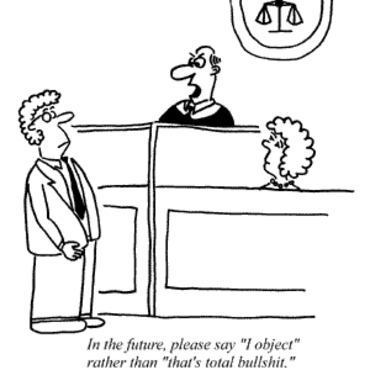
          It’s not really written in English after all, but in another language whose meanings can be quite difficult to comprehend. Some call this language legalese or bureaucratese, but there is another more revealing term for the particular dialect found in lengthy pieces of legislation like this, and that term is bullshit.

          Really grokking* this last point is something a number of Libertarians have achieved. It may lead to some deep epiphanies, among them:

    • Maybe you aren’t meant to understand it; maybe that’s the point – “if you can’t dazzle them with brilliance, baffle them with bullshit,” as the coffee mug saying goes

    • Master Bureaucrat credentials are kind of like Master Huckster credentials, they just involve specializing in and mastering different types of bullshit

    • Hang on, why did I think employing large numbers of people at great public expense to immerse themselves in creating and processing bullshit was a good idea?

    • Government is a scary bunch of bullshit, I should become an anarchist

          Anyway, thank you for reading this considerably shorter and more reader-friendly column. Besides giving you a small head start on next year’s ballot questions, if it has in any slight way enhanced your insight into understanding government, then it has served its purpose. 

          And if you know of any high school or college teachers who might be interested in having someone come in and give their class(es) a “real world” talk on civics and American government based on this essay, please write and put us in touch with them!

                                                                 *          *          *

    *Science fiction writer Robert Heinlein invented the verb “grok” to describe understanding something deeply and holistically.
     

  • 5 Practices For Being An Effective Libertarian Activist

    5 Practices For Being An Effective Libertarian Activist

         Here are a few insights I’ve found in my time as a libertarian (pro-freedom) activist which I consider valuable and thought I’d share in the hope that others may find them useful…

    • If you find yourself debating or arguing with someone (in person, online, or wherever) whose stance in the conversation is more pro-freedom on the particular topic or issue being discussed than yours, change the topic or leave the conversation. If you want to debate that issue, go find another conversation in which the person or people you’re debating are less pro-freedom on it than you are. In this way, you can ensure that your advocacy is on the side of freedom, not against it.

    • Think about your life in broad terms and consider what you can do to share libertarian ideas and advance the cause of freedom. What talents or connections do you have that you can share with the freedom movement which would be helpful in spreading the message?

    • Ask yourself where in your life you can make a difference in terms of influencing where money goes (your own or others’) and how that spending could be altered to create a more positive outcome for freedom, whether it is directing resources toward businesses, organizations and individuals that support or are beneficial to the cause, or withdrawing resources from those that don’t/aren’t. Make preparations to also seek a more positive outcome for freedom for whatever resources you expect to leave behind when you skip off this mortal coil, especially if they are significant and you expect to do so in the not distant future.

    • For each libertarian (pro-freedom) organization you are part of, strive to spend at least as much time communicating with your colleagues in the organization about freedom, philosophy, activism/outreach outside the organization, and events in the world, as you do communicating with them about the politics or operations of the organization itself or interpersonal conflicts/issues that arise – this will not only keep your own efforts focused on actually advancing freedom, but help keep our movement’s groups focused on that purpose as well.

    • Keep some libertarian (pro-freedom) materials (e.g. literature, stickers, rubber stamps, buttons, petitions to sign, Nolan Chart cards, etc.) with you as often as possible, and as you go about your day, be on the lookout for places to distribute these materials and opportunities to share them with people.

         Be creative in thinking about the opportunities to help freedom that may exist for you within each of these bullet points, and may the Non-initiation of Force be with you!   🙂

  • Confucius, Sprint & The State

    Confucius, Sprint & The State

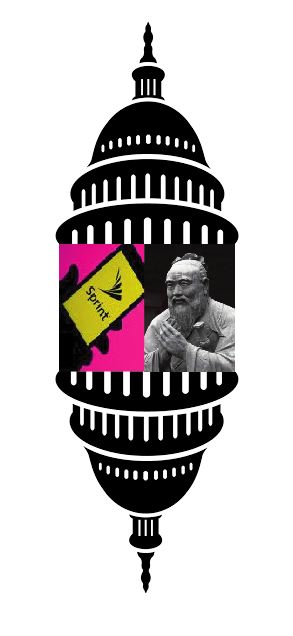
    The philosopher Confucius was reportedly once asked what he would do if he were a governor. He responded that he would first “rectify the names” to make words correspond to reality, for “If language be not in accordance with the truth of things, affairs cannot be carried on to success, proprieties and music do not flourish.”

        I’m not precisely sure what the ancient Chinese sage meant by that, or what examples he may have had in mind, but I’ve thought one possible interpretation of this quote is that language must not be allowed to be abused in such ways that speech grows full of dishonesty and contradictions, or else there won’t be a basis for efficient human action. Perhaps a kind of social equivalent to how free market economists talk about State central planners not being able to efficiently run an economy because they do not have access to accurate price signals.

        These thoughts were provoked by an ad for Sprint cellphone service that I heard earlier this evening. In the ad, a man comes on and says something along the lines of, “Oh great, another wireless ad. You’re probably sick of all these phone ads with all their confusing terms about their networks and offers and blah blah blah. But Sprint is going to do something different.” Then he quotes a monthly price and basically says if you don’t like it after a month you can have 100% of your money back, guaranteed. A few more details are conveyed in a similarly reassuring tone.

    (more…)

  • Where Good Ideas Go To Die

    Where Good Ideas Go To Die

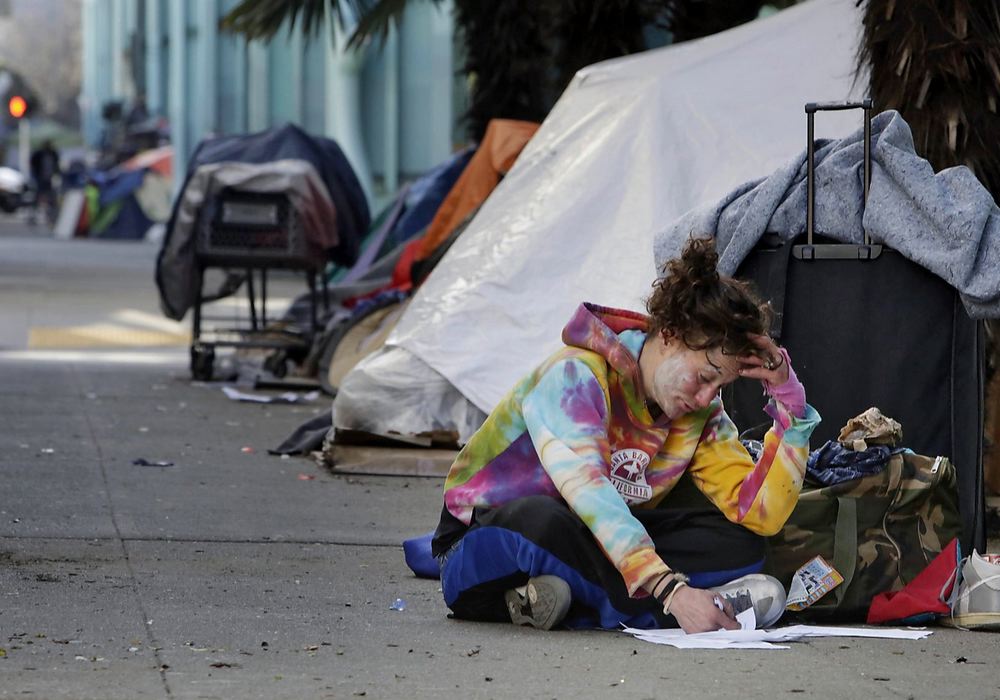
    It’s common knowledge that San Francisco has thousands of homeless people living on the streets and a shortage of not just housing, but even temporary shelter space. San Francisco also has a government-run school system that includes over a hundred schools occupying public space, each with multiple buildings that are vacant and unused at night.

    At some point, someone – probably multiple someones, perhaps even including yourself – may have thought, “Instead of having people without homes out on the streets, at risk of illness or death from exposure, crime, etc, and without places to practice proper sanitation and hygiene, or spending a bunch of taxpayer funds building new shelter facilities, why not let some of the homeless in these unused existing public facilities, where they will be safe and can have access to restrooms and showers?”

    As you may or may not be aware, this is not a hypothetical. Not only was this idea contemplated, it has actually been put into effect as a government program – well, sort of. So how is that working out for us?

    To begin with, the idea was pared way back, limiting the number of people likely to be helped by it. Rather than making space available after hours at government schools in different neighborhoods across the city, the program was limited to a single school, Buena Vista Horace Mann (BVHM), a Mission district kindergarten through 8th grade school located at 3351 23rd Street.

    Then the program was further limited to serving families with children attending that particular school, with assurances to this effect presumably intended to pacify neighborhood and school community xenophobes.

    Did I say xenophobes? Sadly, yes.

    Fear and hostility toward outsiders, people who aren’t here now, aren’t part of the “in group” isn’t just a thing with Donald Trump and his supporters – it’s also a local thing here in SF. Especially (at both the national and the local level) if those outsiders happen to be poor.

    City officials may be regretting those assurances however, because now – after reportedly sinking money into startup costs such as putting in new showers (did the school previously lack showers for students using the gym? were those showers not good enough for homeless people?) – they say they can’t continue the program unless they expand it, because not enough homeless families with students at Buena Vista Horace Mann are applying.

    Did I say applying? Sadly, yes.

    You might think that something like making BVHM’s gymnasium available after hours to homeless families needing a place to stay for the night would be pretty straightforward: Somebody shows up with kids needing a place to sleep for the night, you let them in. Hardly even worthy of being called a “program”. When I let friends or others crash at my place, I don’t call it a program, and there is no application process – people just ask me. But when it comes to government, nothing’s ever so simple. Government is where good ideas go to die.

    Here’s how the “program” is actually working (or not working):

    “Interested families usually begin the conversation by saying they are running out of housing options and they were told the school has a shelter,” writes reporter David Mamaril Horowitz in the bilingual Mission-area newspaper El Tecolote. “They first speak to Chandler”.

    That would be Nick Chandler, the schools’s social worker. According to El Tecolote, he then “vets” these families and “forwards them to Dolores Street Community Services” (DSCS). Why DSCS? Because they are the non-profit organization managing the “shelter”. You might think the school itself should be capable of managing the task of allowing students from its own student body, and their families, to use its own gymnasium, but you are not thinking like a government bureaucrat.

    DSCS’s Mayra Medel-Sanchez is the project’s program manager. You might assume that title means she’s in charge of designing and planning the program. You would be wrong again. They have a separate person for that, one Saul Hidalgo.

    Both Hidalgo and Medel-Sanchez defended the program to El Tecolote (surprise, surprise). But then again, who are they not to have an opinion, when on any given day they may comprise a double digit percentage of the program’s direct beneficiaries?

    That’s right – since it was opened as a shelter in November, according to a critical March 1 story by Jill Tucker and Trisha Thadani in the San Francisco Chronicle, the gym at BVHM has had “an average occupancy of less than two people per night”.

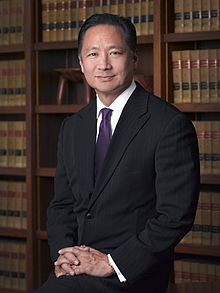
    Tucker and Thadani didn’t get that information from the program’s managers, according to the story, but from yet another individual being supported by tax dollars to “help” the homeless – Department of Homelessness and Supportive Housing director Jeff Kositsky. (Kositsky’s salary of $205,000 a year is presumably not factored into the reported cost of the program – more on which shortly.)

    Although the facility fails to attract any homeless individuals several nights a month, Kositsky said that doesn’t mean it’s completely empty at these times. “Shelter workers are on-site seven nights a week and through holidays, whether anyone shows up or not,” he told the Chronicle. Must be a tough gig!

    The total number of families who’ve used the “shelter” since it’s been open? Five, according to the Chronicle. Seven, according to Nuala Sawyer in SF Weekly, who took the daily paper to task for “implying it’s a failure”. “What may need to happen is a reframing of the program,” Sawyer opined.

    Meanwhile, according to the Chronicle, the city government is paying Dolores Street Community Services $40,000 a month to manage the program (wrong, it’s only $37,000 a month, says SF Weekly). Either way, this doesn’t include any program-related outlays or other costs incurred by Buena Vista Horace Mann school or the city government, such as the aforementioned startup costs. (I couldn’t find an estimate of those costs; Sawyer reports the new showers were “donated with pro bono work”, although by whom, or why, and whether there were any other costs involved, she doesn’t say.)

    This means that for the three-month period of December through February, taxpayers have shelled out a bare minimum of $111,000, and probably significantly more, so that between five and seven families have been able to spend some time sleeping on the floor of a gymnasium.

    Perhaps in future months administrators could instead consider putting homeless families up at the Ritz-Carlton or the Four Seasons, where they could have full access to the hotel’s concierge service to connect them to local resources? With monthly rates at these hotels, they might be able to save some money.

    But in government it’s all about perceptions, so Sawyer’s proposed “reframing” is a more likely outcome for what responsible (or irresponsible, depending on your point of view) parties are calling the “Stay Over Program”. What would this involve? Essentially “keeping people out of the gym’s shelter” rather than getting them into it. If that sounds odd, it is not without precedent – government has long been paying farmers not to grow food, and there is the famous, if possibly apocryphal, story of the U.S. general in Vietnam who explained how they had to bomb a village in order to save it.

    In seeking to continue the program, BVHM principal Claudia DeLarios Morán, program manager Medel-Sanchez, Sawyer, and others, claim the number of families who’ve been sleeping in the gym doesn’t tell the real story. The real benefit, they assert in so many words, has been getting people into other government programs.

    “All participants in the program register with the the city’s Mission Access Point, which enters them into the city’s homelessness response system and makes them eligible for its services. They are also able to meet with a case manager who provides counseling and guides them to resources,” program manager Medel-Sanchez told El Tecolote.

    The paper reported that 59 Horace Mann families (out of an initial 64 that SF Weekly says were identified as “housing insecure”) have spoken with Chandler, and at least 26 have “received case management”.

    Once families show up at the shelter, they “receive support and services from trained professionals who have the connections to get them help,” DeLarios Morán told SF Weekly. That wasn’t happening previously, she said. “This is a level of coherence we’ve never really had before.”

    Since the families had already been identified, you might think that much could have happened without the need to pay a non-profit group tens of thousands of dollars a month to run a shelter that few of them apparently wanted to use. But again, you would not be thinking like a bureaucrat – remember, these are “trained professionals”.

    Supervisor Hillary Ronen, who initially championed the idea in Spring 2018 along with DeLarios Morán and in whose district this is all taking place, said the program won’t be continued unless it can be made more cost-effective. For the number of families involved, it “doesn’t make any financial sense,” she admitted to SF Weekly. “We might as well buy a condo for that amount of money,” she said. Yup, or failing that, give the Ritz-Carlton a call.

    Along with pretty much everyone else quoted by the media with the exception of the NIMBYs, Ronen favored expanding the program to allow the families of students attending other schools in the district to participate. On March 12, members of the SF Unified School District’s Board of Education, aka the school board, agreed, unanimously voting to do what common sense suggests should have been done in the first place. At a minimum, that is – I’ve seen no explanation for why homeless people not related to SFUSD students, whose taxes after all help pay for those government schools, shouldn’t also be allowed to participate. In any case, the “Stay Over Program”, rather than being slated for shutdown on June 30, got a new lease on life.

    The NIMBYs aren’t without some wisdom of their own, however, even if their motives may be less than pure. “This is not to me a success,” BVHM parent Johanna Lopez Miyaki told the Chronicle. “Why didn’t they ask those 60 families what they needed? Why didn’t they ask the 60 families if they wanted to sleep on the gym floor?”

    An estimated 2,200 students in the SFUSD “cope with homelessness or housing insecurity”, according to the El Tecolote article. But how many of their families will be willing and able to deal with the bureaucracy around the program in exchange for the dubious priviliege of accessing a mattress on the floor of a school gym when needed? That remains to be seen.

    But let there be no confusion on this point: Letting homeless people sleep in a government school at night, which school board member Mark Sanchez noted is probably a first in the country, is not the problem, just as the problem with California’s Proposition 64 was never the idea of legalizing cannabis – as with Prop. 64, the problem is all the government BS that has come with it.

    Now that it has been expanded, if not yet reframed, will this comi-tragic effort manage to morph into something both useful and reasonable, as those who conceived it presumably intended, or will their good intentions be once again defeated by the nature of government, its non-profit patronage system, and the Lennon Rule* as the program matures into an even larger and more wasteful boondoggle?

    Stay tuned…

    *”Everything the government touches turns to shit.”
    – John Lennon

  • Our Defender, Jeff Adachi

    Our Defender, Jeff Adachi

    Last month San Francisco lost one of its best leaders, perhaps the only elected official in the city truly worthy of that description.

    “Prosecutors, with near unlimited resources and the full backing of the government, are trying to take away a citizen’s freedom. That’s a big deal and something we want to get right,” he wrote in a 2014 op-ed piece in the Sacramento Bee.

    Jeff Adachi, the 59-year-old elected Public Defender, had held the position since first winning election in 2002 after working as an attorney in the office for several years prior, and was subsequently reelected four times, most recently last year. But on the evening of February 22, he was found unresponsive at an apartment in North Beach after suffering a heart attack, and efforts to revive him were sadly unsuccessful.

    Police officers were soon on the scene, and before long someone in the SFPD – whose misdeeds have often been exposed by the Public Defenders Office under Adachi’s leadership – leaked, in violation of department protocol, details of the police report to the press: The late Public Defender had been in the company of a woman who wasn’t his wife, and they had reportedly consumed several drugs that day including wine, cocaine, and marijuana edibles.

    Some of his detractors were quick to jump on these embarassing (at least to the anti-hedonism set) details. Most notably Gary Delagnes, the former head of the Police Officers Association union who rarely if ever sees a case of police abuse that he doesn’t see fit to excuse (when the Board of Supervisors acted in 2016 to memorialize Mario Woods, victim of an SFPD firing-squad-style execution, he called board members “idiots” who “honored a street thug”), railed on Facebook not long after Adachi’s death that he had been “a serial adulterer who drove his wife to a suicide attempt,” and groused that, “Only in San Francisco is Jeff Adachi a hero.”

    If you’re not pissing some people off as a politician you’re probably not doing it right, as the saying goes!

    To their credit, this tone deaf jab at the recently deceased was the last straw for Delagnes’s colleagues at the POA, who apparently recognized that despite the success of his hardball methods in getting police pay sharply boosted during his tenure heading the union from 2004 to 2013 his big mouth had become too much of a political liability, and politely expelled him from the organization where he had remained on the board earning nearly $100,000 a year as a consultant.

    But as the civil-liberties-hating Delagnes was grudgingly forced to acknowledge, Adachi is a hero in San Francisco, and won’t be soon forgotten. Despite the circumstances of his death, there was an outpouring of grief and mourning from not only his colleagues but many ordinary members of the public. Over 1,000 people reportedly joined a candlelit vigil and march from the Public Defenders Office to City Hall before Adachi’s body lay in state under the grand old building’s dome.

    When a well-known elected official dies, there are almost always the obligatory accolades from other political figures. But in this case the praise that poured in may have been a bit more accurate than usual. “Everything he said or did came from the heart,” State Senator Scott Wiener told the San Francisco Chronicle. “He was someone who, it didn’t matter to him what people thought about him or if people were mad at him. He was there to fight for the most marginalized people in society.” Eric Quandt, a deputy public defender, said of his former boss that, “I’ve never seen a defense lawyer more tenacious or courageous.” He described himself as “devastated” and said he was sure he spoke for many of his colleagues. “I didn’t always agree with him,” said former supervisor and current BART Board member Bevan Dufty, “but I always appreciated that he made this job so much bigger than what the charter called for.” Congresswoman Jackie Speier called Adachi “the real deal… a righteous public servant who believed passionately in the Constitution, due process and the rights of the accused to be ably represented by counsel. He did not shrink from public debate or tough political decisions.” Perhaps referring to the all-too-often correct perception of public defenders being incompetent and providing poor quality representation, Alameda County Public Defender Brendon Woods said that Adachi “crashed and reshaped all of the negative stereotypes” and “elevated what it meant to be a public defender.” 

    In the city’s traditionally black Bayview and Fillmore neighborhoods, where Adachi was a frequent presence, there was widespread sadness at his passing. “Jeff was the only official in this city we could trust to fight for us, the black and brown and poor San Franciscans,” wrote Dr. Willie and Mary Radcliff in the San Francisco Bayview newspaper. The “MAGIC” (Mobilization for Adolescent Growth In our Communities) programs his office started, “BMAGIC” for the Bayview and “Mo’ MAGIC” for the Fillmore, helps integrate struggling teens into the community with gardening programs, field trips, and other activities. Another group started by the SF Public Defender’s Office provides help to the children of incarcerated parents. Adachi himself was often out in the community in connection with these programs as well as legal work. San Francisco mayor London Breed recalled him coming around to visit clients when she was growing up in the Fillmore and living in public housing projects.

    This history may have contributed to Breed, a “moderate” who although African-American herself has not always been relible when it comes to reforming an SFPD and criminal justice system that have had a disproportionately negative impact on blacks (57 percent of local inmates are black, despite blacks accounting for less than 5% of the city’s population, according to the Bayvew newspaper), doing the right thing by quickly appointing Manohar Raju as Adachi’s successor. Raju was previously a deputy public defender and respected member of the office Adachi had built. Prior to the appointment, it was speculated that she might appoint another deputy PD, Chesa Boudin, a reform-oriented candidate for district attorney, in order to get him out of that race and clear the field for her own more law-and-order oriented pick for DA, but she didn’t end up doing that.

    Unlike most politicians, Jeff Adachi rarely inspired such suspicions that his decisions might be politically driven. For him, it was clearly about doing what he thought was right. He was consistently bold and fearless in holding law enforcement accountable. When his office found video camera footage that showed police officers barging into the rooms of poor residents living in SRO hotels without warrants or permission and even stealing from them, he put the videos on YouTube. Again when his office learned through a whistleblower of sheriffs deputies staging fights among inmates at an SF jail, he took the information straight to the media and the public. And the Public Defender’s Office under his leadership is also responsible for the texting scandal among members of the SFPD who exchanged numerous racist and homophobic text messages on the job being uncovered.

    Adachi’s courage went beyond standing up to the politically powerful police and sheriffs departments. He point-blank refused mayor Gavin Newsom’s request to cut his office’s budget along with those of other departments, explaining to the man now in the governor’s office that the legal services provided by the Public Defender’s offices are legally required, and that it would actually cost taxpayers more to outsource them to private attorneys. In 2010, he took on virtually the entire city establishment by championing Proposition B, a pension reform measure he got on the ballot that actually took the burgeoning problem of out-of-control city pension costs seriously and proposed a responsible solution to rein in spending.

    Adachi was politically progressive, but honest in his approach, and not one for feeding the “city family” – for him, good government seemed to mean spending discretionary funds in ways that would promote social justice and equality without breaking the bank. He understood that the soaring costs of “defined benefit” pensions being paid out to well-compensated city government employees would mean fewer and fewer dollars available for everything else, and unlike other local Democrats, was determined to do something about it. Even after Proposition B was overwhelmingly defeated, Adachi brought a revised version of the legislation back the following year as Proposition D. (That measure too was defeated by the votes of the self-serving and the ignorant, an outcome that most San Franciscans will at some point likely come to regret. According to a 2010 SF Weekly article, SF’s city employee pension costs had grown by over 66,000% during the past decade – and they continue to rapidly grow today.)

    When he went to City Hall to lobby for more funding to defend undocumented immigrants against Trump-era deportation proceedings, Adachi brought a cameraman with him to record the encounters. This sort of behavior grated on his politician colleagues, but nevertheless he got $1.9 milllion appropriated for his immigrant-protection efforts. “The theatricality that marked Adachi’s courtroom demeanor did not stop outside the Hall of Justice”, local journalist Joe Eskenazi observed. Just as Jeff Adachi made his office so much more than the usual public defender’s office, in life he was more than just a lawyer. While actively representing clients – as department head, he didn’t limit himself to administrative matters, but argued over 100 cases before juries himself – he also managed to find time to turn his theatrical flair and passion for social justice into becoming an award-winning filmmaker, writing and directing several documentaries about race and criminal justice issues.

    Although Adachi was not a Libertarian, the LPSF has long appreciated both his criminal justice reform and his pension reform efforts, inviting him to come speak to us and recommending our supporters vote for him.

    Some community members have suggested renaming for Adachi a street in the SOMA neighborhood which the late public defender walked almost daily on his “commute” between the Public Defenders Office at 555 Seventh Street to the Hall of (In)Justice at 850 Bryant Street, and we certainly appreciate the sentiment.

    But while Adachi and his work deserve to be remembered, is this the right way to do it? Politicians are always naming things after other politicians, symbolically plundering the landscape for the aggrandizement of their own profession even as they plunder the public’s pocketbooks via taxes and fees in order to fund their political agendas (as well as their generous salaries, benefits and pensions). If a moratorium on such namings were adopted, in favor of attaching more evocative and inspirational names to places and infrastructure, it would be a public blessing.

    At least in this case the renaming would supplant another politician: Gilbert Street is currently named after Edward Gilbert, a 19th century congressman who was killed in a duel with James Denver, the future namesake of the capitol city of Colorado (himself also a politician).

    One nevertheless suspects that Adachi himself, being the man he was, would rather members of the Board of Supervisors remember him by introducing some meaningful criminal justice reform legislation, than by slapping his name on something.

    Regardless, Jeff Adachi’s legacy will live on in other ways. By all appearances, he has built a strong and efficient Public Defenders Office, filled with competent, passionate attorneys and staff who truly believe in the office’s mission of providing quality legal defense to the indigent. The myriad awards he earned, ampong them the American Bar Association’s national award for excellence in public defense, the Managerial Excellence Award of the Mayor’s Fiscal Advisory Committee, and the Elected Official Award for transparency of the Society of Professional Journalists’ northern California chapter, are testimony to this. Just a month before Adachi’s death, the SF Public Defender’s Office as a whole was recognized by the National Association of Criminal Defense Lawyers with its Champion of Public Defense Award.

    One of the last people to spend time with Jeff Adachi was another deputy public defender, the aforementioned Chesa Boudin, who at a recent neighborhood meeting recalled their eating lunch together on the day Adachi died. Boudin, like most of his colleagues, was hit hard by the untimely death. Like his boss, he has a passion for defending the marginalized and upholding civil liberties, and is now running a strong campaign for San Francisco district attorney. The current DA, George Gascon, is not seeking another term. Although reform oriented in some respects – e.g. working with the Public Defender’s Office to work on expunging the records of non-violent marijuana offenders – Gascon has during his term failed to prosecute a single unjustified SFPD shooting.

    As Boudin points out, this will be the first time there’s been an open race for that office in over 100 years. It is a rare opportunity to hopefully elect someone as the city’s top prosecutor who respects civil liberties and believes in holding police accountable when they commit abuses as much as SF’s late Public Defender did. It’s no less than Jeff Adachi would have wanted.

    ~~~~~~~~~~~~~~~~~~~~~~~~~

    “A hail of bullets is not an appropriate police response to people suffering mental health crises.”

    – Jeff Adachi

  • How Millions of Voters Delude Themselves and Undermine Democracy

    How Millions of Voters Delude Themselves and Undermine Democracy

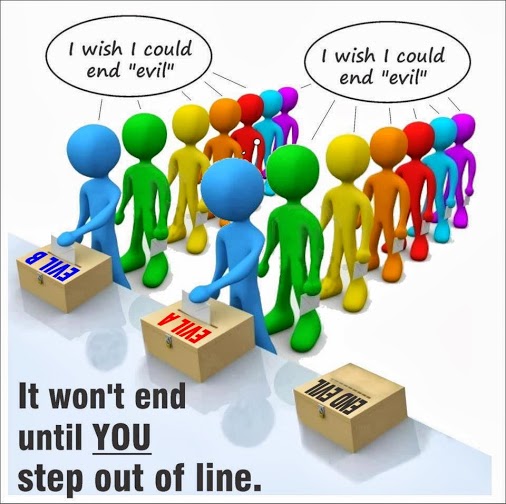
        It’s kind of amazing that something so central to many of the issues we see and read and hear about in the news every day, something on which billions of dollars and countless hours of scheming by political “professionals” are expended every year, continues to be so widely misunderstood. Yes, that description can be applied to government itself, but here I’m simply talking about voting. If you’re a Libertarian, or even just a free-thinking person who’s ever confessed to somebody else that you plan to vote for a candidate who isn’t among the perceived front-runners or those declared viable by mainstream media outlets in a particular race, you’ve probably heard some version of a response like, “Why are you wasting your vote? They can’t win. Be realistic. If we don’t vote for Tweedledee, we’re going to get Tweedledum.”

        The truth that’s overlooked in such thinking is this: When you vote in any election in which many thousands of people or more are voting, you can be virtually certain that your individual vote will NOT change the outcome. Changing the outcome of such an election requires the votes of many other people whose behavior at the ballot box you can’t control. Voting on the wishful premise that your vote might change the outcome of an election is LESS realistic than voting on the basis of thinking a Libertarian might get elected! Libertarians actually do get elected far more often than a single vote changes the outcome of any major election (there are hundreds of Libertarians holding public office around the United States right now). In the very rare instances when a major election is anywhere close to being decided by a single vote, there’s almost certain to be a recount in which the vote totals will change anyway.

         So in terms of how you choose to vote, it really doesn’t matter whether your chosen candidate has a good chance of winning or not, because whether they are likely to win or not, you won’t be changing that outcome with your vote. The popular idea that you’re “throwing away your vote” by voting for a candidate who “can’t win”, as opposed to supposedly “making your vote count” by voting for one who “can win”, has no basis in reality. In fact, mathematically speaking, the fewer votes a candidate receives, the greater the proportional impact that your vote for them will have! To take a simple example, if someone receives only 10 other votes in an election, then your vote for them increases their vote total by 10%. But casting your ballot for someone who receives 1,000 other votes in an election increases their vote total by only a tenth of a percent.

        Nor do you get any special credit, or benefit, for picking the response option that turns out to be most popular among your fellow poll-takers; at best you’ll get the psychological satisfaction of having voted for the winner (if that’s the sort of thing that makes you feel good). The resulting warm fuzzy feeling might typically last you a few days after Election Day. However once the candidate takes office and starts doing stuff you don’t like (which, admit it, happens way more often than not), you’ll be stuck with the embarrassment, shame, and feeling of having been suckered into supporting a bad politician for the rest of their term or beyond.

         So if it’s all but guaranteed your votes won’t change any election outcomes (except maybe at the local level if you live in a very small town), and there’s generally no personal well-being to be gained by voting for candidates who end up getting elected, does this mean voting is a waste of time? Not at all. Imagine you’re part of a crowd of hundreds of people who are trying to roll a huge, heavy fallen log out of the road. When you put your hands on the log and add your energy in pushing, or stop to take a breather, you can’t see any effect – whether you push or slack off seems to make no difference whatsoever in terms of whether the log rolls forward or it doesn’t. Nevertheless you know that at some point when enough people are pushing hard enough, the log will start moving, because you’ve already seen it happen. All you can do is your part. As Mahatma Gandhi once said, “What you do may seem insignificant, but it is vitally important that you do it.”

         Voting can be seen as akin to taking an opinion poll and adding your mark next to one of the response options. If most of the people taking the poll happen to choose the same response option as you do, then the poll results (if it’s a fair poll) will show this option as being the most popular, but that part is beyond your control. When taking public opinion polls, most people seem to recognize that they are simply giving their opinions, not measurably changing the poll results, and consequently give their honest opinions rather than attempting to answer based on how they think others will respond. But for some reason when it comes to elections, a lot of people apparently think they can “game the system” and change the outcome by voting “strategically” based on how they expect others will vote. This imagined “strategic voting” is in reality rank nonsense. Those who believe in it have not properly understood the math or the probabilities involved. Furthermore it is actually undermining democracy, because to the extent that voters cast their ballots based on how they think others will vote rather than voting their own actual preferences, election outcomes will not reflect the true preferences of voters. And when election outcomes don’t reflect the true preferences of the electorate, that means democracy is broken.

          Bottom line: The smart and responsible way to vote in any major election is to vote for the candidates you would most like to see do well, regardless of what you think their chances are of being elected. For me, this almost always means voting Libertarian when that option is on the ballot. Even when our candidates don’t win, adding to Libertarian vote totals helps the party and advances the cause of freedom. Above and beyond this, voting is an act of solidarity with others who believe as you do. Together we can roll the dead log of statism out of the path of human and universal progress. It is always true (assuming the election isn’t rigged) that if enough people vote for a candidate, that person WILL win. Essentially, each of us has a choice: To vote in a manner which may superficially feel clever but actually hurts our own franchise both individually and collectively, or to be part of the solution – a solution which is always possible, and will manifest itself in reality as soon as enough people choose to be part of it.

  • Selective Anger At “Freeloaders”

    Selective Anger At “Freeloaders”

        In my dialogues with defenders of statism, online and off, I routinely encounter people – usually though not always on the political right – who express feelings of anger, disgust, contempt, etc., toward those whom they characterize with terms like “lazy”, “bums”, “freeloaders”, “parasites”, “anti-social”, “welfare queens”, “druggies”, “illegals”, “junkies”, “leeches”, “the homeless”, “non-productive members of society”, etc. Most of the criticisms seem to boil down to resentment that the people who are the objects of their ire are in some way being assisted or provided for by government at the expense of others.

        Are such feelings a step on the path toward libertarian enlightenment, or just narrow-minded self-justification? I’d like to think the former, and in some cases that may be the case, but I often have my doubts. Because from where I sit as a long-time observer of San Francisco politics and local political attitudes, the sad truth is that not just the folks who are often criticized in such terms, but the vast majority of the local population, appear, both from their voting habits and from their own comments, to want to be taken care of by the nanny-state in one way or another.

        It is bitterly ironic, and hypocritical as hell, for anyone who wants government to provide them with “free” elementary schools, “free” libraries, “free” fire protection services, a “free” regulatory bureaucracy of immense scale and complexity that intrudes into everything from air travel to household pets, “free” enforcement of border controls and persecution of people who reside in or attempt to enter the U.S. without government permission, a “free” military whose budget is inching toward $1 trillion with hundreds of bases in other countries, “free” enforcement against people lying on sidewalks or sleeping in tents in the commons, etc., to look down their noses at somebody who wants “free” food stamps, “free” SSI, or “free” housing vouchers as being necessarily a much worse leech or parasite than themselves or their friends.

        Let’s be crystal clear about this:  ALL of these things and more are forms of nanny-state welfare designed to take money stolen from taxpayers to fund services desired by particular constituencies, which members of those constituencies are unwilling to pay for themselves, whether or not the “free” service in question is called “welfare” or not.

        For anyone tempted to feel disgusted, contemptuous, or resentful toward those whom you characterize as wanting to be taken care of by the “nanny-state”, please examine what “free” things you yourself want government to provide at the expense of others. Those who want more welfare than you do when it comes to food stamps or SSI or housing vouchers may in many cases want LESS welfare than you do when it comes to the military-industrial complex, or border controls, or home loans, or government education, etc., and may even want less welfare and a less controlling, less authoritarian government overall!

        Before we judge anyone else too harshly, here’s an illuminating pair of questions for each of us to ask ourselves:

    1) How much theft, and how much coercion, would be required for government to do the things that I want it to do?
    2) How can I reduce the amounts of theft and coercion that I am effectively demanding?