
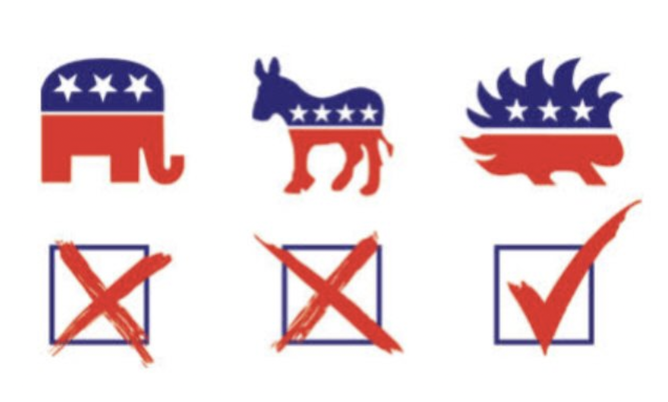
Tag: bond

  • Vote Tuesday June 7, 2022!

    Vote Tuesday June 7, 2022!

    LPSF Ballot Measure Recommendations

    Prop. A (public transit bond) – NO

    Anyone familiar with libertarian thinking know we dislike bond measures, and this year’s Prop. A is no exception. They are a form of tax increase, despite politicians’ efforts to disguise this reality by engaging in a fiscal shell game that keeps property taxes at a permanently inflated level rather than allowing them to decrease when previous bond borrowing is paid off. And due to the costs of interest and servicing the bonds, they are an extremely inefficient way to spend, with each dollar borrowed costing as much as twice as much. As former judge and supervisor Quentin Kopp writes, “the sponsor (MTA) ignores the controller’s statement that interest on the 30-year bond will approximate $600 million. That is borne by homeowners who usually pay double the voter-approved debt, thanks to compounding interest.” Renters will also pay, in the form of pass-throughs raising their rent. And as Kopp also notes, a 2008 court decision effectively removed responsibility for the money to be spent as advertised. Even if it were, if just throwing more money at Muni were capable of fixing the chronic problems with the local government transit monopoly, they would have been fixed long ago.

    Prop. B (Building Inspection Commission reform) – NO POSITION

    This measure purportedly reacting to corruption scandals at the Building Inspection Commission fails to address the fundamental problem, which is that government has too much discretionary power to block or allow development. While reducing the professional qualifications necessary to serve on the commission could marginally diversify the body and reduce its domination by industry insiders, the legal language of the measure is opaque, and it doesn’t appear to do anything significant.

    Prop. C (make recall elections harder) – NO

    Despite our opposition to Prop. H (see below), recall elections are in general an important tool in the voters’ toolbox for holding politicians accountable. They are another form of term limits, essentially allowing voters to demand an early election. The successful recall of school board members in February would not have occurred if the narrow time window mandated by Prop. C had been in effect.

    Prop. D (create new Victim/Witness Rights Office) – NO

    Politicians love to come up with new programs and agencies. It gives the appearance that they are doing something new and concrete to bring about positive change. Certainly doing more to protect victim and witness rights sounds good in theory. But why can’t existing agencies like the SFPD and the district attorney’s office that provide victim and witness services simply reform their practices and coordinate their operations to be more helpful to victims and witnesses of crime without expanding the bureaucracy by creating an Office of Victim and Witness Rights as yet another government department? The official Voter Information Pamphlet argument against the measure points out that the planned new office is tasked with producing “an annual survey, an evaluation plan, and a consolidation plan” without “directly improving victim and witness rights” – in other words “a lot of bureaucracy, without a lot of new services.”

    Prop. E (further restrict behested payments) – YES

    The term “behested payments” may be new to you (it was to some of us), but it refers to an old form of corruption: Politicians and government officials raising – some would say extorting – donations from lobbyists, permit “expediters” or interest groups fearful of saying no lest the money or favors that they rely upon government to provide will be withdrawn if they don’t pony up. Giving directly to government officials at the behest (request) of those officials is mostly prohibited already, but this measure would further make it illegal for members of the Board of Supervisors to seek money from contractors whose contracts they had voted to approve – i.e. closing an obvious loophole that invites corruption. The YIMBY group Grow SF complains that Prop. E “would make it impossible for the city to work with philanthropic organizations” (a frank admission that local government works with these groups in the first place only so that politicos can extort money from them?) While their “impossible” language is an exaggeration, given that philanthropic groups do more good acting on their own than entering into “public private partnerships” with government that often reek of cronyism, making such collaboration more difficult sounds to us like a reason to support Proposition E.

    Prop. F (weak garbage collection reform) – NO

    Recology (nee Sunset Scavenger) is backing this “reform”, which tells you most of what you need to know about how much of a reform it really is. In the wake of revelations about the company having overcharged San Francisco ratepayers to the tune of almost $95 million, and its employees having been involved with bribing corrupt former Department of Public Works head Mohammed Nuru, both of which Recology admits, it is a measure of the longstanding trash and recycling monopoly’s clout that it is not employees were bribing the corrupt head of the Department of Public Works, Mohammed Nuru (now facing charges).

    Prop. G (paid sick leave for air quality) – NO

    This one is a business- and job-killer. Employees whose jobs are classified as substantially outdoors would get a new legal privilege to take up to two weeks of paid sick leave a year on days when a government agency says that local air quality is poor. As the economy has struggled to cope with and recover from government Covid lockdowns and restrictions, the public has gained a new appreciation for the complexity and fragility of supply chains, and what the result can be if, say, one baby formula plant unexpectedly shuts down. A mandate like that of Prop. G would throw additional monkey wrenches into those supply chains.

    Prop. H (DA Chesa Boudin recall) – NO

    While recalls of politicians are more often than not deserved, this case is an exception. The Libertarian Party of San Francisco urges voters to oppose Proposition H, the ballot measure in the Tuesday, June 7 election that would recall SF district attorney Chesa Boudin.

    Boudin was narrowly elected (with LPSF support) in 2019 over the candidate appointed by the mayor and backed by the police union. A progressive prosecutor, he is by no means perfect from a pro-freedom perspective. He has, for instance, sought to sue manufacturers of so-called “ghost guns” for crimes committed with those guns, which is as silly as suing manufacturers of ballpoint pens over letters written with those pens.

    Nevertheless, he is the only SF district attorney in living memory, if ever, to take criminal justice reform seriously by holding police officers accountable for their misconduct as other individuals would be, pushing to end the discriminatory use of cash bail that often results in defendants who don’t pose a risk to the community sitting behind bars pending trial simply because they cannot afford release; de-prioritizing the prosecution of victimless so-called “crimes” involving things like drugs and prostitution; and seeking to reduce the expensive and failed warehousing of criminals in a system of mass incarceration, in favor of a more victim-centered “restorative justice” approach.

    This understanding and approach have made him a committed enemy not only of the SF Police Officers Association – the local monopoly SFPD union that rarely sees a meaningful reform it likes or an abusive cop whose actions it isn’t willing to defend – but of the “law and order” crowd generally. Those who still favor the traditional “lock ‘em up” mentality, including many career prosecutors who undermined the DA’s office by quitting after Boudin’s election rather than embrace a reform agenda, can’t stand that SF’s top prosector has disrupted the office’s previously cozy relationship with the police and adopted a more appropriately neutral stance.

    Government police did not even exist in the United States until the 19th century. They were not part of the vision of the constitutional founders, who generally feared standing armies and would have been horrified by many of the laws under which people are routinely incarcerated in this country today. Well-informed Libertarians and fellow freedom lovers understand that law enforcers and prosecutors are the enforcement arm of Big Government. Without the threat of violence and kidnapping, all the other immoral and unconstitutional State regulations and controls on the lives of people who are harming no one would be moot. In an environment with so many unjust and unconstitutional statutes on the books, calls for more police, more prisons, and harsher sentences are profoundly at odds with the libertarian belief in limiting government power and upholding individual rights.

    While we empathize with San Franciscans upset about lack of respect for property rights in this city, this is a longstanding problem that has far more to do with anti-business and anti-development policies enacted by establishment Democrats than it does with anything the DA’s office has done. Going after homeless people for “quality of life” infractions has further proven ineffective and burdensome to taxpayers. And as Joe Eskenazi has reported in Mission Local, the SFPD’s clearance rate in making arrests for reported crimes has dropped to its lowest level in decades, making the question of whether police are “engaging in a wildcat strike or simply underperforming” a “difference without a distinction”. Indeed SF police have gone so far in trying to undermine Boudin that in a recent successful sting by his office that busted an auto theft rin, his office had to reach out to the Feds for logistical support normally provided by the SFPD. We would be unlikely to support someone with Boudin’s views for mayor or supervisor, but as district attorney he is about the best that San Francisco is realistically going to get, given current political realities.
  • November 2020 Ballot Recommendations

    Proposition ANO. This $960 million bond measure (the estimated cost to taxpayers of borrowing $487.5 million after all the interest and costs are paid) promises everything but the kitchen sink. Prop. A would supposedly fund “investments” (the Voter Information Pamphlet’s biased language) in “supportive housing facilities”, shelters, parks, recreation facilities, facilities for “persons experiencing mental health challenges”, streets, etc. All things that could be paid for out of the city government’s $13.7 billion regular budget (a budget larger than those of many states and even most countries!). But as CPA and former civil grand jury member Craig Weber pointed out, they would rather spend that budget on things like an average salary of $108,774 and an additional average cost of $49,864 in benefits for their over 38,000 employees (a bloated “city family” larger than the entire city of Burlingame).

    Proposition BNO. We’re sympathetic to the desire to shake things up after Mohammed Nuru, the longtime head of the Department of Public Works (and ex-boyfriend of mayor London Breed) was arrested by the FBI on multiple charges of corruption. But Prop. B isn’t exactly a house-cleaning. Nearly half of current DPW employees would just be transferred to a newly-created Department of Sanitation and Streets, with duplicative support staff meaning an additional cost of $2.5 to $6 million annually, according to the Controller’s statement. What it does not do is guarantee that bureaucrats who are not doing their jobs in keeping the streets clean will be replaced, or that the new department won’t be subject to the same kind of cronyistic political appointments as the old one. As former judge Quentin Kopp notes, it’s just an attempt to “take the heat off City Hall criminality” without fundamentally changing anything.

    Proposition CYES. This measure would simply give non-citizen residents the same opportunity as other San Franciscans to serve on city boards, commissions, and advisory bodies. Libertarians strongly support the right of people to move freely from one country to another, and for people to have full equality under the law regardless of citizenship, which is ultimately just another Big Government program that enables those in power to divide and control people and extort money from them on the basis of nationality. According to a ballot argument by the LGBT Asylum Project and others, 35% of voting-age San Franciscans are foreign-born, and we oppose restricting any of these individuals from full political participation. As we argue in a paid statement in the Voter Information Pamphlet, “Laws must not be allowed to discriminate on the basis of innate characteristics like race, gender, sexual orientation, or national origin.”

    Proposition D YES. While we generally oppose additional government spending and bureaucracy, the life and death power that law enforcement agents have over the rest of us creates an even more pressing need for independent oversight than is the case for the rest of government. Incidents like the gladiator-style fights that the Public Defenders Office learned some SF sheriff’s deputies were staging among inmates for their own amusement, drive the point home. Prop. D would create an Office of Inspector General with the power to investigate in-custody deaths and complaints against Sheriff’s Department employees and contractors in at least some cases, and make recommendations regarding the department’s use of force policies. Also an Oversight Board that would hold public meetings and receive input from the public, as well as being able to subpoena witnesses and require the production of evidence. At less then a $3 million additional annual cost, this seems like a good pro-freedom tradeoff. In the wake of the killings of George Floyd and numerous other Americans at the hands of law enforcement, the need to rein in the abuses of gun-toting government agents should be abundantly clear to everyone, and this measure to create some independent oversight of the 800 or so SF Sheriff’s Department employees should do at least a bit to help.

    Proposition EYES. This measure would remove the absurd requirement that San Francisco maintain a minimum of 1,971 sworn SFPD officers, a mandate so out of whack with actual needs and budgetary considerations that it has not even been consistently followed anyway. Our paid ballot argument supporting Prop. E notes that this force size exceeds not only that of neighboring cities like San Jose, which has more residents than San Francisco, but even the per capita policing in Paris under the hated regime of Louis XVI and Marie Antoinette that was overthrown in the French Revolution of 1789! While certain types of incidents such as auto break-ins have been up the past few years, the SFPD has plenty of capacity to address this trend if they get their priorities straight and focus on investigating and responding to real crimes against life, liberty, and property, rather than victimless actions like drug sales and use, prostitution, and public camping. Additionally, mental health crises and other types of service calls should involve personnel trained to address those situations, not police officers (who have a disturbing tendency to use excessive force against the mentally ill and others), and efforts underway to transfer some of these responsibilities away from the SFPD will likewise free up  more officers to focus on apprehending actual criminals.

    Proposition FNO. Trying to parse what this 125-page monstrosity of a ballot measure would actually do is extremely difficult, which is a reason in itself to regard it with a high degree of skepticism. We couldn’t figure out from the text itself what the net effect of swapping a payroll tax for a gross receipts tax in all their respective intricacies would be, but according to the Controller’s statement it amounts to an estimated $97 million/year tax increase. Which is no doubt why Mayor Breed and the entire Board of Supervisors, unreformed statists all, are supporting it. You might think politicians would have more sense than to try to foist a massive tax hike on local businesses during a government lockdown that has already forced more than half of The City’s retailers to close their doors, many of them permanently, but you would be underestimating #GovernmentGreed. The Democrats who run SF claim that Prop. F would provide relief for businesses most impacted by the government’s ham-fisted response to Covid-19, but of course they could have provided that relief without tying it to higher levels of legalized theft that will harm other businesses.

    Proposition GNO POSITION. We debated this one. Several of us thought this was a clear libertarian “yes”, but several other members had concerns including that minors still legally under the control of their parents could be influenced by them on how to vote. On the flip side, 16 and 17 year olds do still pay sales tax and other taxes, and “taxation without representation” was one of the prominent complaints of the American colonists who seceded from Great Britain in 1776. You make the call.

    Proposition H YES. Prop. H represents a rare local ballot measure that would actually increase economic freedom, by streamlining or eliminating a few of the city government’s myriad noxious regulations that make it expensive and difficult to start and maintain a business in San Francisco. Currently, the Planning Code needlessly prohibits many sensible and harmless uses of commercial space. This has contributed, even pre-Covid19, to a glut of business failures and vacant storefronts. One sentence in the Controller’s statement kind of says it all, noting that under the measure, “Fees for additional reviews required due to City errors would be waived.” Does anyone other than the most retromingent statists think it’s reasonable to impose additional fees on businesses as a result of government errors?

    Proposition I NO. Riddle: How do you top an effort to increase business taxes by $97 million during the worst economic downturn the U.S. has seen since the Great Recession, if not the Great Depression (Prop. F)? Why, with an effort to raise real estate taxes during a housing shortage when there are over 8,000 homeless people on the streets of San Francisco according to the official count (which is probably an underestimate) by double that amount. This would be Prop. I, which the Controller’s statement estimates would add an average $196 million a year to the cost of housing and commercial real estate. A pair of small business owners writing in the Voter Information Pamphlet note that the measure doesn’t just apply to the sale of property, but also to small business and storefront leases – in other words, a hit on some of the same businesses that some of the same Supervisors supporting this proposition claim that they are trying to help with Prop. F. “At a time when many [mom and pop businesses] are desperately trying to sell, break, or renegotiate their leases, this tax will increase their rents and threaten their safety nets when they can least afford it,” write small business owners Gwen Kaplan and Rodney Fong.

    Proposition J NO. What would an election be without some kind of appeal to rob people “for the children”? Enter Prop. J, a regressive $48 million annual parcel tax increase that would hit every property owner (small or large) in the city not given a special exemption with an extra $320 on their property tax bill, to flow into the coffers of the SF Unified School District. Close behind appeals to commit robbery for the children are arguments to do it for the teachers, and this measure promises “raising the salaries of teachers” – oh, and unspecified “other School District employees” (read: members of bloated administrative non-teaching staff). The SFUSD would also have the “sole discretion as to allocation of the proceeds” among these and other assorted purposes – meaning they could if they chose spend 90% of the money on more administrative bureaucracy.

    Proposition KNO. The LPSF won the “lottery” process to be selected as the official opponent on this one, and its supporters – again a laundry list of local political power players including every member of the Board of Supervisors – decided to try to sell it as an anti-racism measure, touting the fact that it would override the California Constitution’s Article 34, a 1950 ban on government development of housing for low income persons unless first authorized by a public vote. “Prop. K is a step towards removing this racist legacy”, they write. In reality Article 34 says nothing about race, and does not stop low cost housing from being built by independent builders. It simply prevents government officials from using taxpayer money to subsidize such housing against the will of the public. The irony is that supporters of Prop. K are making arguments suggesting that they want to engage in racism by handing out housing on a preferential basis to people of certain racial backgrounds. Rather than attempting to get into the housing construction business, an endeavor that won’t end well, the mayor and Board of Supervisors should cut the red tape and expensive bureaucratic requirements that prevent more affordable housing getting built by independent builders. Legalize tiny homes and ADUs (accessory dwelling units, also called “granny units”), for example. And make more legal free parking places for people living in RVs and vans. Those options won’t be ideal housing for everyone, but they work for many people and are better than sleeping on the street, as thousands of San Franciscans do now.

    Proposition LNO. This is an effort to pressure businesses to pay their top executives less, or other workers more, when those executives receive more than 100 times the median pay of their workers, by stealing more money from such companies in the form of a higher gross receipts or payroll tax. Unfortunately, robbing a company as a whole won’t necessarily come at the expense of its overpaid executives, but could easily instead negatively impact other workers who may see lower compensation or be more likely to lose their jobs (or not get hired in the first place), as well as at the expense of members of the public who could face higher prices for the company’s products. It could also cause some businesses to stop doing business in San Francisco, costing local jobs and reducing the choices available to residents. Executive overpay is a legitimate concern when driven by factors other than simple market-based compensation based on relative demand for different types of labor and skills, but a better way to address the issue is through corporate governance reforms to make management more accountable to shareholders. Not by simply feeding a State which is even more bloated than the biggest independent companies and whose own top employees are already overpaid at the public’s expense.<!–break–>

  • March 3, 2020 Ballot Recommendations

                Longtime freedom-oriented observers of politics in the City by the Bay won’t be greatly surprised that exactly none of the local measures on the March 3 ballot are worth supporting. The Libertarian Party of San Francisco recommends voting NO on all five. Here’s some brief thoughts on why:


    Proposition A – $845 million City College “Job Training, Repair and Earthquake Safety” bond

    According to a faculty union representing teachers at City College, spending on administration has grown to comprise 10% of the school’s personnel costs, up from 7% just five years ago.

    An October bulletin published by the union describes how students, teachers and community members recently had to “push back on exorbitant raises” for top administrators, “including a proposal to compensate Associate Vice Chancellors at $275K/yr.” Meanwhile, City College enrollment is down from 90,000 in 2011-2012 to 65,000 today, according to a piece by Marc Joffe of the Reason Foundation. “With so many San Franciscans living on the streets, investing in educational infrastructure seems to be an especially odd priority,” he writes. We agree. Vote NO on Prop. A.

    Proposition B – $628.5 million “Earthquake Safety and Emergency Response” bond

    Another massive tax-and-spend measure in the name of “safety”. San Franciscans have already voted time and again to appropriate money for earthquake preparedness and emergency services. Just last year voters adopted a $425 million bond measure billed as protecting the city from flooding and earthquakes. As with all bond spending, this measure is wasteful – the controller estimates that borrowing $628.5 million will end up costing taxpayers over $1 billion by the time the principal is repaid with interest to the companies financing the bonds. A nice deal for Wall Street financiers perhaps, but not so great for overtaxed residents including tenants, who could see up to half the cost of the measure passed along to them in the form of higher rents.

    Proposition C – Retiree Benefits for Former SF Housing Authority Employees

    The Housing Authority is a local agency, but has been funded by the federal government. Now some former SFHA employees are being hired by the city government. This measure would make them eligible for city government retirement benefits based not just on their time as municipal employees, but also based on the years they spent drawing federal government paychecks. This sounds like a recipe for double-dipping, and most government employees are already over-compensated compared to people doing similar work in the voluntary sector. Increasing government employee compensation also means stealing more money from the taxpayers to pay for it. We say Vote NO.

    Proposition D – Vacancy Tax

    This measure would tax owners of commercial storefront property for allowing it to sit vacant, incentivizing landlords to rush to fill leases quickly rather than taking the time to consult with community members and groups and seek out tenants who are a good match for their neighborhoods. The usually statist editors of the Bay Area Reporter newspaper correctly point out that retail vacancies are growing nationally “as a result of the convenience of online shopping, competitive prices, and speedy delivery”, and that “the challenges of doing business in San Francisco” , among them “bureaucratic red tape and a protracted permitting process, onerous taxes, scarcity of workers” make the problem even worse here. They note that instead of “doing the hard work of cutting the red tape that frustrates and discourages businesses from operating in our neighborhoods,” the Board of Supervisors “punted and placed Prop. D on the ballot.” We agree – please vote NO.

    Proposition E – Limits on Office Development

    This measure would limit the amount of office space that can be built in San Francisco unless the city government meets its goals for the development of “affordable” housing. More housing is urgently needed, but development of new office space should not be held hostage to this need. Creating laws like this based on guesses about what future needs will be is a bad idea. Limiting creation of office space will also pave the way for politicians to hand out special exemptions based on political favoritism and corruption. One such loophole already built into the measure would allow new office space development in exchange for affordable housing being built off-site, but would require such off-site housing to be located “within an economically disadvantaged community”. In other words, new housing for poor people would have to be located in places where poor people already live, further reinforcing the de facto segregation of the city into poor and wealthy areas, as driven by past government policies like redlining, rather than allowing market development to happen organically. Vote NO on Prop. E.

    Aside from voting to oppose the ballot measures, the LPSF also voted to support three candidates in this election:

    Starchild for State Assembly (write-in)

    Such is the lack of democracy in this largely one-party town that incumbent Assembly member David Chiu was the only candidate to fill for his District 17 seat that comprises the eastern half of San Francisco, leaving an opening for a write-in candidate to run in the primary and automatically appear on the November ballot without having to feed the State by paying a filing fee of hundreds of dollars. LPSF chair Starchild decided this was too good an opportunity to pass up, and decided to collect the signatures needed to be that candidate. The erotic service provider and freedom activist says the core of his campaign message will be the idea of a consent-based society in which government does not tell people what to do with their own bodies and resources, and you can live your life as you choose so long as it does not involve initiating force or fraud against others. “Consent is not just about sex, it matters in every aspect of our lives,” Starchild asserts. He also pledges to champion the rights of homeless people, immigrants, sex workers, independent and homeschool families, the kink and poly communities, people in the cannabis and psychedelic communities, and others who have been marginalized and harmed by the statist quo, while cutting the 6-figure salaries and lavish benefits of those in government who are profiting off the backs of the poor and the victims of government taxes and fees.

    Maria Evangelista for Superior Court Judge

    Like newly elected district attorney Chesa Boudin, Maria Evangelista is a public defender who has worked at the award-winning SF Public Defender’s Office built by the late Jeff Adachi. Her opponent, by contrast, is a former prosecutor. In a criminal justice system that has given the U.S. what is widely reported to be the highest per capita incarceration rate in the world, we need more judges whose background is in trying to keep people out of jail, rather than trying to lock them up. Evangelista’s parents emigrated from Mexico to work as farm workers and took refuge here in San Francisco as undocumented migrants, and her mother collected recycling to help make ends meet, so she has first-hand experience of being poor and on the wrong side of the authorities, if not the law (the Feds actually have no constitutional authority to criminalize or regulate who migrates to the U.S., only the process of becoming a citizen). “Every day I see how our courts have failed to meaningfully address homelessness, car break-ins, and violence”, she writes. “Everyday I see how the courts are disproportionately arresting and imprisoning people of color. We are stuck in a cycle of catch, imprison and release.” It is notoriously difficult to find solid information on the policy positions of candidates for judge, but from her background we believe Maria Evangelista is likely to be the more pro-freedom candidate in this race, and recommend Libertarians support her for Seat 1 on the Superior Court.

    John Dennis for Congress

    There was some dispute in our ranks as to whether we should be recommending a vote for a Republican in a partisan race, but John Dennis has a history of engagement with the freedom movement dating back to Ron Paul’s first campaign for president back in 2007, when he walked the streets alongside many of us canvassing for the libertarian Republican and lifetime Libertarian Party member. A plurality of our committee felt that history, and his positions aside from some regrettable stances on immigration and homelessness, make him a more pro-freedom choice than establishment incumbent Nancy Pelosi or any of her other challengers. John is against overseas wars and in favor of cutting Pentagon as well as other government spending, auditing the Federal Reserve, a return to sound money, and reining in warrantless spying on Americans by the federal government. While we cannot endorse candidates of other parties, we recommend a vote for John Dennis for Congress in District 12 as the best choice in a race without a Libertarian candidate.

    *       *       *

  • Sympathy for the Sausage Makers

    Sympathy for the Sausage Makers

          Politicians and bureaucrats certainly give people plenty of good reasons to hate them, but from time to time you have to sympathize with them, because in their power-addiction, serving as cogs in the leviathan they have created, they victimize themselves too.

          Just because they are oppressing us from the top of the pyramid doesn’t mean that most of the individuals running government necessarily have a good quality of life. I don’t think most people would actually enjoy doing their jobs. They may have power, but the daily grind of exercising it, cranking out the sausage on a day-to-day basis, can’t be very enjoyable for most of them. They’re like junkies who keep chasing after that power fix even though it’s destroying their lives.

          What do senior government officials really spend their time doing, to earn all the taxpayer money they suck up? Many of them spend significant amounts of time writing, reading, interpreting, and/or overseeing compliance with material that’s written like this:

    ———————————————————————————————————————

    SEC. 13. Section 17070.57 is added to the Education Code, to read:

    17070.57. (a) A school district submitting an application for an apportionment shall include all of the following as part of the school district’s application package:

    (1) A school facilities master plan adopted pursuant to Section 17070.54.

    (2) A certification by the governing board of the school district acknowledging the applicable school facilities program grant agreement and the school facilities program’s associated audit requirements.

    (3) Any information and forms required by the board and department required pursuant to law.

    (4) Written approval from the State Department of Education that the site selection, and the building plans and specifications, comply with the standards adopted by the State Department of Education pursuant to subdivisions (b) and (c), respectively, of Section 17251.

    (5) Plan approval of the project by the Department of General Services pursuant to the Field Act, as defined in Section 17281.

    (6) A certification by the governing board of the school district indicating that upon receiving an apportionment, the school district will have entered into construction contracts within 90 days for at least 50 percent of the work included in the scope of the application.

    (7) For modernization projects, a certification that the school district complied with the requirements of Section 116277 of the Health and Safety Code.

    (8) The applicable grant agreement associated with the school district’s applicable project.

    (b) Subject to the availability of funds, the board shall disburse apportionment funds to an eligible school district only upon a certification by the school district that the required matching funds from local sources have been expended by the district for the project, or have been deposited in the county fund, or will be expended by the district by the time the project is completed.

    (c) As a condition of participating in the school facilities program, a school district shall certify that it has submitted a five-year school facilities master plan pursuant to Section 17070.54 and that the school facilities master plan is consistent with the goals, actions, and services identified in the school district’s applicable fiscal year’s local control and accountability plan for the first state priority, as described in paragraph (1) of subdivision (d) of Section 52060, as it relates to school facilities. In developing its required school facilities master plan, a school district shall review any data that is publicly reported for the school accountability report card related to the safety, cleanliness, and adequacy of school facilities pursuant to paragraph (8) of subdivision (b) of Section 33126.

    (d) (1) New construction and modernization applications submitted before August 30, 2019, shall be processed in accordance with this chapter, as it read on August 30, 2019.

    (2) New construction and modernization applications submitted before August 30, 2019, that are withdrawn and subsequently resubmitted by a school district shall be processed in accordance with this chapter, as it read on August 30, 2019.

    SEC. 14. Section 17070.59 is added to the Education Code, to read:

    17070.59. For purposes of determining the points used to compute the adjustments applied pursuant to Sections 17072.30 and 17074.16, the department shall compute the sum of the following point computations applicable to each school district:

    (a) For each school district, the department shall divide the district’s gross bonding capacity by the district’s total enrollment, as determined for purposes of this chapter.

    (1) A school district determined to have a gross bonding capacity per enrollment of between zero dollars ($0) to nine thousand nine hundred ninety-nine dollars ($9,999), inclusive, shall receive four points.

    (2) A school district determined to have a gross bonding capacity per enrollment of between ten thousand dollars ($10,000) to nineteen thousand nine hundred ninety-nine dollars ($19,999), inclusive, shall receive three points.

    (3) A school district determined to have a gross bonding capacity per enrollment of between twenty thousand dollars ($20,000) to fifty-four thousand nine hundred ninety-nine dollars ($54,999), inclusive, shall receive two points.

    (4) A school district determined to have a gross bonding capacity per enrollment of more than fifty-five thousand dollars ($55,000) shall receive one point.

    (b) For each school district, the department shall identify each district’s unduplicated pupil percentage as determined for purposes of the local control funding formula pursuant to Section 42238.02.

    (1) A school district determined to have an unduplicated pupil percentage of between 75 percent and 100 percent shall receive eight points.

    (2) A school district determined to have an unduplicated pupil percentage of between 50 percent and 74.99 percent shall receive six points.

    (3) A school district determined to have an unduplicated pupil percentage of between 25 percent and 49.99 percent shall receive four points.

    (4) A school district determined to have an unduplicated pupil percentage that is less than 24.99 percent shall receive two points.

    (c) A school district that has a pupil enrollment of 200 pupils or fewer shall receive one point.

    (d) The department shall draft regulations for consideration by the board to further clarify the requirements of this section.

    ———————————————————————————————————————

          If you take a few minutes to try to read and understand the material above, and then consider the fact that there’s much more where that came from which you may need to read for context (see http://leginfo.legislature.ca.gov/faces/billTextClient.xhtml?bill_id=201920200AB48 to get started), and that even the material there comprises just one single document out of an endless web of government documents that relate to each other in various ways, you may be moved to feel some pity for your oppressors. (At least until you recall the inflated paychecks, generous benefits, and pensions they give themselves at your expense!)

          Except in regimes where tyrants simply do as they please regardless of what’s written in the law, the actual functioning of government on a large scale is always entwined in a morass of this kind of legalese. Humorist P.J. O’Rourke called the notion that the senior bureaucrats who live and breathe this stuff are lazy a “delusion”, noting that wasting as much money as government does requires “enormous effort and elaborate planning”. And as novelist Mary McCarthy said, reminding us that it really isn’t funny but destroys peoples’ lives, “Bureaucracy, the rule of no one, has become the modern form of despotism.”

          If you think you can tell me, in a few readily understandable sentences and without resorting to reading someone else’s analysis, what effect adding the above regulations to state law will have in the real world, please do so. I’d honestly like to know. After all, I’m a voter.      

          Which leads me to sort of the kicker of this essay: Those running government expect you to understand it. I mean, that’s the basic premise of putting a piece of legislation before the voters, isn’t it? A belief that voters are competent to understand the proposal and make an educated decision on it.

          Do you feel competent to make a decision based on your understanding of what real-world effect the regulations copied above would have if enacted? Because this material was taken from Assembly Bill 48, a piece of legislation that put a $15 billion bond measure on California voters’ ballots this year. If you vote for that bond measure, designated as Proposition 13 on the March 3, 2020 ballot, all 55 pages or so of it will become the law of the land in California.

          Mind you, you won’t see the whole thing on the ballot, only one part out of 56. But if voters approve that part, guess what? The other 55 sections that weren’t in the ballot will also take effect! Scroll all the way down to the bottom of the legislation, and you’ll see, “Sections 1 to 56, inclusive, of this act shall take effect upon the adoption by the voters of the Public Preschool, K–12, and College Health and Safety Bond Act of 2020, as set forth in Section 54 of this act.”

          So it you might vote for something with a title like that, and believe in being a responsible voter who makes educated decisions on ballot measures based on understanding what a measure you’re voting on actually does before you support it – you’ve got a few weeks as of this publishing to bone up on the document.

          And again, if you think you do understand this legislation, and can explain in plain English exactly what it will do in the real world, please do share! I’m serious – send me an email with your response, putting “I Can Explain What AB 48 Does” in the subject line. If I were designing a video game here, accomplishing this task might earn you your Master Bureaucrat credentials. Sadly I don’t have any of those to give out, but I can tell you the real world relevance: $15 billion of Californians’ money is at stake.

          Even if you believe “your” state senators and assembly members who voted to put it on the ballot are smart, honorable people in whom you have full confidence, are you sure they read and understood the legislation before voting on it? To ask that question is to answer it – they vote on hundreds of bills a session and spend most of their time fundraising. It’s on you! Before you go along with letting government relieve you and your fellow residents of that kind of cash without their individual consent, shouldn’t you or someone you trust have first read the plan and understood it well enough to be able to explain what any of the language in it means if asked?

          But if you don’t feel like doing all that work for no actual compensation (unlike the well-paid politicians, bureaucrats, and lawyers who generate this stuff) – and what sane person would? – there is a libertarian shortcut: Vote No.

          Even if they’ve given it a really appealing title, like “The Public Preschool, K–12, and College Health and Safety Bond Act of 2020.” Even if you see a lot of slick fliers and TV ads telling you the great things it’s going to do. Just Vote No.

          Don’t feel bad for rejecting the legislation without understanding it. If you can’t understand something, chances are there’s a lot of unsavory stuff hidden in those bits of legal sausage. Supporting a piece of legislation is saying you want it to be The Law™, which means that someone could be prosecuted for not obeying it – they could have their money taken or be put in jail or worse. Voting to potentially inflict that kind of harm on people without even understanding what you’re voting on is immoral.

          And if studying a proposed law sufficiently to understand it would take an unreasonable amount of your time, you have no actual moral or civic responsibility to do so before rejecting it. The people who wrote it, or had it written, or voted on it, have no legitimate basis on which to expect you to understand it, and the reality is they don’t expect you to. Odds are most of them don’t really understand it either.

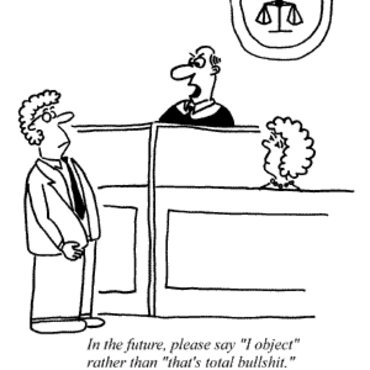
          It’s not really written in English after all, but in another language whose meanings can be quite difficult to comprehend. Some call this language legalese or bureaucratese, but there is another more revealing term for the particular dialect found in lengthy pieces of legislation like this, and that term is bullshit.

          Really grokking* this last point is something a number of Libertarians have achieved. It may lead to some deep epiphanies, among them:

    • Maybe you aren’t meant to understand it; maybe that’s the point – “if you can’t dazzle them with brilliance, baffle them with bullshit,” as the coffee mug saying goes

    • Master Bureaucrat credentials are kind of like Master Huckster credentials, they just involve specializing in and mastering different types of bullshit

    • Hang on, why did I think employing large numbers of people at great public expense to immerse themselves in creating and processing bullshit was a good idea?

    • Government is a scary bunch of bullshit, I should become an anarchist

          Anyway, thank you for reading this considerably shorter and more reader-friendly column. Besides giving you a small head start on next year’s ballot questions, if it has in any slight way enhanced your insight into understanding government, then it has served its purpose. 

          And if you know of any high school or college teachers who might be interested in having someone come in and give their class(es) a “real world” talk on civics and American government based on this essay, please write and put us in touch with them!

                                                                 *          *          *

    *Science fiction writer Robert Heinlein invented the verb “grok” to describe understanding something deeply and holistically.


  • San Francisco Libertarians File an Election Contest to Invalidate November’s Proposition A Election Due To Violations of New Law

    “The only stable state is the one in which all men are equal before the law.”
    – Aristotle
     

    There has been an ongoing problem of collusion between government officials and municipal bond advisors who often actually write the bond bills for profit. And then deceptively work with government to sell them to an unsuspecting public. To address this issue, the California State Assembly passed AB-195 which was approved by Governor Jerry Brown and on January 1, 2018 became Law. Sections of that law governs the way local governments can present bond measures on ballots:

    1. Measure shall be a true and impartial synopsis of the purpose of the proposed measure,
    2. and shall be in language that is neither argumentative nor likely to create prejudice for or against the measure.
    3. If the proposed measure imposes a tax or raises the rate of a tax, the ballot shall include in the statement of the measure to be voted on the amount of money to be raised annually and the rate and duration of the tax to be levied.

    Section 18401 of the California Elections Code says election officials who allow non-compliant ballots to be put before the public are criminally liable.

    As this complaint clearly shows, Proposition A was enormously non-compliant. The Libertarian Party of San Francisco (LPSF) was designated official Opponent of Proposition A by the SF Dept. of Elections. LPSF members called attention to these issues before the Ballot Simplification Committee. They were ignored.

    (more…)