Category: Uncategorized

  • January – July 2018: What We’ve Accomplished

    January – July 2018: What We’ve Accomplished

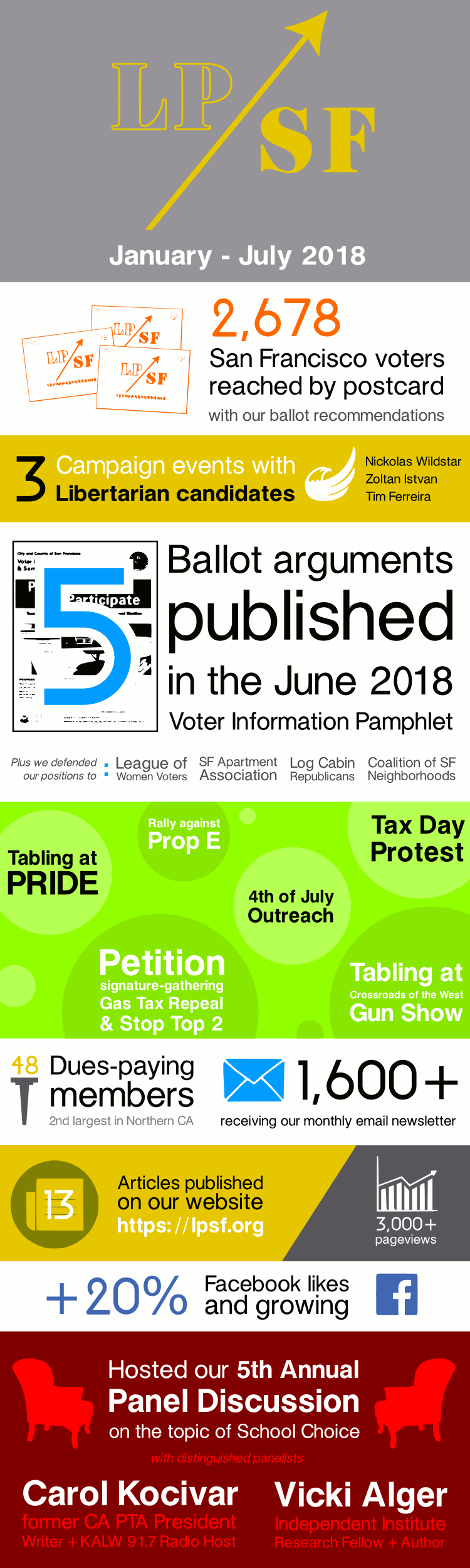
    Infographic

    We’ve really accomplished a lot in the first half of this year! Thank you everyone who continues to put in the time and energy to fight for liberty in San Francisco! It’s an uphill battle, and sometimes it doesn’t feel so rewarding, but it’s important work that wouldn’t happen without our amazing activists and volunteers.

    So, take a few minutes to reflect on the first half of this year and ask yourself: how can we make the rest of the year even better??

    If you’re reading this now and you’re not yet a member– why not? Your $25 annual membership sends a clear sign that you stand on principle and want to see real change. Please consider becoming a member today. We hope to see you.

    For the rest of you, this would be a great time to make a donation to help make the rest of this year and 2019 even bigger and better!

  • Keeping Out The Riff-Raff

    Keeping Out The Riff-Raff

    With the Nimby’s and Yimby’s battling each other over land use rules in tackling The City’s and California’s housing problems, we wonder why so little is being said about another major cause of the high prices—urban growth boundaries (UGB).  UGB’s have been around for decades all along the west coast, so it should be no surprise that the highest cost of housing in the nation tends to be in California, Oregon, and Washington state. Boulder, Colorado has a UGB and not coincidentally very high housing costs too.

    An urban growth boundary is a policy that limits growth by establishing a line where a city or metropolitan area will not expand into for development purposes.  Not all entities take the same approach to stopping growth—some are worse than others, though none are good. Communities that do not want to grow will size their UGB to the current municipality’s boundary, which prevents any future expansion of the city.  Other UGB’s are a little more flexible and provide an amount of undeveloped land for development to meet future city growth estimates, which allows for “controlled and orderly growth.” In Oregon, state law mandates that regional bodies draw metropolitan-scale UGB’s for all cities.  In California, there is no state mandate (a good thing), but many cities have enacted their own disastrous homemade policies to stop growth.

    San Jose is a perfect example of government planning gone terribly awry.  Starting in 1971, under Mayor Norman Mineta’s (later became US Secretary of Transportation) administration, the city conjured up a land-use plan that called for limiting growth not only in the 136 square miles in its city limits but another 200 square miles in its “sphere of influence” with the help of Santa Clara County.  The boundary prohibited subdivisions to the east and south of San Jose, while west of the boundary were other cities, which were either surrounded by other cities or had their own boundaries. When the bureaucrats drew the UGB around San Jose, they expected moderate growth in the next 15 years. Of course, no one could have predicted the birth of Silicon Valley—so much for central planners and their special “knowledge”—and the mad rush of workers for high-paying tech jobs who moved to the San Jose area.  As the city refused to expand the UGB to allow more development to accommodate all the new workers, the obvious occurred: a dramatic increase in land prices and housing costs. Housing prices almost doubled between 1985 and 1990 and then doubled again between 1996 and 2001. Meanwhile San Jose’s density, which had dropped to less than 3,300 people per square mile before the UGB scheme began, increased to 5,000 people per square mile in San Jose and almost 6,000 people per square mile in the San Jose urban area.  To make matters worse, San Jose’s officials wrote a new General Plan in 1994 that kept the UGB just as it was with no expansion despite the rapidly rising home prices. They also classified Coyote Valley and South Almaden as “urban reserves” and refused to allow development in those areas. Even though Cisco Systems wanted to build a new factory in Coyote Valley, which would have allowed for less commuting, and homebuilders offered to pay for all the infrastructure needed to support residential housing, San Jose still did not allow the development.  Is it any wonder that San Jose’s housing prices rank as highest in the nation?

    Davis, California, just west of Sacramento, is another good example of how an urban growth boundary impacted housing prices.  In 2000 Davis voters approved by 54% adopting an urban growth boundary to mitigate “greater traffic problems, overcrowded schools and other associated problems.”  Measure J established the UGB by requiring a public vote by the city’s residents for any conversion of agricultural designated land into developed land. At least the measure required going back to the voters in 10 years to be renewed or ended.  Unfortunately Measure R in 2010 passed by an even wider margin of 77%. It thus became an ordinance that any time the city’s land use map is amended to change land designated from agricultural or open space into urban use or urban reserve use—the voters must approve it.    Two large areas in Davis’ 1999 Land use Map called Covell Center and Nishi Properties that were earmarked for development would also need voter approval. The Covell project was submitted to the voters in 2005 and 59% voted no. Then the Wildhorse Ranch project to develop land within Davis city limits which had an agricultural designation went to the voters in 2009 and failed at the ballot by a 75/25 margin.  Not only was Davis determined to limit its own growth—it also went to extraordinary efforts to limit growth of nearby cities. When the cities of Dixon and Woodland considered new residential and commercial development to provide jobs to UC Davis graduates, additional shopping options, and lower housing prices than Davis, the voters in Davis approved a $24 annual tax to purchase development rights for up to 2,200 acres of agricultural land to contain Dixon and Woodland.  Furthermore, Davis sued to stop any development outside its city limits but within reasonable distance in its “sphere of influence.” When a developer tried to develop an area called Kidwell near UC Davis, David successfully sued to stop the project. Since then, the city has been very active in the easement purchasing business. Is it any wonder that housing prices in Davis have gone through the roof while nearby cities are much lower?

    Housing figures as of December 2014:  San Francisco-741,200; Davis-580,900; Folsom-440,500; Dixon-344,900; Winters-322,200; Woodland-280,400; West Sacramento-280,000; and Sacramento-265,600.

    One ironic trend that has occurred over the years that UGB’s have been around is that UGB’s adopted through initiative and direct democracy are generally more restrictive than those adopted by politicians and bureaucrats.  In the case of Davis, even before the voters get to weigh in, the change in land use must have a project plan that outlines all the land use components and proposed public and recreation facilities. Once the project plan is established, it can’t be changed without a public vote.  Then it must be shown that the project is in compliance with all California environmental, planning, and zoning laws. Then the City Council must approve the change in land use, and finally the voters must approve the change by a majority vote. Small wonder that one study of 65 UGB’s in California found that 27% of the municipality-adopted UGB’s had been modified in some way to accommodate some growth, but in the 15 UGB’s that were approved by voters, not one had changed at all.  The biggest beneficiaries are people who owned land before the UGB’s were drawn, and they’re not about to allow a drop in their home values.

    The equity issue is perhaps the worse consequence of UGB’s.  Clearly, limiting the amount of land that can be built on benefits relatively affluent property owners at the expense of renters and low-income families.  This has contributed to the wealth inequality we hear so much about these days, as the higher housing prices prevents first-time buyers from moving on up. Plus living in dense, crowded, dirty, crime-ridden cities—even with high-paying jobs—isn’t necessarily a higher standard of living.

    Fortunately, it doesn’t have to be this way.  Did you know that only 5.1% of the land in California is developed?  In the 5 counties that make up the San Francisco-Oakland urban area, only 34% has been urbanized.  Since 20% is government-owned land, that still leaves 45% that could be developed but, due to UGB’s and other governmental restrictions, has been taken out of circulation.  If UGB’s were eliminated, new communities would pop up all over the west coast that could accommodate everyone’s taste—from those who prefer bustling cities to those who prefer suburban or rural lifestyles.  Expanding out from 5.1% to 10% would dramatically slash housing prices, and still there would be plenty of open space left to enjoy the natural beauty of the state’s forests, lakes, mountains, and farm land. It’s not necessary to cram everyone into crowded high-priced cities or gated communities that have closed the doors behind them—there’s plenty of room for everyone.

  • Divorce—San Francisco Style

    Divorce—San Francisco Style

    Last weekend the LPSF hosted a booth at the San Francisco Pride 2018 Fair.  We’ve become a regular exhibitor (not literally!) at the fair for many years, and liberty-leaning folks always love to see us there each year with our brochures, posters, buttons, World’s Smallest Political Quiz, Spinning Wheel of Crazy San Francisco Laws, and other tricks of the outreach trade.  This year folks may have noticed that we were there under our own Libertarian Party of San Francisco banner, rather than Outright Libertarians, which we had used for the last 14 years. The general public probably didn’t even notice the subtle difference because to the average person, once you’ve seen one Libertarian, you’ve seen them all.

    Well, not exactly.  We’ve taken Outright to task for their conspicuous silence on the Jack Phillips case and the recent Supreme Court ruling.  As you probably know, Jack Phillips is the owner of Masterpiece Bakery in Lakewood, Colorado who was fined by the Colorado Civil Rights Commission in 2012 for refusing to bake a wedding cake for David Mullins and Charlie Craig who were planning their wedding.  He offered to make them other baked goods but not the cake because it violated his Christian faith, but they stormed out and left. Then they filed a complaint of discrimination with the Colorado Civil Rights Commission, which ruled in their favor and ordered Phillips to re-educate his staff (most of whom were his family members) and report to the government for two years all the cakes that he declined to create and the reasons why.  Phillips then took his case to the Colorado Court of Appeals and argued that the Colorado Civil Rights Commission had violated his constitutional right to freedom of speech and free exercise of religion. Eventually the Supreme Court of the US ruled on the case that the Colorado Civil Rights Commission had not applied the law correctly and ruled in Phillips’ favor. Supreme Court Justice Anthony Kennedy wrote the majority ruling that “the law must be applied in a manner that is neutral toward religion.”  The Colorado Commission’s consideration of Phillips’ case was “compromised” by comments by one of the seven commissioners who disparaged Phillips’ faith as “despicable” and comparable to comments made by those who sought to justify slavery on religious grounds. The Colorado Commission had previously allowed three different bakers to refuse to put anti-gay messages on cakes they were preparing. Since this was a very narrow ruling of the law, and though it’s a partial victory for folks concerned about the constitutional guarantee of freedom of religion, the issue has hardly been put to rest as other similar cases will undoubtedly end up in the courts again.  David Mullins proclaimed, “The case is about more than us, and it’s not about cakes. It’s about the right of gay people to receive equal service.”

    “Equal service”—what does it mean and does it matter who is performing the service?  To Libertarians, it makes a world of difference who provides the service. If it’s a service provided by government—and we prefer as few of those as possible—then service must be provided to all “customers” without discrimination.  This includes all government roads, schools, housing, sidewalks, marriage licenses, and all the endless amount of services the government has taken over. Because the taxpayers all pay for the services in one way or another, it only makes sense and fulfills our sense of fairness that equal access must apply to all.  However, when it comes to the voluntary sector, this is where Libertarians part company with gay activists. Gay activists want to use the force of government to punish those opposed to the gay lifestyle. Whether those who don’t want to bake the cakes or provide the flower services—or issue the marriage licenses—no one can really know if their denial of services is truly religious or simply bigotry masked by religious freedom.  Should it matter if they are really bigots or not?

    Yes and no.  We should find it abhorrent in this day and age that people are still judged as part of groupthink, rather than as individuals.  Libertarianism, if nothing else, is all about individual rights, not the rights of groups, though if individuals choose to associate in groups with other individuals voluntarily, that’s still an extension of individual rights.  However, in the real world, we all discriminate in our private lives with whom we associate, and there’s no compelling reason for that right of association to disappear when people voluntarily offer their goods and services for sale.

    Most voluntary businesses these days are looking for more customers, not less, but if a business chooses to forego some profits—for whatever good or bad reasons it chooses—why is it necessary for the government to intervene?  Are there not dozens—if not hundreds in a major city—of bakers, florists, and photographers who would be more than willing to pick up the slack and offer their services? Why was it necessary for the gay couple to get their cake made from someone who didn’t want to bake it?  Isn’t that forced labor? Weren’t there other ways to affect change of a business that they felt was unfair and uncivil like negative word of mouth, a social media campaign, a boycott, even picketing in front of the store?

    Now come the What If’s when it comes to private discrimination.  What if a gay couple is driving across Utah and wants to stop for food and lodging and no one wants to serve the couple because they’re gay?  (I was actually asked this question one year at our Pride booth.) I’m not so sure that the predominately Mormon state is as anti-gay as folks suppose; I personally know one gay Libertarian who was elected mayor of a small town in Utah.  More to the point, the couple knew they were heading into Mormon territory before they headed out, and they should have come prepared with a lunch and sleeping bags because no one should ever be forced to serve another. What if a racist business owner doesn’t want to serve a black customer in his restaurant?  Free markets and competition offer built-in incentives against discrimination. Unless all the restaurants in town have made a pact not to serve blacks, the racist’s loss is another business owner’s gain. What if an emergency vehicle comes to tend an accident victim and they discover the victim is the wrong color and refuse to treat him?  (I heard of this happening in South Africa years ago.) The answer is the medical professional has taken the Hippocratic Oath and is bound by that, so if he fails to live up to it, he should be expelled from his professional organization. Considering the huge commotion, expense, and public image nightmare over the recent Starbuck’s incident in Philadelphia, it is safe to say today that businesses that exert blatant bigotry or outrageous treatment of customers will pay a price.  However, individual business owners may choose to pay the price, so that should be their choice, and the heavy hand of government is unnecessary, as there will always be another business standing by to serve the customer—and earn a few extra bucks. If not, we have to ask what barriers has government put up that prevented other potential business owners from opening up their own shops to serve shunned customers?

    Why has discrimination based on groupthink persisted over the years?  While things have definitely improved for some groups, still some bigotry exists.  One of the reasons could be government enforcement of anti-discrimination legislation.  Of course, it is human nature to be wary of different cultures, but markets and free-dealing and voluntary trading among people do a lot more to break down barriers than the heavy hand of government.  Remember the massive flight to the suburbs in the 70’s when the busing of children and desegregation started? Forty years later, have things changed that much in the schools? Not really. Schools in the suburbs tend to mostly white, and inner-city schools tend to be attended by non-white kids.  All that fighting, hate, and expense—and not much has changed. People do not like to be forced to change their attitudes, and most of all, they don’t like change forced in their faces. Governmental enforcement of anti-discrimination laws and preferences for favored groups (at the moment) only lead to backlash, which takes many years to dissipate.  Does anyone really think that Mullins and Craig running to the Colorado Civil Rights Commission to force him to respect them would make him more tolerant or approving of gays? Not likely now—or ever. He might have come around eventually, but dealing with government bureaucrats probably turned him away from forced tolerance forever.

    Our final thought on the issue brings us back to our dispute with Outright.  We understand their unease with standing with what appears to be bigotry, but the principle at stake here is what goes on in the voluntary sector is none of the government’s business.  Individuals have—or should have—the right to serve or not serve in their own business for whatever reason they choose. Period. The same ruling that allowed Phillips to refuse to bake the cake should apply to a black baker refusing to bake a cake with Nazi dogma or the recent case in Seattle where a gay coffee shop owner ordered religious folks passing out literature that he found offensive out of his business.  A press release from Outright posing the other side of the coin could have shown their disdain for Phillips’ choice and still upheld Libertarians’ reverence for freedom of association and property rights. We still hope that they will come around and defend all individuals’ freedoms, not just the ones they prefer, and denounce all government coercion to legislate morality. Until then, we’ll do the job for them.

  • 5th Annual Panel Discussion: School Choice

    5th Annual Panel Discussion: School Choice

    Join the Libertarian Party of San Francisco for our 5th annual panel discussion. We will be discussing the pros and cons of school choice.

    Click here to reserve your tickets on Eventbrite

    This event has already passed. Join us next year for another great panel discussion!

    Date and Time
    Thu, June 21, 2018
    5:30 PM – 8:30 PM PDT

    Location
    Mechanics Institute – Meeting Room
    57 Post Street, San Francisco, CA 94104

    Panelists:

    Vicki E. Alger is a Research Fellow at the Independent Institute in Oakland, California and holds Senior Fellowships at the Fraser Institute, headquartered in Vancouver, British Columbia, and the Independent Women’s Forum in Washington, D.C. Her research focuses on education reforms that promote a competitive education marketplace and increase parents’ control over their children’s education. Alger has advised the U.S. Department of Education on public school choice and higher education reform. She is the author of more than forty education policy studies and four books, most recently, Failure: The Federal “Misedukation” of America’s Children.

    Carol Kocivar has worked to improve public education ever since her two children attended public schools in San Francisco. She is a past President of the California State PTA and has advocated for adequate school funding, small class sizes, arts for all children, special education funding, physical education and counselors, civics education, and the defeat of vouchers. She has worked as a journalist, and attorney, and ombudsperson for special education. She hosts “Looking at Education” on KALW radio 91.7 FM in San Francisco and is a writer for Ed100.org, a web resource to create informed parent leaders.


     

    Moderator: Allen Saakyan, founder of Simulation

    Simulation is a multidisciplinary daily show and live event series featuring some of the greatest scientists, entrepreneurs, technologists, and educators of our time discussing humanity’s most thought-provoking questions.

    Website: simulationseries.com
    YouTube: youtube.com/simulationseries
    Donate on Patreon: patreon.com/simulationseries

    Schedule
    5:30-6:30 Reception
    6:30-7:45 Panel
    7:45-8:00 Audience Q&A
    8:00-8:30 Reception

    Refreshments will be served.

    For all inquiries or to submit a question to the panel, e-mail Rebecca Lau at vicechair@lpsf.org.

  • San Francisco, 2028– A Healthy City?

    San Francisco, 2028– A Healthy City?

    San Francisco, 2028 – Under legislation passed by the Board of Supervisors on Tuesday, all city residents who don’t already have a SuperHealthySF chip implant will be required to obtain one by January 1.

    After that date, persons not showing up on a Department of Public Health scan will lose various privileges, such as the ability to connect to the Internet via the civic network, the ability to use virtual reality programs and other services provided by the library, and the ability to enter parks and other facilities that require chip recognition for entry.

    Visitors will be able to get temporary chips by applying and paying a fee at one of the DPH checkpoints at SFO, on the bridges, at the Convention & Visitors Bureau, or along the city’s southern border.

    A spokesperson for the Mayor’s Office said at a press conference yesterday that the SuperHealthySF program has been a tremendous success.

    “Abuse of drugs, sugar, junk food, meat and dairy are down since expanded voluntary participation was implemented in 2022,” said Don Lee. Whether this decline was mostly attributable to chipping, or to the longer-term trend toward healthier lifestyles has been debated.

    The chip implant program, first conceived in the wake of 2018’s ban on the sale of flavored tobacco products, was originally designed to allow parents to monitor their children for tobacco use.

    In 2021 it was revealed that a secret “backdoor” had been built into the chips to allow SFPD to also monitor the data being collected from children, as well as being able to see when and how parents viewed that data. This provoked complaints from parents and civil liberties organizations concerned about increased surveillance.

    Nevertheless many residents, enticed with free or discounted tickets to local attractions and other perks for “chippies” as the persons with implants came to be known, signed up for the expanded voluntary participation, according to an information sheet provided by the DPH.

    “Knowing that if someone put something unhealthy into my food or drink and I consumed it, my chip will immediately notify the health police and they can come and stage an intervention, makes me feel safe,” said Richmond district resident Michelle Kim.

    “With all the violent street crime these days from the gangs selling illegal sugar and meat products, it’s good to feel government still has ways to protect us,” agreed Kim’s friend Bennie Baumgarten, who was waiting in line with her at the Companion Animals Registration Center to renew their cat licenses after the center’s electronic licensing payment app was taken down by hackers.

    However other evidence suggests large numbers of residents still do not want to be chippies, and resent the city government limiting their access to public services if they don’t effectively surrender control over their own bodies, although few were willing to admit holding such views to a reporter. Relocation applications submitted by San Franciscans are up 250% in the past year, according to data from the state Bureau of Internal Migration.

    Nevertheless, as of 2029 those who remain in The City will be required to accept electronic health supervision or pay fines of $430 for a first offense of being unchipped, and as much as double that or up to 6 months jail time for subsequent violations. After hitting a low in 2019, the number of people incarcerated by authorities has once again been rising, especially after construction of a new city jail able to house twice as many inmates in 2024.

    “Prohibition still doesn’t work” said Lily Tang, an activist with the Libertarian Party of San Francisco, now based across the bay in Alameda County due to tightened political regulations in SF. “We’re sliding toward an authoritarian police state. We’ve been warning people about this for years, but back before the widespread use of facial recognition cameras and chipping, when they were only going after the sale of a few harmful drugs like tobacco, nobody wanted to listen. Now it’s starting to sink in.”

  • The Seen & The Unseen

    Do you ever wonder why The Golden State is no longer golden?  Just one look at a state initiative that is circulating for signatures for the November election might give you a clue.  The desire to “do something” quickly to fix a serious problem might make sense at first thought, but not considering the long-term effects of more government laws can (and usually does) lead to worse problems.  It’s what Frederick Bastiat, the French classical liberal economist, referred to as the “seen” and the “unseen.” In this case it’s the repeal of the Costa-Hawkins Rental Housing Act, or as more commonly referred to as Costa-Hawkins, passed in the state legislature in 1995.  A spokesman for the Alliance of Californians for Community Empowerment, which supports the repeal, noted, “People are excited. This is the easiest signature-gathering we’ve ever done. It’s telling…People are hungry for rent control and…to see solutions to the housing crisis that can provide immediate relief to themselves and their neighbors.”

    “Immediate” is the key word here.  California’s housing market has people in the rest of the country rolling their eyes at the eye-popping prices people here pay for rent and home ownership.  There’s no question that the repeal of Costa-Hawkins would lead to stability in the ever-escalating rental market. So, what’s not to like?

    Plenty, but first a little background on Costa-Hawkins.  In the 1970’s and 1980’s most of the major California cities passed rent control laws.  While they varied from city to city, in general the laws limited the amount housing providers could increase the rent from year to year; this was usually tied to an official measure of inflation.  The California courts have generally upheld the principle that local rent control laws cannot prevent housing providers from receiving a “fair” rate of return on their investment. Good luck on getting bureaucrats in local rent control boards to figure out what “fair” should be.  Costa-Hawkins put up some definite roadblocks to local rent control laws: no rent control for housing occupied after February 1, 1995; no rent control for housing exempt from local rent control laws in effect on February 1, 1995; and no vacancy decontrol. Vacancy decontrol is probably the most hotly contested part of Costa-Hawkins because it allows housing providers to raise the rent to market rates when a tenant moves out.  Tenant activists point to vacancy decontrol as the real problem because it leads to evictions and displacement as housing providers do anything the can to oust current tenants to jack up the rents. Expect a ton of political advertising and propaganda as both sides fight over the laws governing the rental market. On the one side it’s Michael Weinstein (of condom ballot measure fame in 2016) as President of AIDS Healthcare Foundation and tenant groups against the California Apartment Association, the California Chamber of Commerce, and the California Building Industry Association.

    So, what will happen if Costa-Hawkins is repealed?  According to Assemblyman Richard Bloom, who introduced the repeal bill, not much because it only gives cities more flexibility regarding their rent control policies.  That’s nonsense—loud-mouth tenant activists in all the major cities will immediately be pressuring their local politicians for rent control on all housing—including single-family homes—regardless of the year built and to get rid of vacancy decontrol completely.  The renters must be protected at all costs, so expect a flurry of local laws statewide to be enacted if the repeal of Costa-Hawkins is approved by the voters. Perfect price control.

    Well, not exactly.  The most obvious side effect of increased rent control will be housing providers going out of the business and selling their buildings.  With the devaluing of their properties by more bureaucratic control, there will be a shift of units from the rental market to the ownership market.  The irony here is that increased rent control would make the state more attractive to folks who are able to buy a home—typically the more affluent and not renters who tend to be lower income.  How all this helps renters in the long run is anyone’s guess since less apartments or houses available is no help to anyone needing a place to live who doesn’t want or cannot afford to buy.

    Then there’s the double whammy of reduced construction of new rental housing.  Even a report from the Legislative Analyst’s Office—not a libertarian think tank—concluded that expanding rent control would likely lead to “significant reductions in construction of new housing” by limiting the profitability of new rental housing.  Even backers of the repeal concede that building more housing is essential, but they say that will take decades, and tenants facing big rent increases need “help” now. The director of the AIDS Healthcare Foundation’s “Housing is a Human Right” campaign declared, “There’s no building our way out of this crisis.”  Their solution: pass laws to discourage more building. But don’t worry—when there are zero apartments available to rent, they’ll be back with more laws to fix that crisis.

    A third consequence of repealing Costa-Hawkins is stricter rent control would encourage more discriminatory behavior by housing providers when selecting tenants.  Obviously with less rental stock, it will become even more of a “seller’s market.” If a housing provider gets 25 applicants for the rare vacancy that occurs, do you think it’s going to be the more affluent or the financially struggling renter who’s going to be selected for that apartment?  Especially if the housing provider can never get the renter out—and why would they move if they’re protected by rent control forever—why would the housing provider pick the poorer tenant when the more financially able tenant looks to be a better investment? As always, we say these laws to “help” the poor hurt them the most.

    Yet more unpleasant consequences of more rent control are reduced maintenance of rent controlled properties and increased rents for properties not covered by rent control.  It only makes sense that if your costs go up but your revenue doesn’t, you have to cut corners somewhere if you are to stay in business. Yes, the repeal of Costa-Hawkins would require allowing housing providers a “fair” rate of return for maintenance and other costs, but “fair” is in the eye of the beholder, and we wouldn’t count on government bureaucrats to be supportive of property rights or “fairness.”  In crowded coastal cities overrun with tenants, the rent boards will bow to the tenant activists and maintenance will tend to be deferred. That’s how slum landlords are born. We point out also that nothing exists in a vacuum, so if rent-controlled properties are kept artificially low, if there are any properties left that are not rent-controlled if Costa-Hawkins is repealed, they are bound to go for a premium.  Just as we’ve seen with “affordable” housing, when some units are kept below market due to government intervention, correspondingly other units become priced higher. Not only new homes built, but even used homes too. The politicians can pass laws until they’re blue (no pun intended) in the face but cannot repeal the economic laws of supply and demand.

    For those concerned about “revenue stream,” the repeal of Costa-Hawkins doesn’t bode well for either state or local governments.  For the state, the reduction in income of housing providers due to stricter rent control is likely to reduce extractions for state income tax due to devalued properties and less capital gains when housing providers sell their properties.  On the other hand, more affluent folks buying homes in California could increase income tax payments. The Legislative Analyst is predicting “that the measure would result in a decrease in personal income tax revenues of an unknown—but potentially significant—magnitude.”  As for local governments that are always in need of more money due to the ever-increasing cost of pensions (yet another crisis on the horizon), the decline in property values would result in lower assessments over time as they are sold and reassessed to their market values.  These property tax losses could range from a few million dollars to the low hundreds of millions of dollars per year. The Analyst adds that sales tax revenue will likely increase due to renters having more disposable income due to lower rents, but the offset will not be enough to balance the loss of personal income tax revenue.  He predicts a “net decrease more likely than net increase.”

    Another part of this issue that you’re likely to hear about is local control.  Michael Weinstein says that communities should be able to address the issue of rent control themselves, “The fundamental question here isn’t even the merits of rent control.  The real question is why shouldn’t cities be deciding this? Why is the legislature taking away all the authority over land use from cities?” Indeed the issue of local versus centralized control is a thorny issue.  The tyranny of government overreach isn’t just limited to centralized governmental power, as “local control” can also lead to a tyranny of its own. The government-sanctioned racial discrimination laws of segregation were all examples of “local control” until the federal government stepped in.  Similarly it was the California courts that have come to the rescue of property owners facing outrageous local laws that infringe on their property rights. The tyranny of unlimited government is a double-edged sword that can (and often does) apply to both local and centralized powers. In the end, there’s nothing particularly sacred about “local control,” but it is preferable to centralized concentration of government because people are free to move away from local tyranny to a community that fits their needs better.  When government’s tentacles are so overreaching as they are under centralized power, there’s no way to escape them.

    Our last thought on the Costa-Hawkins repeal effort is the stagnation it would bring.  For all the problems in the US, why do immigrants still line up at the borders to come here (often at great personal expense and heartache)?  The chance for a better life—and certainly economic opportunity is a huge part of the reason. Contrary to what the statists claim, the old Horatio Alger dream is not dead.  A vibrant constantly changing society which encourages and rewards upward mobility is still what beckons foreigners to America, and California in particular. Repealing Costa-Hawkins would encourage just the opposite.  I know renters who have stayed in their rent-controlled apartments for decades. They probably would have preferred to move somewhere else at some point, but the security of having a stable rent was more important than taking a chance and moving.  I have a friend from Europe who always says that the constant changing of jobs and moving she sees in America—that’s unheard of in Europe, where you’re lucky to find a place to live and work, and people never give them up because you might not find another one.  You know something is amiss in California when even the Legislative Analyst mentions reduced turnover among renters and moving in general as likely consequences of the repeal. Aside from making it harder for renters—especially lower-income ones—to find a suitable or any place to rent in California if the repeal passes, perhaps the stagnation of “stability” would be the cruelest consequence of all.

  • The Bad Apple

    The Bad Apple

    I’ve been meaning to write this article for years, and it’s only the addition of Prop G to the June ballot for a new parcel tax for San Francisco’s government teachers that prompted me to think about my experience with teachers when my son was growing up in The City.  I must add, first of all, that my experience with teachers in both government schools and religious schools was very positive. Almost without exception, I found all the teachers I had contact with were dedicated, loved the kids, and worked long and hard to make sure the kids actually learned something in school.  They weren’t just overpaid babysitters watching the kids so both parents could work, as often happens these days.

    But what do you do about the occasional bad apple?  How a government school and a religious school handled the problem illustrates the essential difference between government and voluntary schools.  

    I was one of the lucky ones who got my first choice on the school assignment lottery system used in San Francisco.  The Japanese Bilingual Program at Clarendon was my first choice, and through some stroke of luck, I got it. I remember well attending a tour of the school a year before my son entered kindergarten, and there was so much tension in the air that the principal noted that you could cut it with a knife.  With close to 1,000 families vying for, at most, 100 slots between the two programs at Clarendon, and the cost of $20,000/year in tuition per child (at that time) at stake if the lottery system didn’t pan out, you can understand the anxiety of the parents.

    The teachers at Clarendon were excellent, not the least of the reasons being that parental involvement was required, not requested.  However, my son’s second grade teacher was not well-liked, and already there were grumblings about her teaching from the parents that year.  She was old-style teaching, and that didn’t fit in well with today’s modern, progressive San Francisco parenting. I thought she was OK—perhaps not the best or the warmest, but I wasn’t particularly concerned.

    By the time my son was in the fourth grade, the situation definitely deteriorated to the point that many parents were complaining to the administration about her.  Of course, the union was involved and defended her vigorously in the numerous meetings about the teacher. According to one parent I spoke to, he said that the parents were so up in arms that they organized a strict timetable schedule amongst themselves to ensure that at least one parent was in the classroom at all times every day during school hours.  That’s how unhappy the parents were with this teacher. By the end of the school year, amazingly the teacher was flat out of luck and options, and even the union could no longer defend her with all the parents’ complaints. She was advised by the administration to retire gracefully or risk losing all her retirement benefits. She retired—and the parents celebrated.

    Now here’s how a similar situation ended differently when my son moved on to a religious school for middle school.  I met his homeroom teacher at “Back to School” night, and she seemed OK to me—nothing out of the ordinary that would have evoked the brief storm that quickly followed “Back to School” night.  Sometime in the fall (either in October or early November—certainly well before Thanksgiving) on the way home from school one day, my son told me that his homeroom teacher had been replaced with another teacher.  Not a substitute—completely replaced. What happened? Apparently, the teacher was also of the old-style method of teaching and had taken to calling the kids “losers” and other non-positive names if their work did not measure up.  Her style was probably more suited for physical education and sports than academics and outraged the parents who heard about it (I hadn’t). Needless to say, progressive San Francisco parents paying good money directly out of their own pockets raised a big stink with the administration—and she was out.  Just like that.

    In the government school, the parents fought long and hard for two years to get rid of a teacher they were unhappy with.  In the voluntary school, a similar situation was handled in about two months. The parents raised Cain and fearing a loss of their “customers”—and the dollars they bring—the reaction of the administration was immediate.  That’s why you never hear about “rubber rooms” for teachers when parents pay for their children’s education directly themselves.

  • Ballot Recommendations (June 2018)

    Ballot Recommendations (June 2018)

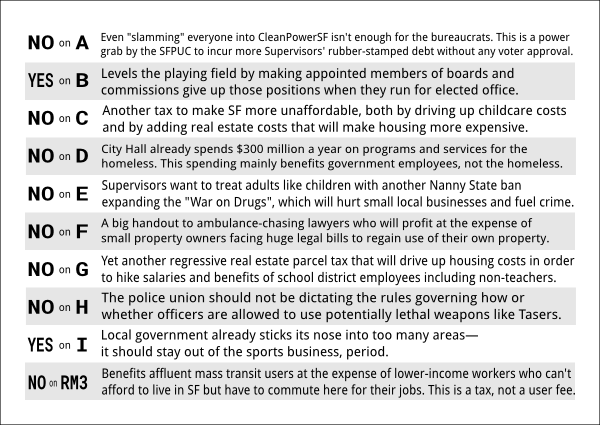
    California’s primary election is quickly approaching– it’s time to make sure you are prepared to go to the polls! The LPSF has made official recommendations on all the county-wide ballot measures to help inform you on the issues. We consider these very seriously and judge each based on the answer to the question “does this measure advance liberty or restrict it?”. Here are our recommendations, in brief:

    Postcard

    You may have seen these already– on May 10, we mailed out 2,678 postcards to registered Libertarians in the city with this same information. We also have 4 arguments published in the city’s voter information pamphlet and spoken about many of these issues at other organizations’ events.

    For more explanation on these, check out this article from our April newsletter: Both Sides Now

    We’re always happy to offer more information on our positions for these and answer your questions. Please feel free to contact us, and remember to vote on June 5!

  • Splitting the Vote, Sharing the Message

    Splitting the Vote, Sharing the Message

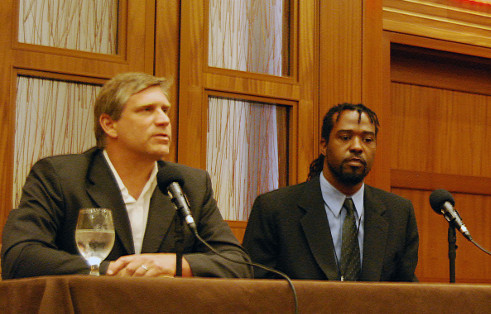
    On Sunday, at the California Libertarian Convention in Long Beach, delegates voted for two candidates to share the party endorsement in the Governor’s race. What follows is a recounting of events and an explanation of why that’s healthy for the party.

    When the Chair, Ted Brown, opened the call for endorsements, our own Tim Ferreira approached the podium with an unorthodox motion. Rather than moving for the party to endorse either Nickolas Wildstar or Zoltan Istvan for Governor, Mr. Ferreira made his motion to endorse both of these candidates. Although the delegates were caught by surprise, the motion passed by a majority vote, and both candidates were endorsed.

    However, it didn’t end there.

    An hour or so later, our business was disrupted with a motion to suspend the rules in order to reconsider the earlier endorsement. Soon, we were back to where we started with the understanding that we should consider each of these endorsements separately.

    What quickly followed was a motion for the party to endorse Mr. Wildstar. In a 10 minute speech, Nickolas Wildstar’s resounding optimism had the convention ballroom fired up, and the delegates echoed this by voting unanimously an emphatic “yea” for his endorsement. It all felt so right. Spirits were soaring and the energy level was high, but it quickly dropped off as the Chair surveyed the delegates for other endorsements. The crowd fell silent and for several seconds we sat waiting nervously for the moment to pass. Just as the call was about to close, I stood and made the motion for the party to endorse Zoltan Istvan.

    Zoltan was not present to speak for himself. He had not attended the second day of the convention. On his behalf, Tim Ferreira again addressed the delegates with a simple message:

    “Do what is best for the party.”

    At this point, it bears mentioning that these candidates are both staunch Libertarians and, put to the test, they are aligned on 99% of the issues. Despite their similar beliefs, the way they lead their campaigns could not be more different. In the Governor’s debate which took place on the first night of the convention, the two held the stage like yin and yang. Wildstar’s unrelenting positivity neatly juxtaposed Istvan’s stalwart pragmatism. Nickolas is a man of the people, and his spirit and enthusiasm will lead us to victory through igniting a grassroots movement to #BringBackLiberty. Zoltan is a high profile entrepreneur who is focused on garnering as much media attention for himself as he can, speaking on technology and transhumanism and peppering in the Libertarian message when it makes sense. At the conclusion of the debate, the crowd had a clear favorite. Nickolas Wildstar is the one who will lead us to victory.

    Having spent time with both candidates and gotten to know them personally, I know that both are intelligent, passionate, and firm believers in Libertarianism. I, personally, like and support both of them. But, for the party to endorse both sends a more powerful message. For the delegates (having just voted to endorse Nickolas Wildstar) to vote to endorse another candidate seems absurd. If they believe that Wildstar is the answer and that he can win the election, it would be foolish for us to encourage Libertarians across the state to split the vote and reduce our chances of making it past California’s awful top two primary.

    However, the vote was counted with 45 delegates voting “yea” versus only 35 “nay”. The party had once again settled on endorsing both candidates.

    So then, are these 45 delegates fools? Have they contradicted themselves? Have they sabotaged their own goals? I think no. I think this is healthy. The vote tells me that we are becoming more pragmatic and are carefully evaluating our priorities.

    As that same morning kicked off with Nick Sarwark addressing the crowd  with the message that we need to start looking outside the party— to invite others in and find out why they are coming and how we can help them realize they belong— the Libertarian Party of California delegates took a close look at themselves and came to terms with the harsh reality that we don’t have a shot of winning the Governorship in 2018. As painful as it is to admit, all the energy and optimism in the room after Wildstar’s speech does not extend far beyond those walls— not nearly far enough to garner much of a share of the vote.

    By endorsing both candidates, the delegates signal their understanding that our endorsement just doesn’t mean all that much right now and that our candidates have a slim chance of making it into the top two either way. We admitted that the primary objective of these campaigns— what we can realistically hope to achieve— is to spread the message of liberty as far as we can possibly reach. Nickolas Wildstar’s ground game of hitting the streets and engaging citizens directly, and Zoltan Istvan’s national media reach introducing curious minds to Libertarian ideas through speaking on technology and futurism— both of these strategies serve the party’s goals and both of these candidates are worthy and capable of spreading our message. And we are very fortunate to have both of them leading the charge to promote us.

    I am not optimistic that we will get much of a showing in the Governor’s race this June primary, but nor am I discouraged. I will vote for and campaign for Nickolas Wildstar. I will help spread the message that there is another option. The efforts of these two candidates and their volunteers will continue to inspire a new wave of voters and activists and grow our party. One day, maybe not too far from now, if we are patient and determined, we will turn California gold. Our day may not be today, but it will come.

    They can’t beat you if you never give up.

  • Both Sides Now

    Both Sides Now

    With the June election just around the corner, expect to see the LPSF’s arguments all over the Voters Handbook that will be mailed out next month. There are 10 local propositions on the ballot for San Francisco County, and we covered most of the major ones either as the official opponent or in our paid arguments. Here’s a short synopsis of our arguments that you won’t hear about in the local media.

    Prop A—Public Utilities Revenue Bonds. This measure would give the SFPUC the authority to issue revenue bonds for power facilities, in addition to the authority they currently have to issue revenue bonds for water delivery and sewers. The politicians definitely want PG&E out of The City, and Prop A gives them the power to incur debt without voter approval to force all residents to get all our power needs from The City and no one else. We are no fans of PG&E—and we say so in our argument—but will a government-owned and run monopoly serve residents any better? We also questioned the wisdom of the SFPUC’s current practice of mixing groundwater in with our drinking water, despite the current campaign to “educate” the public with paid consultants regarding safety and the necessity of rate increases. Lastly, we had something to say about the ongoing “slamming” of all San Francisco residents into the CleanPowerSF program—how tacky can they get?! We recommend a NO vote on A.

    Prop C—Additional Tax on Commercial Rents Mostly to Fund Child Care & Education. Heavens to Betsy 

    —it’s another “crisis” in San Francisco! The City that spends more money per resident than any other city in the country except Washington D.C. is facing one “crisis” after another. This time it’s an “early education crisis.” It is true that child care is outrageously expensive in The City, but why is that so? Could it be all the regulations that make it so expensive and burdensome to open a child care center? Could there be other reasons for families choosing to move to the suburbs like better schools, lower housing costs, larger living spaces, and less traffic and parking woes for which “universal child care” won’t make a bit of difference? Prop C will tax commercial businesses that rent out spaces to other commercial businesses. Are the politicians so silly to think the additional costs of the tax won’t be passed on to the businesses leasing out the spaces and they won’t increase their prices to their customers? Is there no relationship between higher taxes and higher living costs? The politicians prefer to ignore reality and just tax “commercial landlords” hoping for “free” money to dispense. However, they’re not completely in the dark since Prop C exempts commercial landlords that rent space to small businesses, government tenants (we love this one), and nonprofits from the higher gross receipts tax, so they’re admitting that costs do matter. We would have liked to mention in our argument why is government funding any child care at all—let alone more—since it’s the job of parents to provide for their children (which includes all education, not just early education), not the taxpayers and those who choose not to have children, but this is a leftist city and “children” are a sacred cow, so we contained ourselves. Prop C will do nothing to lower child care costs—in fact, with more government funding, it probably will drive prices up—but it will make more parents dependent on the politicians to “help” them. We recommend a very strong NO vote.

    Prop E—Ban on Flavored Tobacco Products. This measure is a referendum on the ban on flavored menthol cigarettes, hookah tobacco products, and E-cigarettes. Shamefully every member of the San Francisco Board of Supervisors voted to ban the sales of all of these products in San Francisco. This is not even an issue of protecting “the children” because the banners already banned the sale of all tobacco products to anyone under 21 (in San Francisco and statewide too), so the ban is truly about treating adults as children since our leaders know what’s best for us all. Even more shameful is banning E-cigarettes since they are supposed to help people kick the smoking habit, but the banners don’t approve of any smoking at all. Of course, none of these bans do any good as prohibition never works and folks will continue to get the products they want—either through online purchases, purchasing them in nearby cities, or the reliable good ol’ black market. We advise a strong NO vote on E to send a message to the Board of Supervisors to end their busybodyism and let us make our own decisions for ourselves.

    Prop G—Parcel Tax for the San Francisco Unified School District. Another parcel tax for “the children”? No, actually this time it’s for the teachers, and the earlier title of the measure was the “Living Wage for Educators Act of 2018,” but they were probably forced to change it to the more honest parcel tax that it is. That’s $298 extra per household—no chump change especially with the recent $99 parcel tax for CCSF, the $12 parcel tax to “Save The Bay,” and the current parcel tax of $244.10 that still has ten years left on it. Considering that about 1/3 of San Franciscans with children choose private schools over “free” government schools, despite the tremendous costs of private schools, it’s going to take a lot more than yet another parcel tax to attract better teachers and improve the outcome at San Francisco’s government schools. It’s no secret that when the school district negotiated their last contract with the teachers’ union when they were threatening another strike, part of the settlement was a salary increase of 11% over the next 3 years, an overall compensation boost of 16%, and that both sides would work together to push for a parcel tax for the June election for an additional 2% salary increase at least. Voila Prop G. I had my own son in a government elementary school here in The City years ago—one of the good ones—and from my own experience, I can tell you that almost all of the teachers were dedicated and hard-working, but there was always the constant worry of all the parents of the teachers going out on strike.

    This never happened when my son was in religious school later on, despite the government teachers getting better pay and benefits. The one time there was a big dispute between a husband and wife teaching team and the administration at the religious school—they just quit at the end of the school year and that was that. If the government schools need to offer better compensation, we suggest they cut out the administrative fat and get back to teaching basics like algebra and the Constitution in middle school, rather than burdening property owners even more, despite such a poor record. We recommend a strong NO on Prop G.

    Prop H—Use of Tasers by San Francisco Police Officers. While taser use could be preferable to the tragic killing of civilians by police officers that we read about in the news often these days, tasers have their own problems too. Hundreds of people in this country alone have died after being tased by the police. Prop H would specifically let officers tase anyone who is actively resisting, and when “active resistance” is so loosely defined as even “tensing,” this creates a dangerous situation for anyone stopped by the police for any reason. While being a police officer can’t possibly be an easy job, perhaps better training regarding explosive confrontations would serve and protect the public better than more deadly weapons. Because we prefer to see more restraint when government’s ultimate agents of deadly force do their jobs, we recommend a NO vote on H.

    There are also 3 other measures that we submitted arguments against for the “free lottery,” but we did not win the lottery for these measures or submit them as paid arguments due to budget constraints.

    Prop D—Additional Tax on Commercial Rents Mostly to Fund Housing & Homelessness Services. This is a competing measure to Prop C, and if both measures pass, then the one with the most votes becomes the law. Again, the emphasis is to tax rich “commercial landlords” and exempt small businesses and nonprofits. Again, we point out these taxes will be passed on to the ultimate consumers in the end, as always. The San Francisco Tax Collector is currently enjoying record collections due to San Francisco’s hot real estate market, but still it’s never enough. Increased subsidies will only increase the “need” for more housing subsidies. The City currently spends around $300 million per year on the homeless—and the problem is getting worse, not better. Higher taxes on “landlords” will do nothing to solve either problem, but they do make good sound bites for politicians to claim they are “doing something.” We also recommend a very strong NO vote on this one.

    Prop F—City-Funded Legal Representation for Residential Tenants in Eviction Lawsuits. There are already plenty of protections in place in this city where 70% of the residents are renters. In fact, it is already so hard to get a tenant out of one’s private property that many potential housing providers simply forego the potential earnings and leave their properties vacant rather than deal with politicians and bureaucrats who have zero respect for private property. Renting a place to live and providing a place to live—this is a completely voluntary transaction by both parties, and the only proper role of government is to enforce the terms of the agreement signed by both parties. Now, if it were a criminal matter where the government is threatening the loss of one’s liberty, then it’s reasonable for the government to provide a lawyer if the accused has no resources. But renting is a civil, not a criminal matter, so why should the taxpayers have to pay for more lawyers at City Hall? Worse still, a housing provider faced with a problem tenant would be forced through taxation to pay for a lawyer for the tenant in order for the lawyer to deny the housing provider their property rights to their own property. This is ludicrous! This measure is pandering at its worst to appeal to all the renting voters in a renters’ city, so it deserves a very strong NO.

    RM3—Regional Measure 3. This is a regional ballot measure that all 9 nine counties of the Bay Area are  

    voting on. It will increase the tolls on all Bay Area bridges, except the Golden Gate Bridge, by $3 over the next few years. We railed against this measure in the last newsletter, so there’s not much to add here. Our ballot measure argument emphasized the equity issue of having the less affluent working-class folks who can’t afford to live on the peninsula but have to commute to their jobs on the peninsula who will be paying the lion’s share of the higher tolls so the more financially comfortable can enjoy the (supposedly) better public transportation the tolls will pay for. Talk about wealth redistribution! This measure is clearly a tax, not a fee, since the payers will not enjoy much benefit since the bulk of the tolls (the part that isn’t wasted) is going to mass transit, not the roads. However, the proponents are getting away with calling it a “fee,” which only needs a 50% + 1 vote majority, rather than the 2/3 approval requirement for a “tax.” Our argument also took a few well-deserved pot shots at the MTC for its mishandling of earlier government boondoggles like the Central Subway, the Bay Bridge, the Oakland Airport Connector, and the Transbay Terminal, but it did not win the “free lottery” argument, and there are no paid arguments allowed on regional measures, so you will not see our argument in the Voters Handbook. Nevertheless, we recommend a very strong No on RM3.

    As always, we expect the majority of San Francisco voters will probably vote the opposite of what we recommend on the ballot measures, but nevertheless we always make it a point in each election to see that the argument for more limited government is always presented to the voters, not just the statist side. We hope to be pleasantly surprised from time to time! In the last general election in 2016, San Francisco voters amazingly voted down another proposed sales tax increase with a 65% NO vote majority. Hope springs eternal!