Category: Uncategorized

  • San Francisco Diary: Black Eggs, Black Ops, Tail of Two Headless Torsos, Broken Beams, Broken Dreams, and Don’t Forget the Lucky Dog!

    SAN FRANCISCO ­– Passing the bustle and grime of Fifth street with its soot wafting down on the dingy Hall of Justice and its asbestos-ridden caves of crooks and cutthroats and where idling autos queue to sail past a plaque marking the end of the Eisenhower Interstate and Defense Highway System, one turns past a sketchy former SRO now unoccupied by residents but having something-to-do with a Carlisle Group affiliate called the Community Housing Partnership. I peered inside and did not see much housing, let alone community, so unfearingly I turned onto Clara street – more of a slot than a street by San Francisco standards. After all, before it was “South of Market,” it was “South of the Slot,” but it retained the Bay Windows characteristic of Oz. Before Governor Brown 2.0v2 banished redevelopment agencies to the far side of the Moon, Clara was officially blighted, or as the tune whistled by activists in decades-long eminent domain battles lauded over by San Francisco’s newly minted mayor went, “London Breed is tearing down.”

    One beneficiary of this heroic effort to displace long-term residents to build affordable housing (or in some cases hotels like the ghastly post-modern Marriott and the trendy Yerba Buena Center, scene of many an Apple product rollout) in the city where Jim Jones once sat on the Housing Authority is long-time Clara Street condo owner and newly minted California Senator Kamala Harris. Before her days of appearances on “Politics & Eggs” in New Hampshire or posed over an egg and cheese Breakfast on ABC’s Good Morning America, Harris lived for over a decade in a cheerful sunny condo here in the name of Amon Hurlihey overlooking a lovingly-maintained garden adjoining a rare Federal-style Victorian. There, in her modern kitchen inspected by Building Inspection Chief Angus McCarthy, a modern Horatio Alger rising from street riff-raff on the tattered sidewalk of Clara to became a developer to the Politico-stars (or so goes the fable), I imagine Harris poached her own eggs as she gazed down on her friendly gardener neighbor and collector of Oriental carpets – Brian Egg, lately severed of his head. She the then easied on over to dispense justice to the parents of truants and check in with her varied and sundry informants, or when her matters of importance rose so that a limo was necessary to loftier purveyors of fine kool-aid – it would idle in front of Brian Egg’s garden.

    I imagine she occasionally purchased her free range eggs from a nearby “formula-retail” establishment otherwise known as Whole Foods on 6th. Brian Egg’s head (before someone ran off with it, or more technically, “poached”) was usually stuffed with nourishment from St. Anthony’s Kitchen, a place hardly changed from when Upton Sinclair ran for Governor. Debasing myself to walk in his shoes with shoeleather journalism, I discovered Clara street formed tight and beautiful community of neighbors. The “suburban looking boy, clean, not like the others” stocking the Whole Foods would even bring over buckets of water – and sometimes Blood – hop up on the roof of Egg’s Federal Victorian and pour them down. Surely, he was testing the waterproofing. And so it went on for months, according to Egg’s other, far more approachable neighbor, a retired teacher and West Coast Artist named Wilma of the type that is becoming a rare breed in San Francisco, as I heard her recount the tales of the numerous military-looking men appearing on Egg’s block in the months surrounding his disappearance.

    Egg was certainly familiar with the type (High and Tight, muscled, roving in packs), having escaped to San Francisco in the 70’s like many with diminished capacity searching for communities like those once flourishing on Clara from his oppressive Father – an Army general buried at Arlington who for some reason liked Florida. Egg’s family were prone to untruths and concerned about the impact of notoriety on appreciated property values. Egg’s lifestyle was not sexualized. In fact, he proclaimed himself to be asexual, I learned, concerned more with art and things of beauty as he fertilized his garden and made it grow. Not enjoined by Wilma, I peered though a foxhole and gazed out to an untended Paradise.

    The real news on Clara Street is that of its community and its artists. It is the news of Wilma’s studio and the stories of how she bought the place when housing actually was affordable for some reason from its builder who recalled hauling rubble during the great earthquake. I met Wilma talking to neighbors on the street, and they were eager to speak and excited I actually presented myself as a journalist with a platform to tell their stories. In spite of the tabloid headline opportunities to match the Big Apple Post’s Headless Body in Topless Bar, that bar was not truly topless, and few journalists had made the effort to head down and check out the fishtank. It was not a fishtank. It was Brian Egg’s fishtank and Brian Egg’s garden and Wilma’s art that should be the news. The real news is what makes this community thrive and what are the threats to it as the city imposes parcel taxes, the state re-legislates re-development, and London, Mayor of the City, regularly dispatches clipboard commandos to poke and prod Wilma with harassing inspections in her earthen, almost-antiseptic smelling frame-home unique to those made of old-growth Redwood. The City Hall commandos are well dressed in pantsuits. I am sure they will ride someone’s coattails to more prestigious communities than Clara St., where the residents complain of a “besieged mentality.”

    Sadly, the News that is Fit to Print is that of San Francisco Thugs wielding sledgehammers to attack journalists.  They evidently can enter a building. The News that is Not Fit to Print is that of the Community on Clara calling for months in hopes the SFPD would care. After All, Kamala Harris is on the Senate Select Intelligence Committee, and the disappearance of her neighbor might be considered strange. This after the death of the Mayor, Police Commission President, and Public Defender.. So much loss. The SFPD claimed it had no authority to invade Brian Egg’s privacy. I wish the same was true of the Intelligence Community and its favored black ops contractor, EG&G.

    But that is the way of Justice. San Francisco is full of contradictions. Consider Just, Inc. an eggless mayonnaise factory on Folsom in the Mission with an inflated IPO that was once caught up in a lawsuit whether eggless mayo is mayo and where employees were caught buying up their own product at retail to prop up sales. I walked past it too – in a warehouse that used to be a Leather factory and where conductor Kent Nagano would produce underground performances of Shostakovich operas for the countercultural classical music scene in a facility surrounded by hides. Now, it’s full of Silicon valley types doling out fake mayo and fake news over easy money.

    Speaking of the Mission, Wilma told me the SFPD had just discovered bones in a double-wide Victorian on Folsom! A Green Double Wide! By the fake Mayo Factory! Were they Egg’s? Wilma was not sure, but she had seen pictures of Brian Egg’s dog, Lucky, shown to her after Egg’s disappearance in a photograph by “that very nice looking young man” from Whole Foods who was pouring the water and blood on the plants. Not that the SFPD would make a sketch (although I’m sure Wilma could – she is planning an exhibition of her recent work, which I can assure the reader is far less macabre but will get far less publicity. She once painted for the Navy in Alameda). The picture showed the dog in a beautifully spacious fully furnished Victorian room – the type one only finds in old San Francisco. Where is Lucky? Sadly, even I as a journalist have my limits.

    So Headless Torsos in a bygone community. Jack London once lived nearby. A new world Legend like the Headless Horseman of Tarrytown up from the Tappan Zee. Incidentally, as news of Egg’s Head broke, the opening of the Tappan Zee bridge was delayed seven days. A broken beam. Our London Breed would sympathize.
  • Confucius, Sprint & The State

    Confucius, Sprint & The State

    The philosopher Confucius was reportedly once asked what he would do if he were a governor. He responded that he would first “rectify the names” to make words correspond to reality, for “If language be not in accordance with the truth of things, affairs cannot be carried on to success, proprieties and music do not flourish.”

        I’m not precisely sure what the ancient Chinese sage meant by that, or what examples he may have had in mind, but I’ve thought one possible interpretation of this quote is that language must not be allowed to be abused in such ways that speech grows full of dishonesty and contradictions, or else there won’t be a basis for efficient human action. Perhaps a kind of social equivalent to how free market economists talk about State central planners not being able to efficiently run an economy because they do not have access to accurate price signals.

        These thoughts were provoked by an ad for Sprint cellphone service that I heard earlier this evening. In the ad, a man comes on and says something along the lines of, “Oh great, another wireless ad. You’re probably sick of all these phone ads with all their confusing terms about their networks and offers and blah blah blah. But Sprint is going to do something different.” Then he quotes a monthly price and basically says if you don’t like it after a month you can have 100% of your money back, guaranteed. A few more details are conveyed in a similarly reassuring tone.

    (more…)

  • Libertarians Condemn Raid on Independent Journalist, Support Press Freedom and Government Transparency

    Responding to press reports about a joint SFPD-FBI raid on Bryan Carmody, a local journalist, today, the Executive Committee of the Libertarian Party of San Francisco, as authorized by its members, passed a resolution in support of journalism, freedom of the press, journalist shield laws, and government transparency.
     
    This resolution follows a statement by Libertarian National Committee Chair Nicholas Sarwark on April 11th calling for the dismissal of charges against Wikileaks founder, Julian Assange, who was dragged out of the Equadorian Embassy in London to face extradition to the US and possible torture and execution for his reporting on war crimes. National Libertarian Party Platform Plank 1.2 states “We support full freedom of expression and oppose government censorship, regulation, or control of communications, media, and technology.”
     
    Said LPSF Treasurer and independent journalist, Thomas Busse, who proposed the motion “This comes in the context of a massive wave of deplatforming, online censorship and self-censorship, and in the age of the internet, we are all journalists. We should never become complacent in our freedoms – including freedom of the press. Although there are major problems with American media due to consolidation and gatekeeping, some of the most vital work is being done by freelancers and smaller local news outlets. The raid on Mr. Carmody should be a wakeup call that the authorities presume it is somehow OK to attack the press and civil liberties here in San Francisco, and we need to stand firm in opposition.”
     
    The full text of the resolution:
     

    Resolution Condemning the Raid on Journalist Bryan Carmody’s Home and Office
    in Connection with the Leak of the Adachi Police Report

    14 May, 2019

    Whereas independent voices responsive to the people are needed in a democracy to inform the voters of abuses of power by those vested with authority;

    Whereas California government code Section 54950 states, “the people in delegating authority, do not give their public servants the right to decide what is good for them to know and what is good for them not to know. The people insist on remaining informed so that they may retain control over the instruments they have created”;

    Whereas the California Constitution’s Sunshine Amendment, The California Journalist Shield Law, and the San Francisco Sunshine Ordinance establish principles of transparency in government and freedom of the press;

    Whereas the circumstances surrounding the death of San Francisco public defender Jeff Adachi are a State and local affair outside the scope of the delegated powers of the Federal constitution;

    Whereas the United States Supreme Court found in Pruneyard Shopping Center v. Robins that the California Constitution can establish broader rights and freedoms than enshrined by the first Amendment in the Federal Constitution;

    Whereas secret grand juries, knockless searches on journalists, the seizure of their business and personal property, judge and venue shopping, and law enforcement threats create a chilling effect on freedom of the press in their service to the public;

    Whereas law enforcement at all levels of government have a long and dark history of infringing on civil liberties through entrapment by process crimes such as “obstruction of justice”, and

    Whereas in an age of internet publishing We are all journalists,

    It is Resolved by the Libertarian Party of San Francisco to express its severe concern over press reports regarding SFPD and Federal raids on journalist Bryan Carmody and the seizure of the tools needed to earn his living;

    It is Further Resolved a copy of this resolution shall be sent to the Society of Professional Journalists, Northern California, the Federal Bureau of Investigation, the US Department of Justice, the San Francisco Police Department, the Office of the Mayor, and to news outlets in Northern California.

    Mover: Thomas Busse, LPSF Secretary, secretary@LPSF.org
    Seconders: Nick Smith, LPSF Chair, chair@LPSF.org

  • The Right to Tweet?

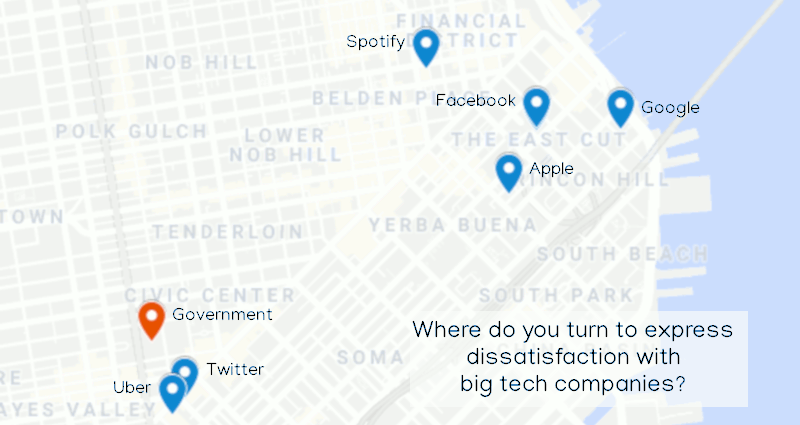
    The Right to Tweet?

    Free speech is crucial and must be defended.

    The founding fathers recognized this and gave us the first amendment as a guard against tyrannical government, so that we are free to spread ideas even when those ideas are not popular with those in power.

    Many influencers with outspoken political views—especially Conservatives—feel that their voices are being shut down by big tech, whether silently by an algorithm or blatantly by outright ban. From what I can tell, in many cases they are right. This is a very serious problem not just for any single person affected by this, but because it will serve to further divide people into their own echo chambers. Rather than a place to spread ideas, this brand of censorship is turning social media into a place to go to confirm our own biases and entrench us in our singular beliefs.

    If we value the principle of free speech, naturally we must take action to prevent this!

    Many—including organizers of the recent rally for free speech which took place at City Hall on Friday—frame this as an a violation of their first amendment rights. The first amendment protects our right to free speech and they believe these tech giants are consistently infringing on this right.

    This belief is not only misguided; it is dangerous.

    The first amendment empowers citizens to check the power of their government by preventing government from taking coercive action against them in response to what they say. The actions taken by tech companies like Twitter or Facebook, however, are not part of this deal. They are neither a Government entity nor are their actions coercive.

    I know, I sound like a corporate apologist. But why is this distinction important?

    The first amendment affirms a NEGATIVE right; your right NOT to face retaliation from the State for your speech.

    Applying the first amendment to a private platform like Facebook or Twitter is asserting that they do not have the right to block you from using their services as a result of your speech. That implies that you have a POSITIVE right to use their services which is being infringed.

    Weaponizing the first amendment in this way would only be employing government coercion to force anyone with a platform to let anyone else use their platform for their own speech. Your ability to use the services of Twitter or Facebook is a privilege, not a right. It is a privilege that can be revoked at the discretion of whoever controls the platform—as it must be, if we believe in free association.

    Let me reiterate; I want to live in a world where free speech is held high as a defining principle. However, my free speech cannot tread on your right to choose whether to associate with me. You can say what you like, but I’m not obligated to invite you into my house for you to say it.

    Free speech in the voluntary sector must be a value ingrained in our culture. Make it clear that’s what we want, and the market will fill this demand.

    What we can do to protect the principle of free speech is to clearly demonstrate that we value it. A rally to demand free speech is a perfect approach to accomplish this, which makes this rally at City Hall on Friday particularly disappointing. Their hearts are in the right place and they have a clear message of what they want, but their messaging falls into the trap I’ve described. Instead of looking to government to grant us additional rights at the expense of the rights of others, emphasize the value of this principle and instill it into our society. Instead of holding a rally at City Hall demanding that Government solve our problems, take the message to the companies themselves.

    And if they won’t listen, be prepared to stop using their services. When enough people do that, then they will.

    If that seems impossible, it isn’t. It certainly isn’t easy, but who said liberty was going to be easy?

  • Where Good Ideas Go To Die

    Where Good Ideas Go To Die

    It’s common knowledge that San Francisco has thousands of homeless people living on the streets and a shortage of not just housing, but even temporary shelter space. San Francisco also has a government-run school system that includes over a hundred schools occupying public space, each with multiple buildings that are vacant and unused at night.

    At some point, someone – probably multiple someones, perhaps even including yourself – may have thought, “Instead of having people without homes out on the streets, at risk of illness or death from exposure, crime, etc, and without places to practice proper sanitation and hygiene, or spending a bunch of taxpayer funds building new shelter facilities, why not let some of the homeless in these unused existing public facilities, where they will be safe and can have access to restrooms and showers?”

    As you may or may not be aware, this is not a hypothetical. Not only was this idea contemplated, it has actually been put into effect as a government program – well, sort of. So how is that working out for us?

    To begin with, the idea was pared way back, limiting the number of people likely to be helped by it. Rather than making space available after hours at government schools in different neighborhoods across the city, the program was limited to a single school, Buena Vista Horace Mann (BVHM), a Mission district kindergarten through 8th grade school located at 3351 23rd Street.

    Then the program was further limited to serving families with children attending that particular school, with assurances to this effect presumably intended to pacify neighborhood and school community xenophobes.

    Did I say xenophobes? Sadly, yes.

    Fear and hostility toward outsiders, people who aren’t here now, aren’t part of the “in group” isn’t just a thing with Donald Trump and his supporters – it’s also a local thing here in SF. Especially (at both the national and the local level) if those outsiders happen to be poor.

    City officials may be regretting those assurances however, because now – after reportedly sinking money into startup costs such as putting in new showers (did the school previously lack showers for students using the gym? were those showers not good enough for homeless people?) – they say they can’t continue the program unless they expand it, because not enough homeless families with students at Buena Vista Horace Mann are applying.

    Did I say applying? Sadly, yes.

    You might think that something like making BVHM’s gymnasium available after hours to homeless families needing a place to stay for the night would be pretty straightforward: Somebody shows up with kids needing a place to sleep for the night, you let them in. Hardly even worthy of being called a “program”. When I let friends or others crash at my place, I don’t call it a program, and there is no application process – people just ask me. But when it comes to government, nothing’s ever so simple. Government is where good ideas go to die.

    Here’s how the “program” is actually working (or not working):

    “Interested families usually begin the conversation by saying they are running out of housing options and they were told the school has a shelter,” writes reporter David Mamaril Horowitz in the bilingual Mission-area newspaper El Tecolote. “They first speak to Chandler”.

    That would be Nick Chandler, the schools’s social worker. According to El Tecolote, he then “vets” these families and “forwards them to Dolores Street Community Services” (DSCS). Why DSCS? Because they are the non-profit organization managing the “shelter”. You might think the school itself should be capable of managing the task of allowing students from its own student body, and their families, to use its own gymnasium, but you are not thinking like a government bureaucrat.

    DSCS’s Mayra Medel-Sanchez is the project’s program manager. You might assume that title means she’s in charge of designing and planning the program. You would be wrong again. They have a separate person for that, one Saul Hidalgo.

    Both Hidalgo and Medel-Sanchez defended the program to El Tecolote (surprise, surprise). But then again, who are they not to have an opinion, when on any given day they may comprise a double digit percentage of the program’s direct beneficiaries?

    That’s right – since it was opened as a shelter in November, according to a critical March 1 story by Jill Tucker and Trisha Thadani in the San Francisco Chronicle, the gym at BVHM has had “an average occupancy of less than two people per night”.

    Tucker and Thadani didn’t get that information from the program’s managers, according to the story, but from yet another individual being supported by tax dollars to “help” the homeless – Department of Homelessness and Supportive Housing director Jeff Kositsky. (Kositsky’s salary of $205,000 a year is presumably not factored into the reported cost of the program – more on which shortly.)

    Although the facility fails to attract any homeless individuals several nights a month, Kositsky said that doesn’t mean it’s completely empty at these times. “Shelter workers are on-site seven nights a week and through holidays, whether anyone shows up or not,” he told the Chronicle. Must be a tough gig!

    The total number of families who’ve used the “shelter” since it’s been open? Five, according to the Chronicle. Seven, according to Nuala Sawyer in SF Weekly, who took the daily paper to task for “implying it’s a failure”. “What may need to happen is a reframing of the program,” Sawyer opined.

    Meanwhile, according to the Chronicle, the city government is paying Dolores Street Community Services $40,000 a month to manage the program (wrong, it’s only $37,000 a month, says SF Weekly). Either way, this doesn’t include any program-related outlays or other costs incurred by Buena Vista Horace Mann school or the city government, such as the aforementioned startup costs. (I couldn’t find an estimate of those costs; Sawyer reports the new showers were “donated with pro bono work”, although by whom, or why, and whether there were any other costs involved, she doesn’t say.)

    This means that for the three-month period of December through February, taxpayers have shelled out a bare minimum of $111,000, and probably significantly more, so that between five and seven families have been able to spend some time sleeping on the floor of a gymnasium.

    Perhaps in future months administrators could instead consider putting homeless families up at the Ritz-Carlton or the Four Seasons, where they could have full access to the hotel’s concierge service to connect them to local resources? With monthly rates at these hotels, they might be able to save some money.

    But in government it’s all about perceptions, so Sawyer’s proposed “reframing” is a more likely outcome for what responsible (or irresponsible, depending on your point of view) parties are calling the “Stay Over Program”. What would this involve? Essentially “keeping people out of the gym’s shelter” rather than getting them into it. If that sounds odd, it is not without precedent – government has long been paying farmers not to grow food, and there is the famous, if possibly apocryphal, story of the U.S. general in Vietnam who explained how they had to bomb a village in order to save it.

    In seeking to continue the program, BVHM principal Claudia DeLarios Morán, program manager Medel-Sanchez, Sawyer, and others, claim the number of families who’ve been sleeping in the gym doesn’t tell the real story. The real benefit, they assert in so many words, has been getting people into other government programs.

    “All participants in the program register with the the city’s Mission Access Point, which enters them into the city’s homelessness response system and makes them eligible for its services. They are also able to meet with a case manager who provides counseling and guides them to resources,” program manager Medel-Sanchez told El Tecolote.

    The paper reported that 59 Horace Mann families (out of an initial 64 that SF Weekly says were identified as “housing insecure”) have spoken with Chandler, and at least 26 have “received case management”.

    Once families show up at the shelter, they “receive support and services from trained professionals who have the connections to get them help,” DeLarios Morán told SF Weekly. That wasn’t happening previously, she said. “This is a level of coherence we’ve never really had before.”

    Since the families had already been identified, you might think that much could have happened without the need to pay a non-profit group tens of thousands of dollars a month to run a shelter that few of them apparently wanted to use. But again, you would not be thinking like a bureaucrat – remember, these are “trained professionals”.

    Supervisor Hillary Ronen, who initially championed the idea in Spring 2018 along with DeLarios Morán and in whose district this is all taking place, said the program won’t be continued unless it can be made more cost-effective. For the number of families involved, it “doesn’t make any financial sense,” she admitted to SF Weekly. “We might as well buy a condo for that amount of money,” she said. Yup, or failing that, give the Ritz-Carlton a call.

    Along with pretty much everyone else quoted by the media with the exception of the NIMBYs, Ronen favored expanding the program to allow the families of students attending other schools in the district to participate. On March 12, members of the SF Unified School District’s Board of Education, aka the school board, agreed, unanimously voting to do what common sense suggests should have been done in the first place. At a minimum, that is – I’ve seen no explanation for why homeless people not related to SFUSD students, whose taxes after all help pay for those government schools, shouldn’t also be allowed to participate. In any case, the “Stay Over Program”, rather than being slated for shutdown on June 30, got a new lease on life.

    The NIMBYs aren’t without some wisdom of their own, however, even if their motives may be less than pure. “This is not to me a success,” BVHM parent Johanna Lopez Miyaki told the Chronicle. “Why didn’t they ask those 60 families what they needed? Why didn’t they ask the 60 families if they wanted to sleep on the gym floor?”

    An estimated 2,200 students in the SFUSD “cope with homelessness or housing insecurity”, according to the El Tecolote article. But how many of their families will be willing and able to deal with the bureaucracy around the program in exchange for the dubious priviliege of accessing a mattress on the floor of a school gym when needed? That remains to be seen.

    But let there be no confusion on this point: Letting homeless people sleep in a government school at night, which school board member Mark Sanchez noted is probably a first in the country, is not the problem, just as the problem with California’s Proposition 64 was never the idea of legalizing cannabis – as with Prop. 64, the problem is all the government BS that has come with it.

    Now that it has been expanded, if not yet reframed, will this comi-tragic effort manage to morph into something both useful and reasonable, as those who conceived it presumably intended, or will their good intentions be once again defeated by the nature of government, its non-profit patronage system, and the Lennon Rule* as the program matures into an even larger and more wasteful boondoggle?

    Stay tuned…

    *”Everything the government touches turns to shit.”
    – John Lennon

  • Dissecting SF Media Propaganda: Development Impact Fees

    Dissecting SF Media Propaganda: Development Impact Fees

    Ida Mojadad’s wretched March 28th San Francisco Weekly article on San Francisco’s “Development Impact Fee” is so factually erroneous that it deserves to be deconstructed for the propaganda it is. Far too often, reports in San Francisco are P/R repeaters, and I have noticed this type of fake news seems to crop up quite often when Supervisor Matt Haney is cooking up a kickback.

    First, “development impact fees” are clever ways concocted by lawyers to impose taxes without going to the electorate as required by the constitution by calling them “fees.” California even passed the “Stop Hidden Taxes” Constitutional Amendment about this (Prop 26) back in 2010. The twisted logic is the “fees” reimburse the city for its costs related to a new “development impacts” so they’re not a hidden tax, somehow. The specific “jobs-housing-linkage development impact fee” assesses new commercial developments (i.e. buildings with offices or stores in them) for the city’s costs providing affordable housing that is somehow related to the new development. Never mind that the city’s net population swells by 250,000 every workday from commuters and the city is under no obligation to provide any housing to either them or the new workers in the new commercial development. It’s just a legal mumbo jumbo “linkage” backed up with the full faith and credit of the City Attorney’s office.

    Consider Mojadad’s statement “the city’s current formula for funding affordable housing by charging office-space developers is based on a 1997 study.” Later she describes “one of the ways in which the 1997 study has become outdated” and “San Francisco is required to release a Nexus study to prove why it is allowed to charge a certain amount, and a feasibility study will accompany its release.” The implication is San Francisco has not considered its development impact fees for 22 years. This is simply not true. In 2007, the Controller’s office issued a City-wide comprehensive development impact fee study considering the individual fees holistically by several “nexus justifications” (“nexus” is legal mumbo jumbo again): development impacts for “Child Care Nexus” “Fire Facility Development Nexus” “Recreation and Parks Development Nexus” “Transit Impact Nexus” and “Residential Nexus.” (The SFUSD imposes development impact fees independently without policy coordination. How it wastes this money is worthy of its own article).

    Of those, only Transit Impact has any real legitimacy – a new development can result in more traffic. There is, of course, no oversight or enforcement that actual fees charged are used on projects that address the specific impacts created by a specific development. Delving into the city’s nine-page fee schedule detailing the city’s 32 development impact fees, we also learn that the city indexes the “fees” for inflation, further discrediting Mojadad’s implication the fee is somehow “outdated.” The SF Controller’s website indicates the fee studies are “biennial”  There’s a study from 2016 – this is not 1997. The two are different years. So, the City Attorney has suddenly asserted “office spaces are denser” as if cubicles or newfangled “tech spaces” formed “linkages” the way airlines measure legroom. What about the City Attorney’s own office space it rents in Fox Plaza from Swift Real Estate Partners? Did they pack in the same number of city attorneys per square foot in 1997?

    Mojadad slips into a typical P/R trick in her statement “Community groups like SOMCAN have criticized the Central SoMa plan for a lack of plentiful affordable housing.” Never mind that Mojadad just assumes everyone just knows what the SOMCAN acronym is, and we are left to have faith that SOMCAN is, in fact, a “community group.” The SFWeekly has fact-checkers, after all. We have faith in them to call out astrotufing, right?. Who gave SOMCAN (whomever they are) any authority to speak on the subject? Why did Mojadad cite their “criticism?” and not someone else’s (such as the Libertarian Party’s of the Howard Jarvis Taxpayers’ Association?) Is SOMCAN’s very act of criticism itself – packaged somewhere in a press release –  the very mechanism though which “news” is generated? A simple internet search can reveal SOMCAN administers city contracts for social work – a euphemism for functioning as “gatekeepers” for “clients” to get into new “affordable housing.” Come to think about it, Jim Jones did the same thing when he sat on the board of the housing authority.

    Like any horrid piece of propaganda regurgitating some P/R rep’s charm, Mojadad’s article is more manipulative in what it leaves out. What about the detrimental “linkages” of affordable housing “lock-in?” (the process by which households in affordable developments tend to stay in them longer than would be to their benefit and/or limit their long-term career and life aspirations due to their current housing situation). SF Weekly’s enlightened journalist fails to mention the landmark 2016 conclusions of the California State Legislative Office,

     “While affordable housing programs are vitally important to the households they assist, these programs help only a small fraction of the Californians that are struggling to cope with the state’s high housing costs.”

    That small fraction undoubtedly includes the patronage cronies surrounding the SFWeekly and Haney’s P/R team.

  • When History Repeats Itself

    When History Repeats Itself

    On a warm Summer day in July 1916, over one hundred thousand residents descended on Market Street in San Francisco to witness a parade for civic “preparedness” – an ostensibly grassroots and patriotic movement for American involvement in War in Europe, the Pacific, Mexico, or all three organized and funded by the “Law And Order Committee” of prominent California industrialists. As leaflets depicting babies on bayonets rained down, suddenly at 2:05 PM an explosion rung out in front of the shop of Tobacconist John Clifton at Steuart and Market streets. Six people lay dead or dying: George Lawlor, Lea Lamborn, Dr. George Painter, Mrs. Hetta Knapp, Arthur Nelson, and Civil War veteran Adam Fox. Four more would die in the days ahead. Forty were maimed – some crippled for life.

     Authorities arrived immediately. Barely fifteen minutes later, Frederick Colburn of the Chamber of Commerce and District Attorney Charles Fickert directed an off-duty Oakland firefighter to hose down the entire scene – the gore of Lawlor’s head, which had been blown off, and the bits and pieces of a heavy tan suitcase seen left at 1:50 PM by two short men “dark complexioned, possibly Greek, Italian or Mexican” as described by Clifton – all washed away, compromising the evidence “to avoid distressing the public.” Fickert sent Clifton away, saying he had ample witness statements including an account of Martin Swanson, head detective for both Pacific Gas and Electric and Union Railroad. William Randolph Hearst’s papers ran an Extra hitting the streets at 2:45 PM running the same editorial, warning the public San Francisco was in the grip of a “Mafia of pacifists, anarchists, and coddlers of criminals” and something must be done. Two months later, a tall, ruddy-complexioned Irish-American Labor organizer “anarchist” and “socialist” Tom Mooney was convicted on the eyewitness testimony of a “gentle cattleman” named Fred Oxman and sentenced to the death penalty.

    One newspaper held out against the calls for “preparedness” – Fremont Older’s The Bulletin patronized by C&H Sugar magnate and religious pacifist John Spreckels – the force behind the Balboa Park beautification of San Diego. The paper on April 11, 1917, in a remarkable feat of investigative reporting, published letters between District Attorney Fickert and Oxman, showing PG&E had written, coached, and paid for the eyewitness’s testimony and travel in advance of the bombing. Fickert penned back in Hearst’s Examiner that the Bulletin was an “adviser of bloodthirsty anarchists … to convince you Mooney is the victim of an infamous conspiracy.” Within a year, the Bulletin’s shareholders were bought out, and a new executive editor pushed out Older for creating “unpatriotic controversy.” Shortly thereafter, the paper closed, but by that time America had entered the war and bodies of America’s best and brightest were strewn on Flanders’ Field.

    Strangely enough, Hearst invited Older to work at his other SF paper – The Call (once owned by Spreckels) and given editorial independence. On Friday Afternoon, November 22, 1918, two weeks after the war’s end, The Call published in full a highly secret and confidential Federal Dept. of Labor report where Labor Dept. Agent George Parson installed secret wiretaps on the District Attorney Fickert’s dictaphone. It revealed Fickert had fixed cases and admitted Mooney’s malicious prosecution was directed by an attorney for the US Dept. of Commerce, a California supreme court justice, and was coordinated by the fledgling Federal Bureau of Investigation, founded 1908. Soon thereafter, fearing “red communism,” Congress stripped the Dept. of Labor of its investigatory authority and the “Palmer Raids” took place across the nation. Later, Older would admit he promised to withhold publication until after the 1918 California gubernatorial election in exchange for the right to publish.

    Nearing the Centenary of the Armistice and a day after a California gubernatorial election, Thousand Oaks and Ventura County was struck by tragedy. Young lives such as those of Cody Coffman and Alaina Housley were mercilessly cut short at the Borderline Bar in Thousand Oaks. Their families and the public deserve justice – and answers. We know at least eight off-duty officers (two “on duty” per the Oxnard Police Chief) were inside the bar to witness the events, but their identities and accounts are not known to the public. Michael Chilton, a thirty-year veteran of the force, nearly broke down in tears, recalling how major news outlets and the sheriff’s Dept. refused to take his calls. We know that a state-of-the-art CCTV video system was installed at the Bar, but footage has not been released to the public. Local authorities routinely reject public records requests related to the incident. With the reported gunman conveniently suicided, there will never be a public trial to determine the facts of the case – facts needed to understand why this event occurred, to inform an accurate case history for forensic psychologists, and (more importantly) for voters as shareholders in a democracy to make informed choices about public policy to prevent history from repeating itself…again.

    This year on an antipodal autumn, three minutes following yet another tragedy without awaiting the discovery and trial of facts afforded by judicial due process and the true nature of terror– this time in ChristChurch, a patriotic parliament gathered to pass a six hundred page National Security bill nobody had read, the populace egging them on knowing it was uncouth amazing Australians – and not quite interesting Kiwis – could be evil, and this would firmly ensure “Never Again” in a way a new flag never would. A firewall broke out in the media – commanded and controlled by digital media behemoths manufacturing consent based in a progressive Sanctuary City in California – and raids took place against internet radio hosts, digital content creators, independent journalists, and anyone reported confidentially and anonymously to a new government hotline for violating a newly-enacted law against contraband literature subject to a new fourteen year prison penalty. And So It Goes.

    Was Thousand Oaks a sting operation gone wrong? A hoax? A false flag? Training for a false flag? Something else? Or did it happen as reported by the VC Star, Hearst Corporation, Gannett media, and prominent independent journalists and the credentialed experts would have us believe?  This could be confirmed by the now ubiquitous security video. Although the cameras did nothing to keep Justin Meek, Alaina Housely, or Cody Coffman safe, they could serve some purpose in ensuring justice – so the FBI came in and took them away to Quantico, Virginia. I, for one, grew up when images of the Rodney King beating played out repeatedly on television – public interest images of violence outweighing other considerations of privacy or emotional trauma. It brought home in visual form what many did not believe even though minority communities had complained for years – police misconduct is real. Justice is not ensured. Maybe for that reason, I found myself once again, taking the time to put up “Free Chelsea Manning” posters in the Castro. Nobody else bothered. Perhaps the folks at Equality California, Pride, the Human Rights Campaign, the NCLR, the ACLU, and all those clipboard commandos who promise to make it rain were fatigued from the last time. Perhaps they know something I never learned about social graces. Perhaps someone was tweeting about it, somewhere.

    In 1932, a curious photo emerged from the SF Public Library archives: it showed Tom Mooney watching the parade on the roof of the San Francisco Eilert Building seven large blocks down Market Street from the Stuart St Tobacconist (soon thereafter redeveloped as the Headquarters of Southern Pacific Railroad). Faintly, a public clock appears in the background – its hands pointing to 2:00 PM, exactly.

    Today the “Alibi Clock” still ticks away, now on the Vallejo waterfront. It keeps time accurately, no matter your opinion.

    Thomas Busse


    Petition to the Civil Grand Jury of the County of Ventura (Cal. Constitution Article 1, Section 23)

    Whereas, tyrants throughout history have attacked their own people to manufacture consent to take away their civil liberties in the name of security; and

    Whereas, the Press has failed in its duty to inform the public regarding the events of November 7-8 in Thousand Oaks at the Borderline Bar; and

    Whereas, false narratives can inspire copycat crimes,

    I petition the Civil Grand Jury of the County of Ventura to investigate the mass casualty incident at the Borderline Bar and Grill.

    Please Mail signed petitions to: Civil Grand Jury, 800 S. Victoria Avenue L3751, Ventura, CA 93009. Under California Law, petitions must include your name, address, and telephone number.

  • San Francisco Libertarians File an Election Contest to Invalidate November’s Proposition A Election Due To Violations of New Law

    “The only stable state is the one in which all men are equal before the law.”
    – Aristotle
     

    There has been an ongoing problem of collusion between government officials and municipal bond advisors who often actually write the bond bills for profit. And then deceptively work with government to sell them to an unsuspecting public. To address this issue, the California State Assembly passed AB-195 which was approved by Governor Jerry Brown and on January 1, 2018 became Law. Sections of that law governs the way local governments can present bond measures on ballots:

    1. Measure shall be a true and impartial synopsis of the purpose of the proposed measure,
    2. and shall be in language that is neither argumentative nor likely to create prejudice for or against the measure.
    3. If the proposed measure imposes a tax or raises the rate of a tax, the ballot shall include in the statement of the measure to be voted on the amount of money to be raised annually and the rate and duration of the tax to be levied.

    Section 18401 of the California Elections Code says election officials who allow non-compliant ballots to be put before the public are criminally liable.

    As this complaint clearly shows, Proposition A was enormously non-compliant. The Libertarian Party of San Francisco (LPSF) was designated official Opponent of Proposition A by the SF Dept. of Elections. LPSF members called attention to these issues before the Ballot Simplification Committee. They were ignored.

    (more…)

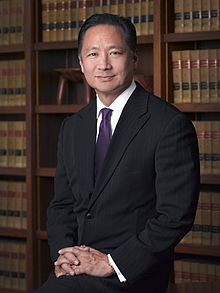
  • Our Defender, Jeff Adachi

    Our Defender, Jeff Adachi

    Last month San Francisco lost one of its best leaders, perhaps the only elected official in the city truly worthy of that description.

    “Prosecutors, with near unlimited resources and the full backing of the government, are trying to take away a citizen’s freedom. That’s a big deal and something we want to get right,” he wrote in a 2014 op-ed piece in the Sacramento Bee.

    Jeff Adachi, the 59-year-old elected Public Defender, had held the position since first winning election in 2002 after working as an attorney in the office for several years prior, and was subsequently reelected four times, most recently last year. But on the evening of February 22, he was found unresponsive at an apartment in North Beach after suffering a heart attack, and efforts to revive him were sadly unsuccessful.

    Police officers were soon on the scene, and before long someone in the SFPD – whose misdeeds have often been exposed by the Public Defenders Office under Adachi’s leadership – leaked, in violation of department protocol, details of the police report to the press: The late Public Defender had been in the company of a woman who wasn’t his wife, and they had reportedly consumed several drugs that day including wine, cocaine, and marijuana edibles.

    Some of his detractors were quick to jump on these embarassing (at least to the anti-hedonism set) details. Most notably Gary Delagnes, the former head of the Police Officers Association union who rarely if ever sees a case of police abuse that he doesn’t see fit to excuse (when the Board of Supervisors acted in 2016 to memorialize Mario Woods, victim of an SFPD firing-squad-style execution, he called board members “idiots” who “honored a street thug”), railed on Facebook not long after Adachi’s death that he had been “a serial adulterer who drove his wife to a suicide attempt,” and groused that, “Only in San Francisco is Jeff Adachi a hero.”

    If you’re not pissing some people off as a politician you’re probably not doing it right, as the saying goes!

    To their credit, this tone deaf jab at the recently deceased was the last straw for Delagnes’s colleagues at the POA, who apparently recognized that despite the success of his hardball methods in getting police pay sharply boosted during his tenure heading the union from 2004 to 2013 his big mouth had become too much of a political liability, and politely expelled him from the organization where he had remained on the board earning nearly $100,000 a year as a consultant.

    But as the civil-liberties-hating Delagnes was grudgingly forced to acknowledge, Adachi is a hero in San Francisco, and won’t be soon forgotten. Despite the circumstances of his death, there was an outpouring of grief and mourning from not only his colleagues but many ordinary members of the public. Over 1,000 people reportedly joined a candlelit vigil and march from the Public Defenders Office to City Hall before Adachi’s body lay in state under the grand old building’s dome.

    When a well-known elected official dies, there are almost always the obligatory accolades from other political figures. But in this case the praise that poured in may have been a bit more accurate than usual. “Everything he said or did came from the heart,” State Senator Scott Wiener told the San Francisco Chronicle. “He was someone who, it didn’t matter to him what people thought about him or if people were mad at him. He was there to fight for the most marginalized people in society.” Eric Quandt, a deputy public defender, said of his former boss that, “I’ve never seen a defense lawyer more tenacious or courageous.” He described himself as “devastated” and said he was sure he spoke for many of his colleagues. “I didn’t always agree with him,” said former supervisor and current BART Board member Bevan Dufty, “but I always appreciated that he made this job so much bigger than what the charter called for.” Congresswoman Jackie Speier called Adachi “the real deal… a righteous public servant who believed passionately in the Constitution, due process and the rights of the accused to be ably represented by counsel. He did not shrink from public debate or tough political decisions.” Perhaps referring to the all-too-often correct perception of public defenders being incompetent and providing poor quality representation, Alameda County Public Defender Brendon Woods said that Adachi “crashed and reshaped all of the negative stereotypes” and “elevated what it meant to be a public defender.” 

    In the city’s traditionally black Bayview and Fillmore neighborhoods, where Adachi was a frequent presence, there was widespread sadness at his passing. “Jeff was the only official in this city we could trust to fight for us, the black and brown and poor San Franciscans,” wrote Dr. Willie and Mary Radcliff in the San Francisco Bayview newspaper. The “MAGIC” (Mobilization for Adolescent Growth In our Communities) programs his office started, “BMAGIC” for the Bayview and “Mo’ MAGIC” for the Fillmore, helps integrate struggling teens into the community with gardening programs, field trips, and other activities. Another group started by the SF Public Defender’s Office provides help to the children of incarcerated parents. Adachi himself was often out in the community in connection with these programs as well as legal work. San Francisco mayor London Breed recalled him coming around to visit clients when she was growing up in the Fillmore and living in public housing projects.

    This history may have contributed to Breed, a “moderate” who although African-American herself has not always been relible when it comes to reforming an SFPD and criminal justice system that have had a disproportionately negative impact on blacks (57 percent of local inmates are black, despite blacks accounting for less than 5% of the city’s population, according to the Bayvew newspaper), doing the right thing by quickly appointing Manohar Raju as Adachi’s successor. Raju was previously a deputy public defender and respected member of the office Adachi had built. Prior to the appointment, it was speculated that she might appoint another deputy PD, Chesa Boudin, a reform-oriented candidate for district attorney, in order to get him out of that race and clear the field for her own more law-and-order oriented pick for DA, but she didn’t end up doing that.

    Unlike most politicians, Jeff Adachi rarely inspired such suspicions that his decisions might be politically driven. For him, it was clearly about doing what he thought was right. He was consistently bold and fearless in holding law enforcement accountable. When his office found video camera footage that showed police officers barging into the rooms of poor residents living in SRO hotels without warrants or permission and even stealing from them, he put the videos on YouTube. Again when his office learned through a whistleblower of sheriffs deputies staging fights among inmates at an SF jail, he took the information straight to the media and the public. And the Public Defender’s Office under his leadership is also responsible for the texting scandal among members of the SFPD who exchanged numerous racist and homophobic text messages on the job being uncovered.

    Adachi’s courage went beyond standing up to the politically powerful police and sheriffs departments. He point-blank refused mayor Gavin Newsom’s request to cut his office’s budget along with those of other departments, explaining to the man now in the governor’s office that the legal services provided by the Public Defender’s offices are legally required, and that it would actually cost taxpayers more to outsource them to private attorneys. In 2010, he took on virtually the entire city establishment by championing Proposition B, a pension reform measure he got on the ballot that actually took the burgeoning problem of out-of-control city pension costs seriously and proposed a responsible solution to rein in spending.

    Adachi was politically progressive, but honest in his approach, and not one for feeding the “city family” – for him, good government seemed to mean spending discretionary funds in ways that would promote social justice and equality without breaking the bank. He understood that the soaring costs of “defined benefit” pensions being paid out to well-compensated city government employees would mean fewer and fewer dollars available for everything else, and unlike other local Democrats, was determined to do something about it. Even after Proposition B was overwhelmingly defeated, Adachi brought a revised version of the legislation back the following year as Proposition D. (That measure too was defeated by the votes of the self-serving and the ignorant, an outcome that most San Franciscans will at some point likely come to regret. According to a 2010 SF Weekly article, SF’s city employee pension costs had grown by over 66,000% during the past decade – and they continue to rapidly grow today.)

    When he went to City Hall to lobby for more funding to defend undocumented immigrants against Trump-era deportation proceedings, Adachi brought a cameraman with him to record the encounters. This sort of behavior grated on his politician colleagues, but nevertheless he got $1.9 milllion appropriated for his immigrant-protection efforts. “The theatricality that marked Adachi’s courtroom demeanor did not stop outside the Hall of Justice”, local journalist Joe Eskenazi observed. Just as Jeff Adachi made his office so much more than the usual public defender’s office, in life he was more than just a lawyer. While actively representing clients – as department head, he didn’t limit himself to administrative matters, but argued over 100 cases before juries himself – he also managed to find time to turn his theatrical flair and passion for social justice into becoming an award-winning filmmaker, writing and directing several documentaries about race and criminal justice issues.

    Although Adachi was not a Libertarian, the LPSF has long appreciated both his criminal justice reform and his pension reform efforts, inviting him to come speak to us and recommending our supporters vote for him.

    Some community members have suggested renaming for Adachi a street in the SOMA neighborhood which the late public defender walked almost daily on his “commute” between the Public Defenders Office at 555 Seventh Street to the Hall of (In)Justice at 850 Bryant Street, and we certainly appreciate the sentiment.

    But while Adachi and his work deserve to be remembered, is this the right way to do it? Politicians are always naming things after other politicians, symbolically plundering the landscape for the aggrandizement of their own profession even as they plunder the public’s pocketbooks via taxes and fees in order to fund their political agendas (as well as their generous salaries, benefits and pensions). If a moratorium on such namings were adopted, in favor of attaching more evocative and inspirational names to places and infrastructure, it would be a public blessing.

    At least in this case the renaming would supplant another politician: Gilbert Street is currently named after Edward Gilbert, a 19th century congressman who was killed in a duel with James Denver, the future namesake of the capitol city of Colorado (himself also a politician).

    One nevertheless suspects that Adachi himself, being the man he was, would rather members of the Board of Supervisors remember him by introducing some meaningful criminal justice reform legislation, than by slapping his name on something.

    Regardless, Jeff Adachi’s legacy will live on in other ways. By all appearances, he has built a strong and efficient Public Defenders Office, filled with competent, passionate attorneys and staff who truly believe in the office’s mission of providing quality legal defense to the indigent. The myriad awards he earned, ampong them the American Bar Association’s national award for excellence in public defense, the Managerial Excellence Award of the Mayor’s Fiscal Advisory Committee, and the Elected Official Award for transparency of the Society of Professional Journalists’ northern California chapter, are testimony to this. Just a month before Adachi’s death, the SF Public Defender’s Office as a whole was recognized by the National Association of Criminal Defense Lawyers with its Champion of Public Defense Award.

    One of the last people to spend time with Jeff Adachi was another deputy public defender, the aforementioned Chesa Boudin, who at a recent neighborhood meeting recalled their eating lunch together on the day Adachi died. Boudin, like most of his colleagues, was hit hard by the untimely death. Like his boss, he has a passion for defending the marginalized and upholding civil liberties, and is now running a strong campaign for San Francisco district attorney. The current DA, George Gascon, is not seeking another term. Although reform oriented in some respects – e.g. working with the Public Defender’s Office to work on expunging the records of non-violent marijuana offenders – Gascon has during his term failed to prosecute a single unjustified SFPD shooting.

    As Boudin points out, this will be the first time there’s been an open race for that office in over 100 years. It is a rare opportunity to hopefully elect someone as the city’s top prosecutor who respects civil liberties and believes in holding police accountable when they commit abuses as much as SF’s late Public Defender did. It’s no less than Jeff Adachi would have wanted.

    ~~~~~~~~~~~~~~~~~~~~~~~~~

    “A hail of bullets is not an appropriate police response to people suffering mental health crises.”

    – Jeff Adachi

  • When will they be happy?

    When will they be happy?

    I feel like I keep repeating myself. Last month, I wrote that Government Thinks You are Fat and Stupid and so they need to set hard rules to keep all of us lemmings from walking off cliffs. In that article, I discussed proposals by the state of California to further regulate and tax sugary beverages (something we already have to deal with here in San Francisco) in the name of public health.

    This time, it’s The City here to tell you how stupid you are.

    Dennis Herrera’s office and Supervisor Walton are set to introduce legislation that will make Juul and the vape industry in San Francisco go up in smoke.

    This past June, the voters approved an ordinance to ban the sale of flavored tobacco in The City, for the sake of the children. Pleased with their victory, the supes have set their sights on vaping next.

    Soda and tobcacco products aren’t good for you, we all know that. But, many things are bad for you. Adults are able to make decisions for themselves, and parents are able to set their own rules and help their children make good decisions.

    The move is purportedly not a ban on e-cigarettes as a whole; only those which have not been approved by the FDA (which of course is all of them). That’s obviously a pointless distinction if your concern is children vaping, though. When is the last time you heard a young person ask “is this FDA approved?” (or anyone, for that matter).

    E-cigarette sales are already prohibited to anyone under 21 under state law, anyway, so this proposal should be seen for what it is—a ban on adults in San Francisco making decisions for themselves.

    For a city that is so pro-choice on women’s issues (“My body, my choice”), it sure doesn’t seem to care much about other choices that one might make.

    If this political grandstanding goes any further, I hope you will join me to protest. Get Government out of our lives!