Author: nsmith

  • The Right to Tweet?

    The Right to Tweet?

    Free speech is crucial and must be defended.

    The founding fathers recognized this and gave us the first amendment as a guard against tyrannical government, so that we are free to spread ideas even when those ideas are not popular with those in power.

    Many influencers with outspoken political views—especially Conservatives—feel that their voices are being shut down by big tech, whether silently by an algorithm or blatantly by outright ban. From what I can tell, in many cases they are right. This is a very serious problem not just for any single person affected by this, but because it will serve to further divide people into their own echo chambers. Rather than a place to spread ideas, this brand of censorship is turning social media into a place to go to confirm our own biases and entrench us in our singular beliefs.

    If we value the principle of free speech, naturally we must take action to prevent this!
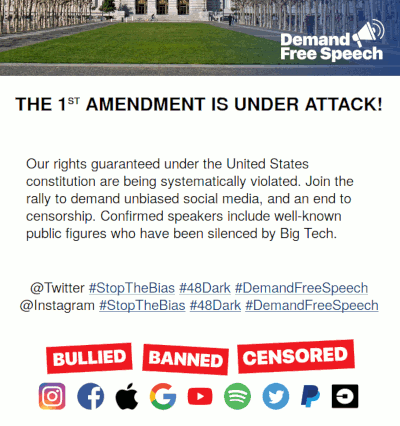
    Many—including organizers of the recent rally for free speech which took place at City Hall on Friday—frame this as an a violation of their first amendment rights. The first amendment protects our right to free speech and they believe these tech giants are consistently infringing on this right.

    This belief is not only misguided; it is dangerous.

    The first amendment empowers citizens to check the power of their government by preventing government from taking coercive action against them in response to what they say. The actions taken by tech companies like Twitter or Facebook, however, are not part of this deal. They are neither a Government entity nor are their actions coercive.

    I know, I sound like a corporate apologist. But why is this distinction important?

    The first amendment affirms a NEGATIVE right; your right NOT to face retaliation from the State for your speech.

    Applying the first amendment to a private platform like Facebook or Twitter is asserting that they do not have the right to block you from using their services as a result of your speech. That implies that you have a POSITIVE right to use their services which is being infringed.

    Weaponizing the first amendment in this way would only be employing government coercion to force anyone with a platform to let anyone else use their platform for their own speech. Your ability to use the services of Twitter or Facebook is a privilege, not a right. It is a privilege that can be revoked at the discretion of whoever controls the platform—as it must be, if we believe in free association.

    Let me reiterate; I want to live in a world where free speech is held high as a defining principle. However, my free speech cannot tread on your right to choose whether to associate with me. You can say what you like, but I’m not obligated to invite you into my house for you to say it.

    Free speech in the voluntary sector must be a value ingrained in our culture. Make it clear that’s what we want, and the market will fill this demand.

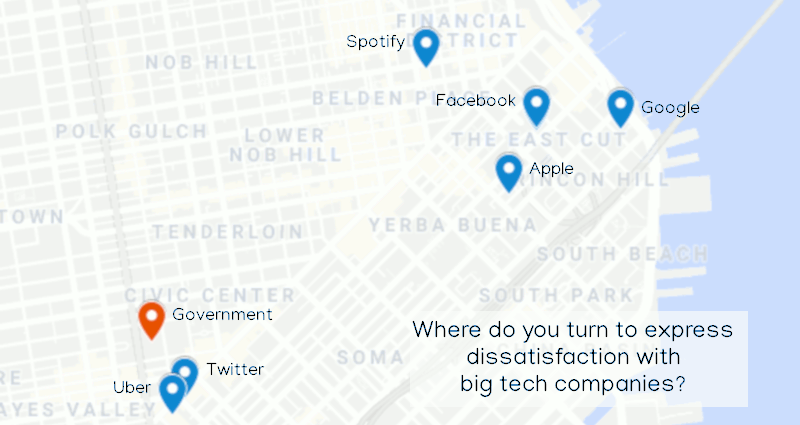
    What we can do to protect the principle of free speech is to clearly demonstrate that we value it. A rally to demand free speech is a perfect approach to accomplish this, which makes this rally at City Hall on Friday particularly disappointing. Their hearts are in the right place and they have a clear message of what they want, but their messaging falls into the trap I’ve described. Instead of looking to government to grant us additional rights at the expense of the rights of others, emphasize the value of this principle and instill it into our society. Instead of holding a rally at City Hall demanding that Government solve our problems, take the message to the companies themselves.

    And if they won’t listen, be prepared to stop using their services. When enough people do that, then they will.

    If that seems impossible, it isn’t. It certainly isn’t easy, but who said liberty was going to be easy?
  • When will they be happy?

    When will they be happy?

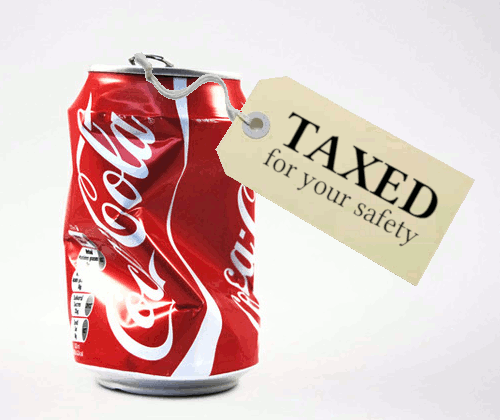
    I feel like I keep repeating myself. Last month, I wrote that Government Thinks You are Fat and Stupid and so they need to set hard rules to keep all of us lemmings from walking off cliffs. In that article, I discussed proposals by the state of California to further regulate and tax sugary beverages (something we already have to deal with here in San Francisco) in the name of public health.

    This time, it’s The City here to tell you how stupid you are.

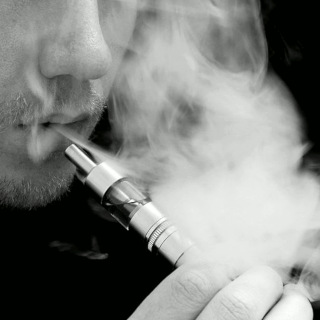
    Dennis Herrera’s office and Supervisor Walton are set to introduce legislation that will make Juul and the vape industry in San Francisco go up in smoke.

    This past June, the voters approved an ordinance to ban the sale of flavored tobacco in The City, for the sake of the children. Pleased with their victory, the supes have set their sights on vaping next.

    Soda and tobcacco products aren’t good for you, we all know that. But, many things are bad for you. Adults are able to make decisions for themselves, and parents are able to set their own rules and help their children make good decisions.

    The move is purportedly not a ban on e-cigarettes as a whole; only those which have not been approved by the FDA (which of course is all of them). That’s obviously a pointless distinction if your concern is children vaping, though. When is the last time you heard a young person ask “is this FDA approved?” (or anyone, for that matter).

    E-cigarette sales are already prohibited to anyone under 21 under state law, anyway, so this proposal should be seen for what it is—a ban on adults in San Francisco making decisions for themselves.

    For a city that is so pro-choice on women’s issues (“My body, my choice”), it sure doesn’t seem to care much about other choices that one might make.

    If this political grandstanding goes any further, I hope you will join me to protest. Get Government out of our lives!

  • Government Thinks You are Fat and Stupid

    Government Thinks You are Fat and Stupid

    Governments continue the perpetual war in Oceania, Eastasia, or Eurasia—for us, tobacco, plastics, and soda—in order to keep the people distracted and to justify their own jobs. It seems that every election cycle, another major city floats a soda tax as a do-good measure to improve public health. I saw it almost happen in New York and then actually become law in Philadelphia, and it followed me out to San Francisco in 2016 (Prop V). A good public health crisis is always around the corner, and the soda industry is a great enemy; what is a hero politician without an arch-nemesis?

    Despite all this, in a rare pro-freedom move, the state legislature begrudgingly agreed last year to pass a bill banning cities from passing new taxes on sugary beverages, under pressure from soda industry lobbyists. Now, they are preparing to get political revenge for that embarrassment by introducing statewide bills which would do little to benefit public health and much more to advance their own political posture.

    Of course, they market these as noble moves to protect innocent and unwitting consumers from the evil soda industry, but what does that really mean?

    Ideas that have been floated so far include restricting the size of sugary drinks sold in unsealed containers to 16oz, labeling sugary drinks with a warning about health risks, prohibiting stores from displaying soda drinks near checkout counters, ending promotional deals, and of course a good old fashioned tax on sugary drinks, probably to the tune of $0.02 an ounce.

    They claim they just want to help, because the commoners don’t know what’s good for them. It’s not about raising money or virtue signaling to their base, it’s an honest effort to solve the crisis facing our poor communities.

    “We’re not saying that people can’t guzzle all the liquid sugar they want through 16-ounce containers. They can do that,” says David Chiu, D-San Francisco.

    “And you can legally still buy sodas under any of the bills that were introduced today,” Sen. Bill Monning, D-Carmel, said. “We’re not taking them off the shelves, we’re saying, ‘Informed choice.’”

    So you’re still free to be as fat and stupid as you like, you’ll just have to work around the government rules and pay a little extra out of pocket.

    What all these proposals boil down to, though, is that you are in fact too stupid to make decisions for yourself, so the government has an obligation to step in to nudge your behavior in the right direction. And we’ll applaud them for taking the initiative!

    But is political action inspired by revenge really what the public needs or wants? New taxes and regulations only serve to restrict freedom by limiting your options, even if those options are not necessarily what’s best for you. There are plenty of things that are bad for you, though– why put the impetus on sugary drinks? Because it’s politically convenient, that’s why.

    Perhaps the worst part of these schemes is that they sort of work! No, there hasn’t been any legitimate evidence that the “crisis” is solved, but studies find that people do drink less soda. And why wouldn’t they? It’s simply the law of demand.

    For a little thought experiment, if you buy a 12 pack of soda in Berkeley today which the store sells for $5.00, you’ll end up paying an additional 9.25% in sales tax, $0.60 for the CRV and $1.44 for the sugary beverage tax ($0.01 per ounce). That comes out to $7.50 after tax, an effective tax rate of 50%! Tack another $0.02 per ounce on top of that and you’re looking at a whopping 125% tax rate.

    What are all these taxes and regulations doing for you other than making your life more difficult and expensive? It’s time to tell the politicians that we can decide what’s best for ourselves. Of course, that would mean that their jobs aren’t quite as important as they would like us to believe.

  • Giving and Taking

    Giving and Taking

    It’s Giving Week, where people come together to celebrate the spirit of giving. It is truly inspiring and humbling to see our fellow man donate their time and money to support causes that they believe in. We come together as a community and show how much we care about each other, and our compassion is celebrated.

    And yet, this week comes less than a month after San Francisco voters came together and decided to give $300M to help the homeless and $40M to aid arts and cultural institutions in the City. The difference, of course, is that the latter is not “giving” so much as it is taking and redistributing. Proposition C was lauded as a compassionate measure to help the homeless in our City, but can it be real compassion when backed by the threat of force?

    As Libertarians, we oppose the use of coercion to achieve political and social goals. While we can agree that a problem exists (people are homeless), Libertarians don’t consider it compassionate at all to force your neighbor to pay to solve the problem. Some of your tax dollars may be used to support causes that you believe in, yet paying your taxes is not an act of compassion– it’s an act of self-preservation! If you don’t pay, you’ll end up behind bars. Even if your taxes really did go to meeting human needs, it would still not be compassionate to pay, because not paying is a crime.

    So what, then, do we propose to solve such a problem? The cost of living in San Francisco is so high already, how can we expect everyone to be so generous to their neighbors to solve large scale problems?

    In the current system, why should they be? Aren’t your tax dollars already supposed to pay for this? With the City’s $11B budget, why should any of us volunteer another dime to help our neighbor who is in need– how could we afford to?

    If government got out of the way and let the people have control of our own money, we together could meet human needs through voluntary giving rather than coercion– and there are advantages to doing so.

    For one, charities are held accountable for how they use their funding. If the organizations I donate to have unsatisfactory results, I will give my money to someone who will make better use of it. Similarly, we give to the causes that we find to be the most worthy. Taxpayers have neither of these luxuries– our money is wasted on programs we don’t agree with, and if those programs are unsuccessful, it is unlikely they will lose funding but instead ask for more!

    The Libertarian Party of San Francisco has recently endorsed a Universal Charitable Credit bill for the state of California which would allow taxpayers to have at least some control over where their tax dollars go. By allowing taxpayers to divert a portion of their tax dollars to a charity of their choosing, it would empower the people to self-organize around the causes and organizations which are most effective at serving the community. The intention is not to pay less taxes (you are still paying, anyway) but to maximize our ability to meet human needs.

    When we, the people, take voluntary human action to solve problems, we can accomplish a lot and all parties feel fulfilled in doing so. Through coercive taxation and redistribution, the only parties feeling fulfilled are those in power, and their ability to actually solve problems gets muddled among many other incentives. Which sounds better to you?

    Let’s tell our Government that we, the people, do better at meeting human needs than they do.

    Read a draft of the We Do Better Universal Charitable Credit Bill for California

  • Post-Election Blues

    Post-Election Blues

    We have been through two intense election cycles in 2018, neither of which produced good results for liberty in San Francisco or California. Facing the ballot results can be discouraging, to say the least. Measures that we have devoted many days of work to oppose passed with ease and candidates that we spent our free nights and weekends supporting came last in their elections. It would be easy to throw in the towel and give up on defending liberty, conceding that our efforts don’t make any difference after all.

    Although… don’t they?

    It’s impossible to know what would happen if the LPSF was not here to stand up for liberty. Proposition A passed by a whopping 65% margin. It had support from the local Democrat and Republican parties. Proposition E passed by a 50% margin. It too had support from the Democrats and no recommendation from the SFGOP. On both of these measures, the only opposition that voters saw came from the Libertarian Party of San Francisco. We were the official– and only– opponent of both of these measures. We certainly don’t deserve all the credit for those NO votes, but if we were not here, the voters would only hear one side of the story. Doesn’t the public need a voice to oppose wasteful Government spending?

    We may have lost a battle, but we continue fighting for liberty, and with each stand we take, we gain more recruits. I have watched the LPSF grow substantially over the past year, with new activists showing up at almost every meeting. We have learned many lessons and picked up new skills that will help us be more effective in the future.

    To put it simply, the work we do does make a difference. Maybe not in the way we want it to yet (election outcomes) but in gained momentum. With a sustained effort, we might just see San Franciscans begin to realize that liberty is worth fighting for.